
Styles
#1973
Mort Kunstler style reference and prompts
Explore the “Mort Kunstler” reference with tactile surfaces, silhouette shapes, and a curved or diagonal visual path. View the images, copy the style or example prompt, and discover related styles on Looksift.
Compare the Qwen Image 2.1 and GPT Image 2.5 examples, choose the visual qualities you want, and copy the style prompt for your own project.
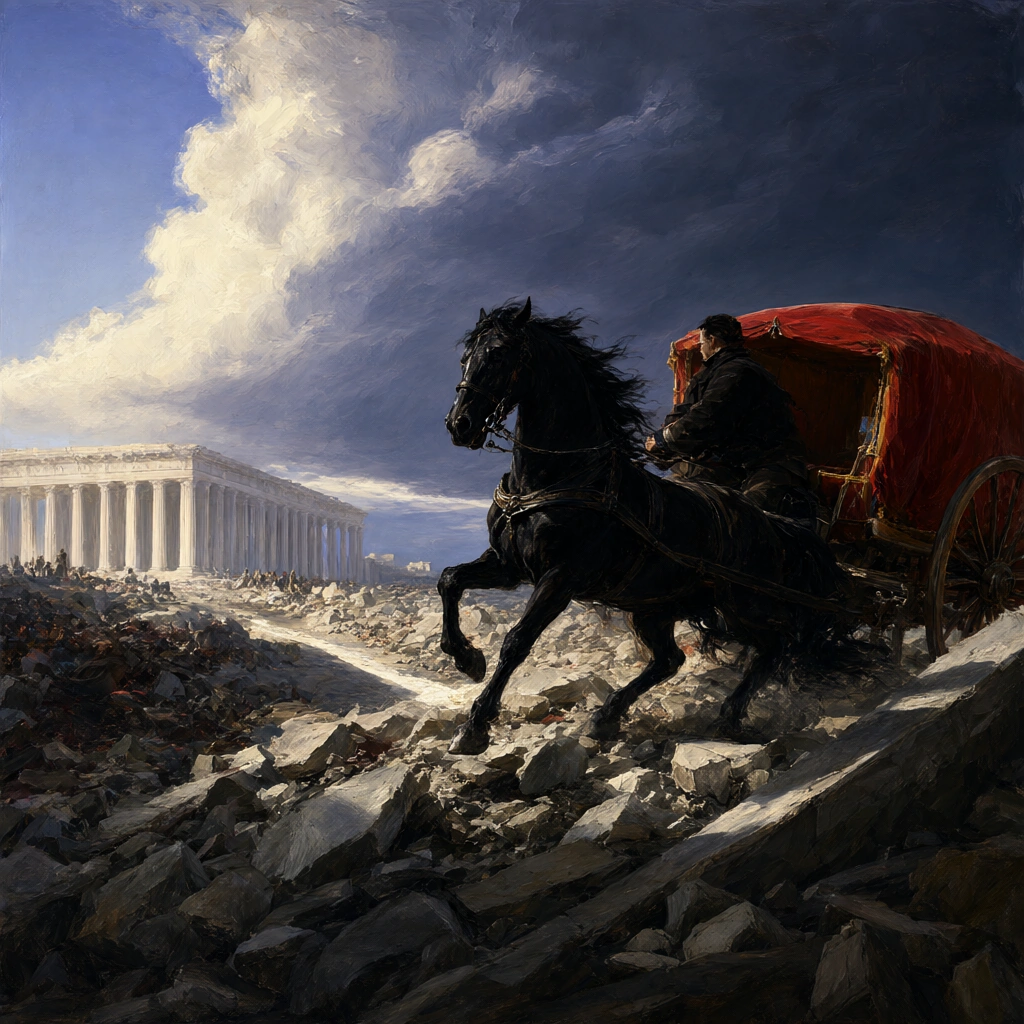 Qwen Image 2.1
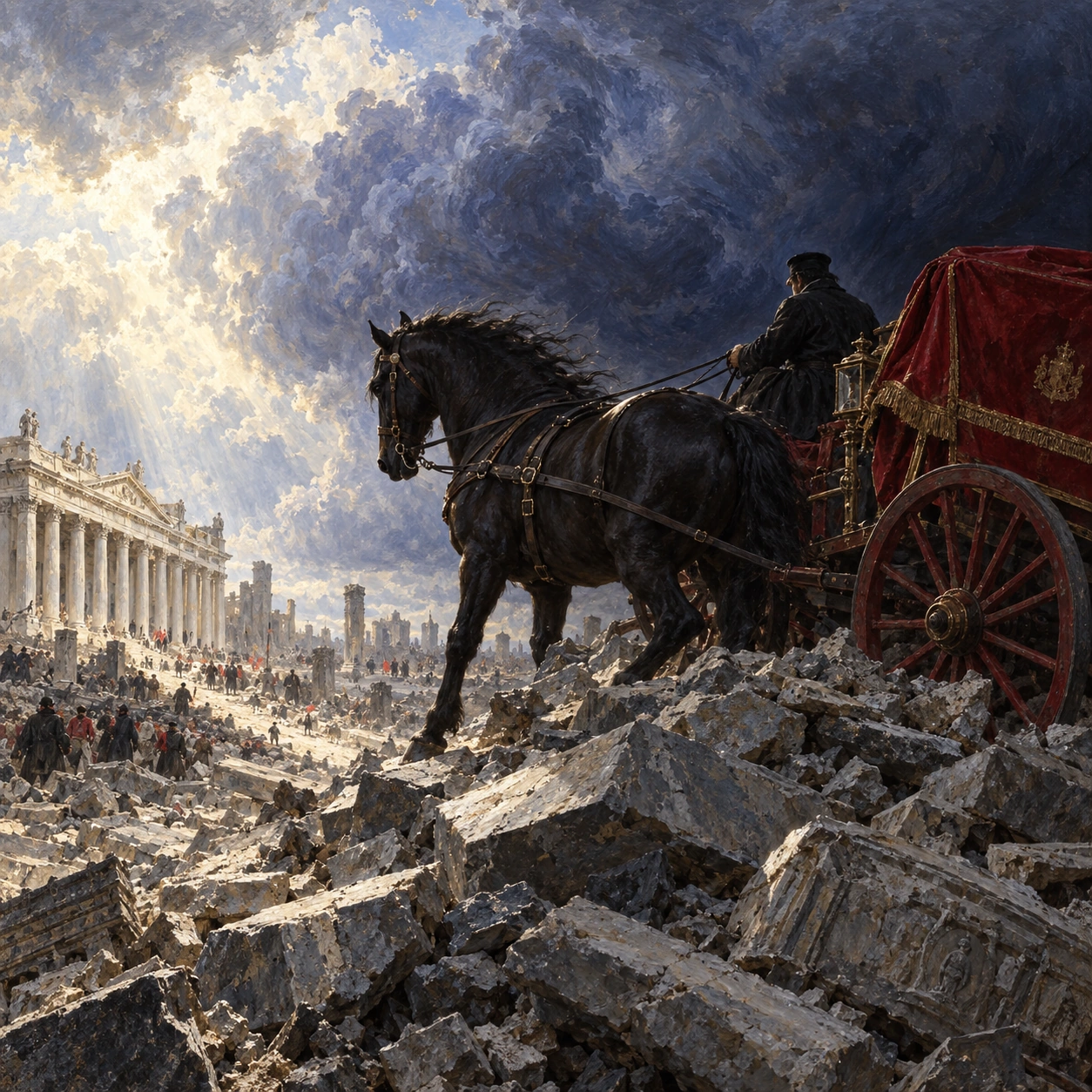 GPT Image 2.5
Reference details
- Reference ID
- 1973
- Category
- Painting
Reference prompts
Style prompt
Narrative oil painting combines carefully modeled foreground forms with broad, vigorous movement in the surrounding atmosphere. Deep blue-violet and charcoal masses occupy a large upper area, cut by luminous cream passages and a concentrated warm red accent. Hard, angled strokes describe broken light and dark planes near the viewer; smaller, busier marks recede into a textured middle distance. Contours are crisp around the nearest dark silhouette but dissolve into clustered strokes where the scene grows crowded. Strong directional light strikes pale edges from one side and leaves deep cool pockets between forms. A low viewpoint and a diagonal route through the composition connect an imposing near scale to a distant focal opening. The overall finish is dramatic, tactile, and restless, with light and brush direction driving the sense of motion.Full example prompt
The image is a square historical narrative painting of a dark horse and a red covered carriage crossing a mound of broken stone beneath a turbulent sky. On the left, a pale classical building with a long row of white columns stands beyond a chaotic stretch of rubble and small distant figures. A narrow path of light cuts diagonally through the shattered ground toward that building. Above it, towering cream-white clouds swell into a dense blue-violet storm mass that sweeps across the upper right. Near the center, the black horse stands in profile facing left, one front leg lower on the uneven stones and its windblown mane lifting from the neck. A driver in dark clothing sits behind the horse, turned partly away from the viewer, holding the reins over the animal's back. On the right, the carriage rises behind the driver, with a deep crimson fabric cover, gold trimming, wooden frame, and a large spoked wheel partly hidden by the horse and rocks. Gray slabs and jagged fragments fill the bottom edge, their angled planes catching white light while deep blue-gray gaps mark the uneven footing. Farther left, the ground remains crowded with smaller dark forms and scattered warm red notes, but the horse and carriage hold the closest and clearest shapes. Strong light from the left breaks through the cloud bank, brightening the columns, pale debris, and the top edges of the horse while the approaching storm keeps the right side dark. The paint is tightly modeled around the animal and carriage, then loosens into energetic curved strokes across the sky and a multitude of broken touches in the distant ground. The viewpoint is low enough to make the horse and cart loom above the foreground stones, yet the receding path keeps the background readable. The overall composition sets a sharp dark silhouette and red accent against a huge, restless sky, giving the passage across ruined ground a dramatic forward tension.