
Styles
#1975
Thomas Schaller style reference and prompts
Explore the “Thomas Schaller” reference with pooled pigment and washes, negative space, and cool blue-gray tones. View the images, copy the style or example prompt, and discover related styles on Looksift.
Compare the Qwen Image 2.1 and GPT Image 2.5 examples, choose the visual qualities you want, and copy the style prompt for your own project.
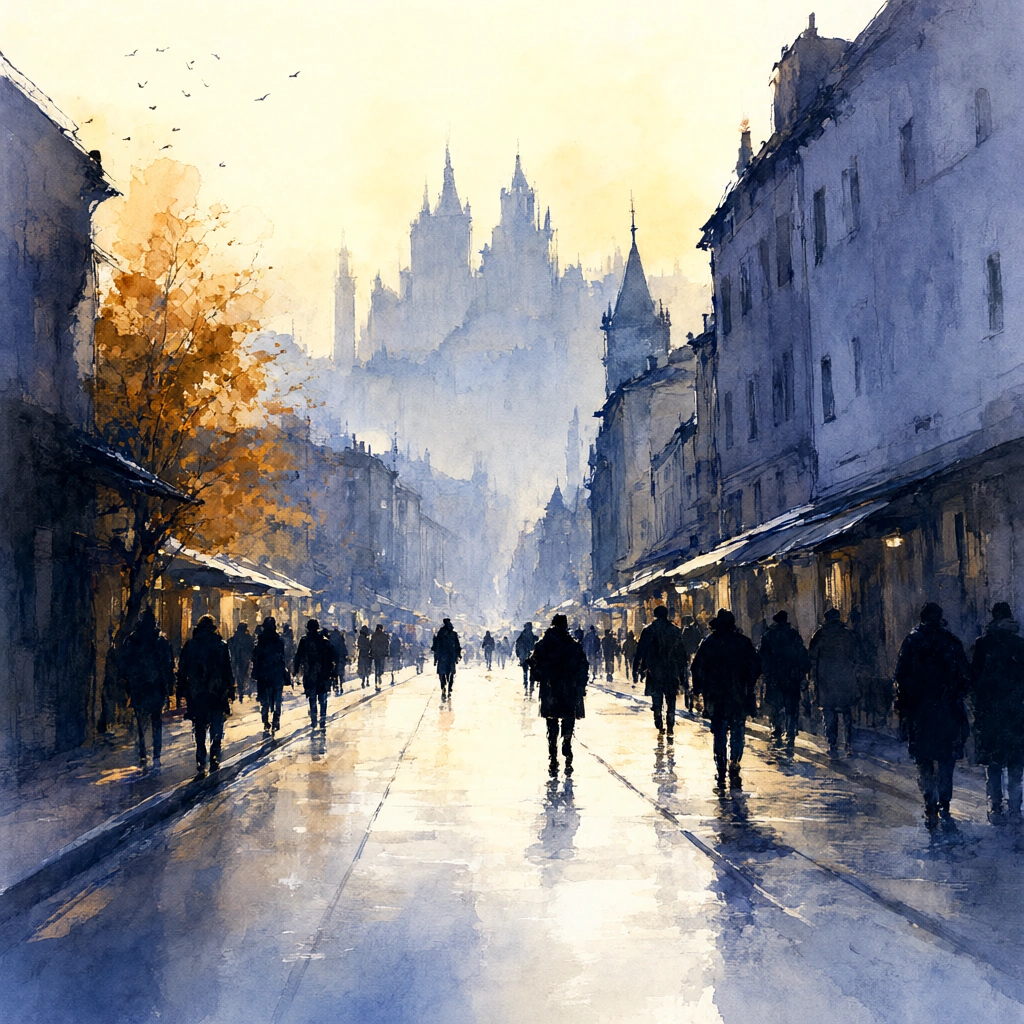 Qwen Image 2.1
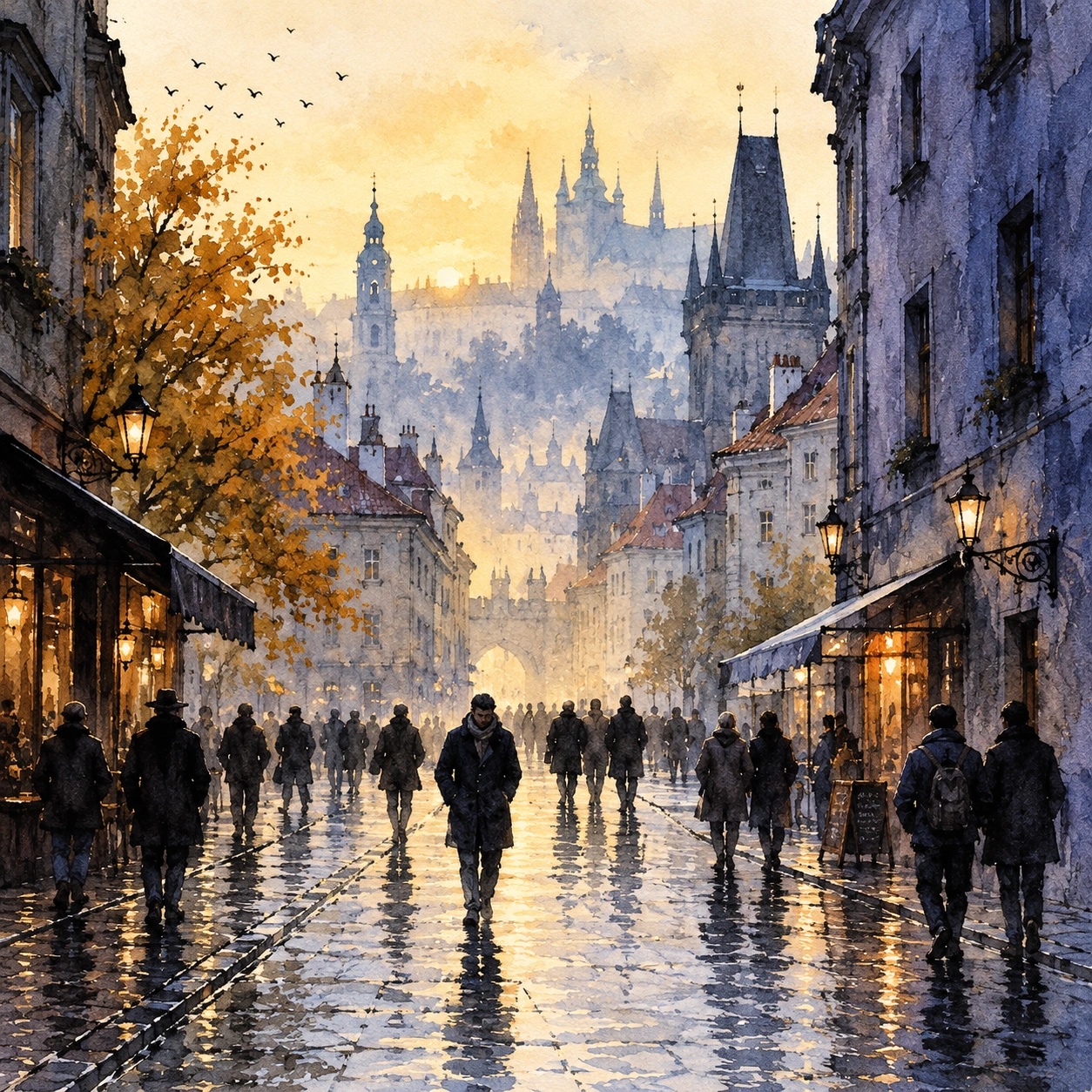 GPT Image 2.5
Reference details
- Reference ID
- 1975
- Category
- Painting
Reference prompts
Style prompt
The watercolor treatment combines large transparent blue-gray washes with selective dark linear accents and small concentrations of amber. Broad pale areas remain open, while darker vertical strokes gather around the sides and lower portion to establish depth. Pigment blooms and diffused edges make distant layers recede into haze; closer forms retain firmer broken contours. Thin dragged marks and diluted reflections extend downward across a smooth, light-toned plane, giving the composition a luminous base. Cool violet, slate blue, and charcoal dominate, with warm ocher and gold placed sparingly as points of visual temperature. The light appears low and diffused through mist, so highlights spread across broad areas rather than forming hard glossy spots. Repeated upright shapes are balanced by a central corridor of negative space and long horizontal roof rhythms. The image feels fluid, atmospheric, and quietly structured through value contrast more than exact detail.Full example prompt
A square watercolor cityscape shows pedestrians moving along a wet street toward a hazy cluster of old towers. The upper background is a warm pale wash, opening into soft yellow light behind blue-gray silhouettes of distant roofs and spires. Small dark birds scatter across the bright upper left. At mid-height, steep roofs and narrow facades descend along both sides of the street, their perspective lines drawing inward to a light opening in the center. The nearest building on the right is a tall cool blue-violet wall with sparse dark window marks; beneath it, slanted awnings and small warm lamps meet the sidewalk. On the left, a darker facade and projecting awning frame a tree whose autumn foliage is painted in loose ocher and amber washes. Further back, layered structures fade into mist, with a slender tower visible left of center and a darker pointed turret nearer the right. Groups of pedestrians occupy the lower middle and side edges. They are suggested mostly by dark coats, heads, and legs, with few facial details; one central figure walks toward the viewer while others gather or move away. The broad street is pale and glossy, carrying long cool blue reflections and narrow dark lines that stretch down from the figures. Watercolor blooms soften distant forms, while sharper ink-like strokes pick out roof edges, windows, awnings, and the closest silhouettes. Low warm light pours from the far end of the street, brightening the wet pavement and leaving the foreground people as nearly black shapes. The overall composition combines a strong central route, dissolving architectural depth, and restrained amber warmth inside a cool blue-gray city.