
Styles
#1990
Jan Mankes style reference and prompts
Explore the “Jan Mankes” reference with velvety grain, pale neutral tones, and a matte finish. View the images, copy the style or example prompt, and discover related styles on Looksift.
Compare the Qwen Image 2.1 and GPT Image 2.5 examples, choose the visual qualities you want, and copy the style prompt for your own project.
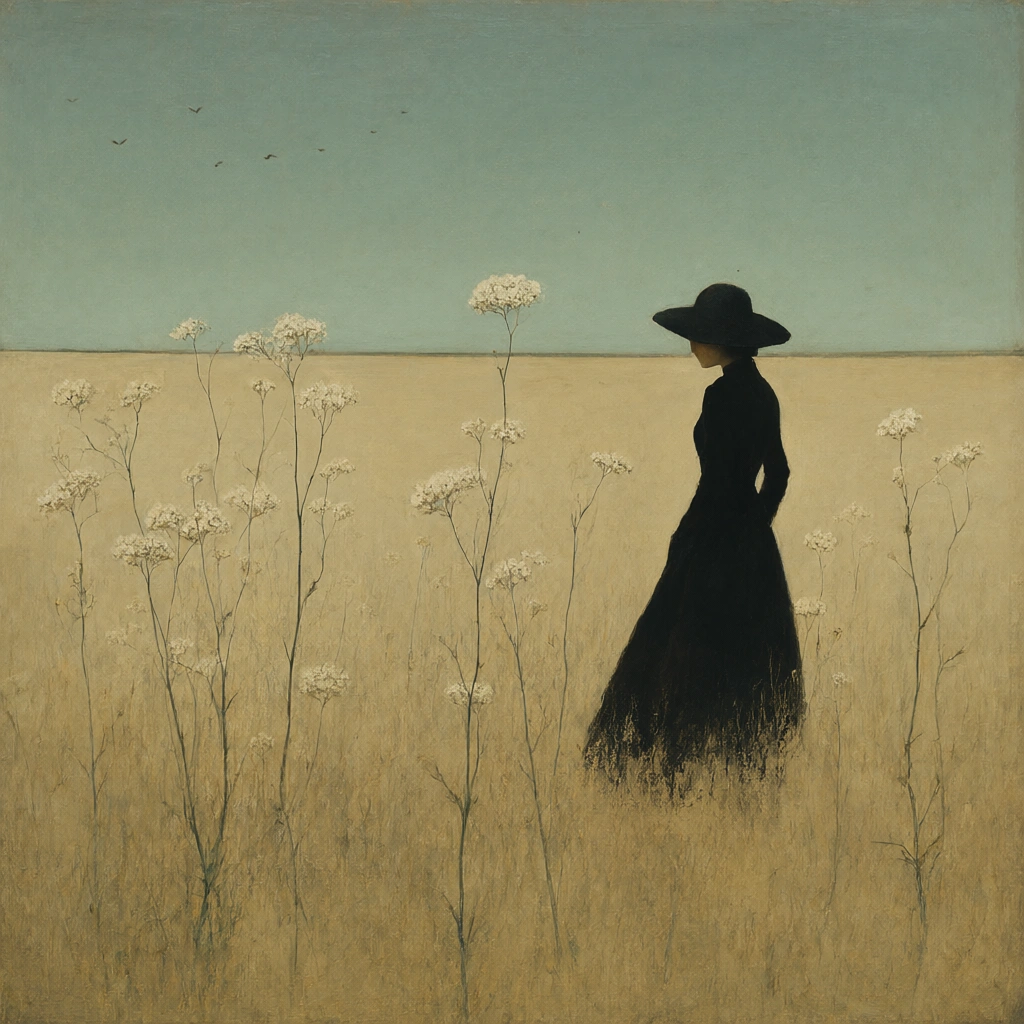 Qwen Image 2.1
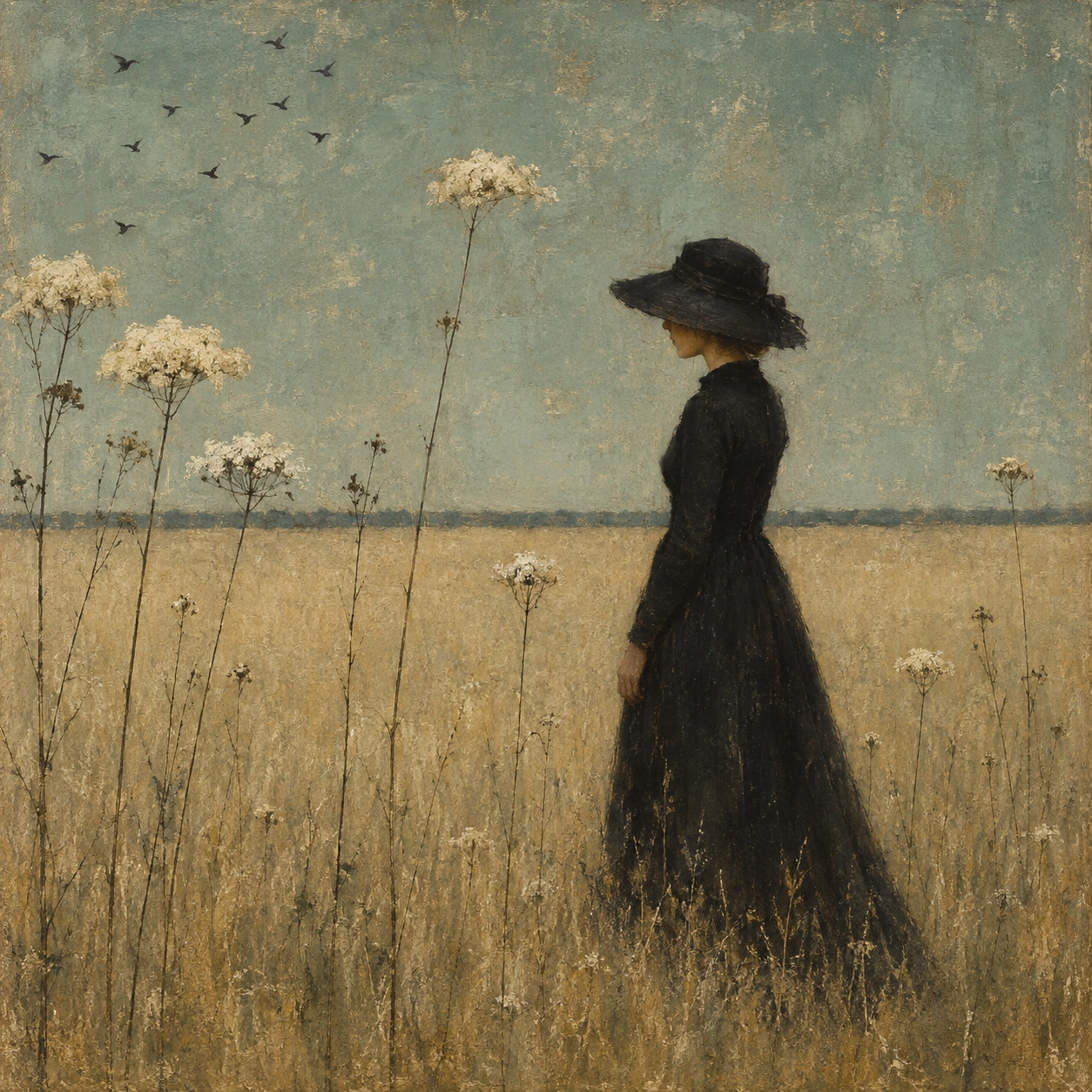 GPT Image 2.5
Reference details
- Reference ID
- 1990
- Category
- Painting
Reference prompts
Style prompt
The painted surface uses a restrained range of dusty blue-green, warm sand, faded cream, and concentrated near-black. Broad matte color fields are gently mottled rather than smoothly graded, retaining a worn, velvety grain. A long horizontal division steadies the frame, while very thin vertical marks rise at uneven intervals through a large open lower area. One compact dark mass supplies the strongest contrast and visual anchor; its bottom edge dissolves into surrounding texture instead of being outlined throughout. Small pale accents sit high on the thin marks and remain widely separated, giving the eye measured pauses. Illumination is diffuse and quiet, with almost no hard cast shadow or brilliant highlight. Spatial depth stays shallow because distant and near areas share muted value, yet overlap and soft edge loss preserve an atmospheric sense of place. The overall effect is spare, still, and slightly enigmatic, with balance coming from contrast between open fields and a single weighted form.Full example prompt
A square muted oil painting shows a solitary woman in dark dress standing among tall pale flowers in a quiet field. The horizon runs straight across the frame just below the middle, separating a dusty blue-green sky from a warm beige expanse of grass. The sky is softly mottled, with small dark birds scattered in its upper left. Thin flower stems rise at irregular intervals from the lower edge. Several pale cream clusters gather on the left, one taller bloom stands near the upper center, and a few smaller heads appear beside the figure and toward the right edge. Their long stems are drawn with almost weightless lines, allowing the field's open space to remain visible between them. Slightly right of center, the woman is seen from the side, facing left. A broad-brimmed dark hat covers much of her face, leaving a narrow warm ocher profile beneath the brim. Her fitted upper garment opens into a long black skirt whose lower edge softens and dissolves among the ocher grasses. One arm rests close to her body; the posture is still, with no visible dramatic gesture. The strong black silhouette is the densest shape in the frame, yet it is surrounded by generous pale ground and widely spaced stems. Color remains subdued: weathered teal above, sand and straw below, cream at the blooms, and near-black in the clothing. Soft even light spreads across the scene without hard cast shadows, while the textured, slightly worn painted surface gives the flat areas quiet variation. The overall composition is sparse and contemplative, using a dark vertical figure to anchor the long horizontal divide and fragile flower rhythms.