
Styles
#2012
Edward Julius Detmold style reference and prompts
Explore the “Edward Julius Detmold” reference with fine linear detail, tactile surfaces, and cool blue-gray tones. View the images, copy the style or example prompt, and discover related styles on Looksift.
Compare the Qwen Image 2.1 and GPT Image 2.5 examples, choose the visual qualities you want, and copy the style prompt for your own project.
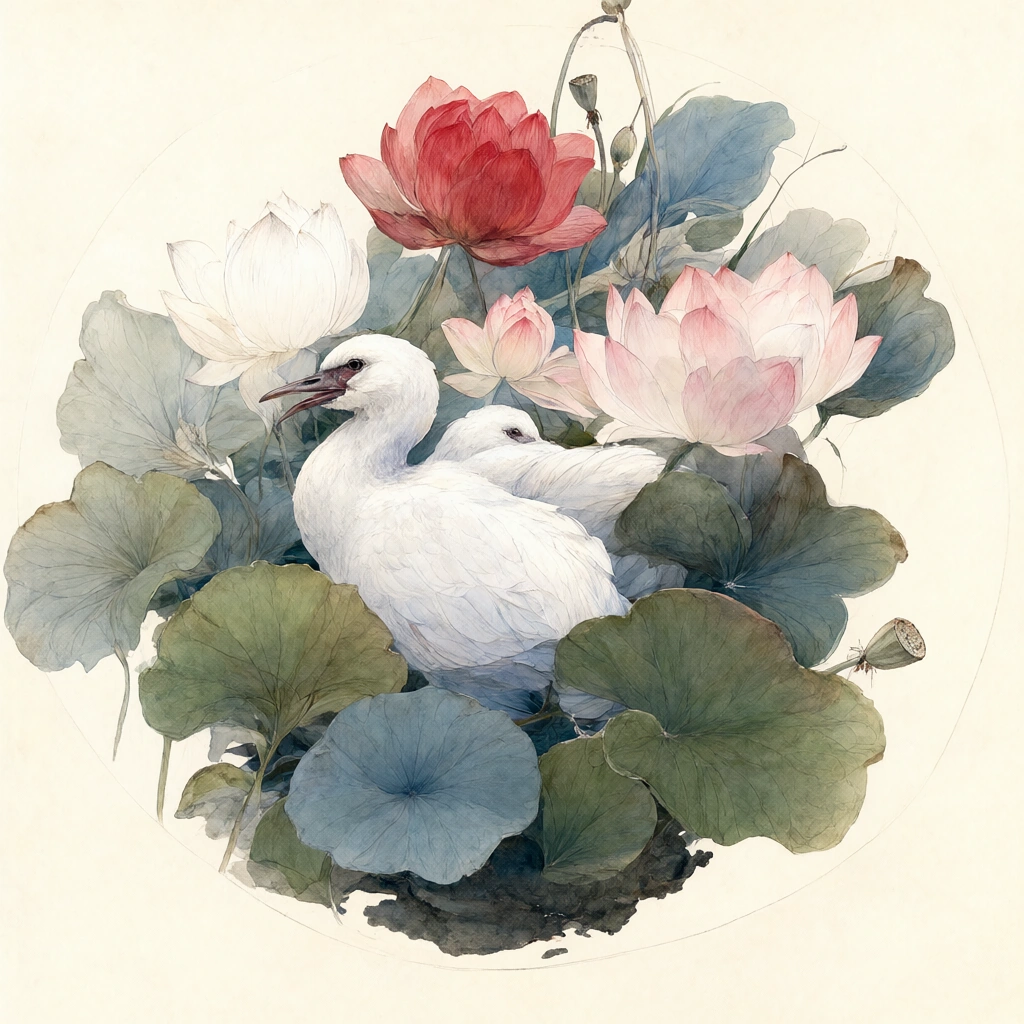 Qwen Image 2.1
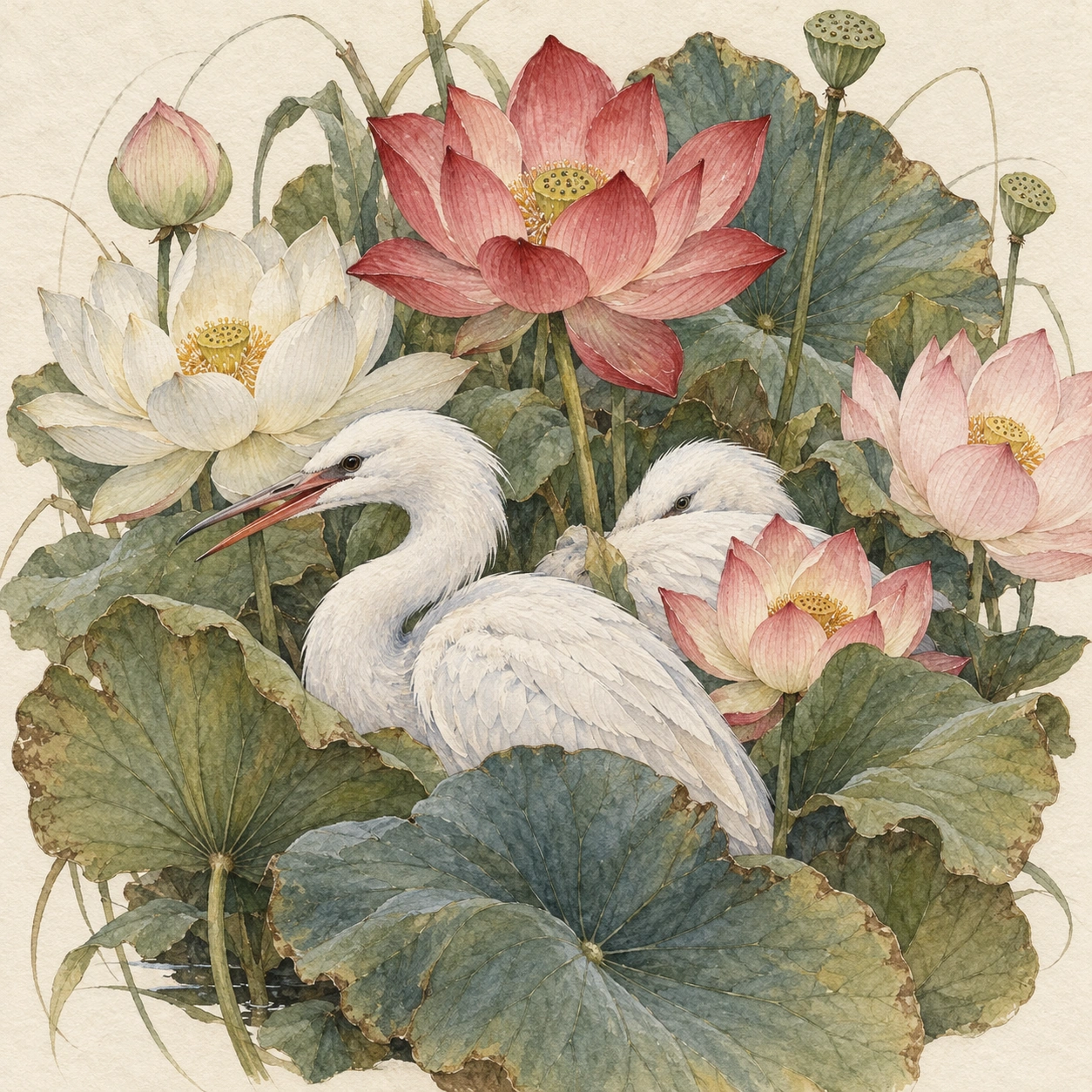 GPT Image 2.5
Reference details
- Reference ID
- 2012
- Category
- Painting
Reference prompts
Style prompt
Watercolor and fine drawing combine transparent layered washes with precise, hairline details on a warm lightly grained ground. Blue-gray and sage green occupy broad overlapping areas, while cream and rose-red accents create a compact luminous center. Rounded forms interlock densely, leaving a narrow pale margin and occasional openings that keep the layers legible. Edges vary from crisp ink-like contours at small features to feathered, pigment-soft transitions across larger washes. Subtle granulation and slight browning at the outer edges give the surface an aged, tactile character. Diffuse light makes pale areas glow gently, with cool shaded pockets between the overlapping layers rather than hard cast shadows. The overall treatment is intricate, calm, and delicately colored, relying on measured detail within a dense organic rhythm.Full example prompt
The image is a square natural-history watercolor illustration of white water birds nestled among broad leaves and pink lotus blossoms on warm cream paper. The page background remains pale and lightly textured, with faint curved linework visible around the outside of the dense central growth. In the upper center, a large layered red-pink lotus flower rises above the group, its translucent petals darkening toward their folded bases. A broad blue-green leaf sits behind it at the upper right, while upright seedpods and slender stems extend toward the top edge. On the left, a large white bloom and a closed round bud glow softly against overlapping gray-green leaves. At the far right, a pale pink bloom opens beside another dark-edged leaf, and a smaller pink-and-cream flower sits just above the birds. In the lower middle, two white water birds rest close together among the foliage. The left bird shows a long curved neck, dark eye, and a partly open reddish bill pointing left; its white feathers carry fine gray contours and soft blue shadows. The second bird is partly hidden by blossoms and leaves, its head and folded wing visible behind the first. Large rounded leaves fill the lower foreground, including a blue-gray disc near the center and several olive-green forms with dark veins and softly browned edges. Shallow water or dark ground appears only in small fragments beneath them, so the scene reads as a clustered study rather than a wide landscape. Diffuse daylight from above and left warms the pale petals and bird feathers, while the folds between leaves retain cool gray-green shade. Delicate pencil-like lines define stems, veins, beaks, and petal edges; transparent color washes and subtle paper grain soften the broader areas. The arrangement is dense in the center but leaves small pale margins around the growth. The overall composition balances white feathers and blossoms with red-pink accents and cool broad leaves, creating a quiet, intricate study of overlapping natural forms.