
Styles
#2072
Edward Henry Potthast style reference and prompts
Explore the “Edward Henry Potthast” reference with broken brushwork, warm and cool tones, and sunlit contrasts. View the images, copy the style or example prompt, and discover related styles on Looksift.
Compare the Qwen Image 2.1 and GPT Image 2.5 examples, choose the visual qualities you want, and copy the style prompt for your own project.
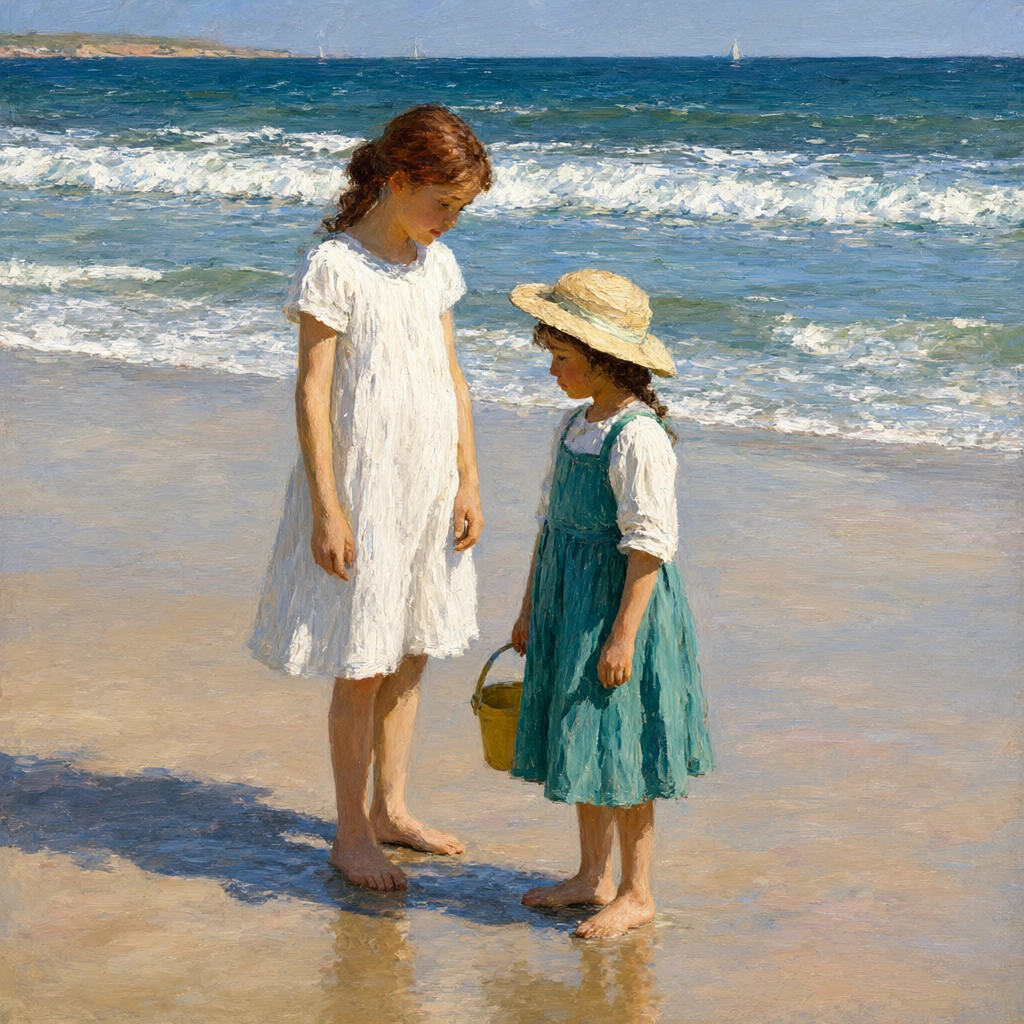 Qwen Image 2.1
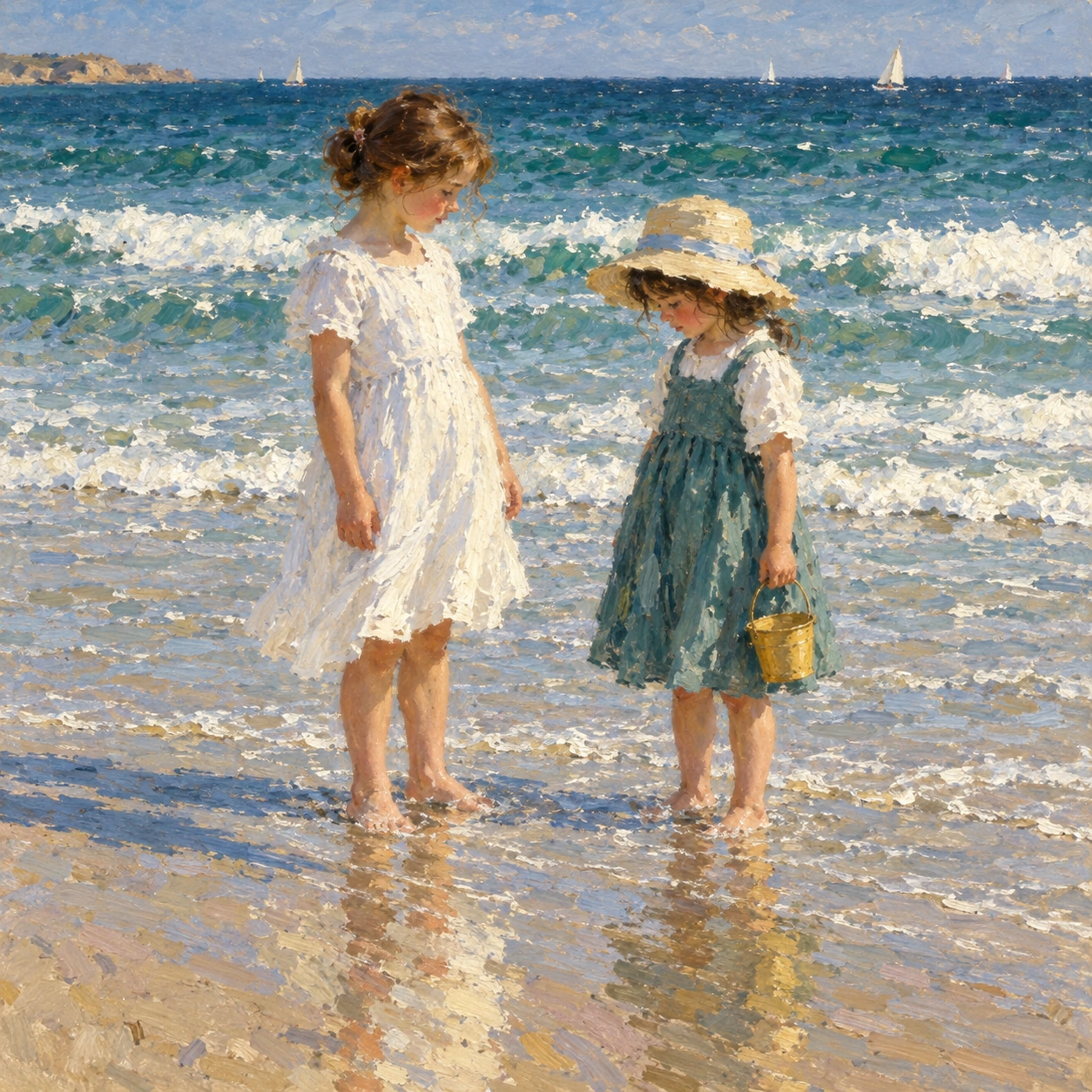 GPT Image 2.5
Reference details
- Reference ID
- 2072
- Category
- Painting
Reference prompts
Style prompt
Impressionist oil painting uses short broken strokes to join bright, airy light with a firm horizontal structure. Deep teal and blue bands occupy the distance, while pale cream, warm sand, and turquoise widen toward the front. White accents collect along one active middle strip, their rough edges suggesting movement without intricate linework. Rounded focal forms are legible through warm-cool contrast, but their contours soften at neighboring light areas. Direct high-side sunlight creates crisp small contact marks and longer cool shadows over reflective lower planes. Brushwork alternates between quick horizontal marks and broader, quieter patches, keeping the surface lively but readable. The overall effect is breezy, sunlit, and gently intimate, with reflected color carrying much of the depth.Full example prompt
The image is a square impressionist oil painting of two barefoot girls standing in shallow surf on a bright beach. A narrow strip of blue-gray sky runs along the top above a dark teal sea, with tiny pale sail shapes and a low warm headland near the far left horizon. White breakers roll horizontally through the middle, separating the distant deep water from the thin wash around the children. The wet sand fills the lower half in warm beige, gray-blue, and pale rose, with a faint mirror sheen beneath their feet. The taller girl stands on the left, her red-brown hair gathered at the back of her head. She wears a loose white dress with short sleeves and a softly uneven hem, and she looks down toward the other girl while keeping her arms relaxed at her sides. On the right, the shorter girl wears a straw hat with a broad pale brim over dark hair, a white blouse, and a teal-green pinafore dress. She faces slightly left with her head lowered, holding a small round yellow pail at one side. Both figures stand close enough to converse but leave a narrow strip of reflective water between them. Their bare feet make dark contact marks in the wet sand; long blue-gray shadows extend to the lower left from the stronger sunlight. The moving water around their ankles is described by quick horizontal white, turquoise, and gray strokes, while the broad sand takes smoother, broken patches of color. Sunlight comes from the upper right, brightening the white dress, straw hat, and wave crests and warming the girls' faces and legs. The forms are carefully readable but not sharply outlined, with edges softening where pale clothing meets the foam. The eye-level viewpoint gives the children a modest central scale beneath the wide sea bands. The overall composition pairs an intimate quiet exchange with open blue water, using bright white, turquoise, and warm sand to convey a breezy seaside afternoon.