
Styles
#2123
What We Do In The Shadows style reference and prompts
Explore the “What We Do In The Shadows” reference with ink contours, exposed paper, and pale neutral tones. View the images, copy the style or example prompt, and discover related styles on Looksift.
Compare the Qwen Image 2.1 and GPT Image 2.5 examples, choose the visual qualities you want, and copy the style prompt for your own project.
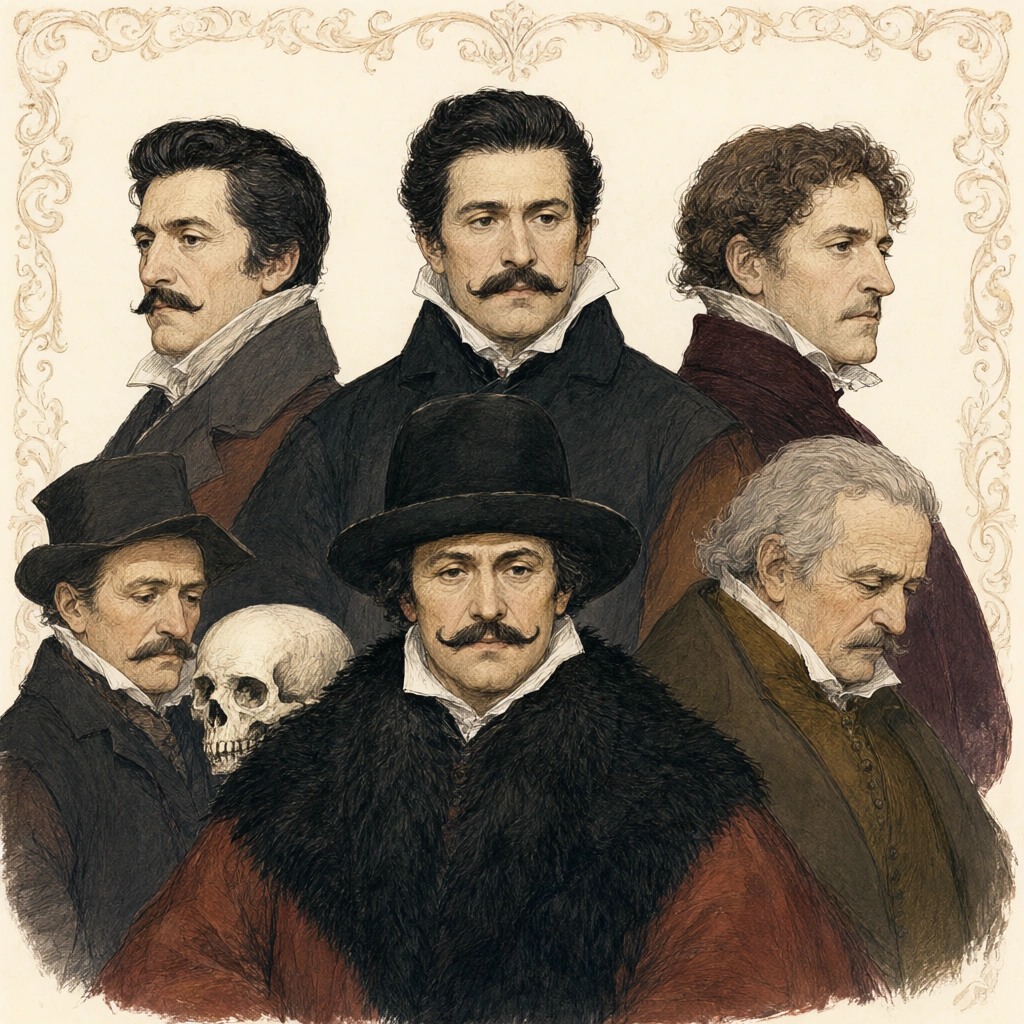 Qwen Image 2.1
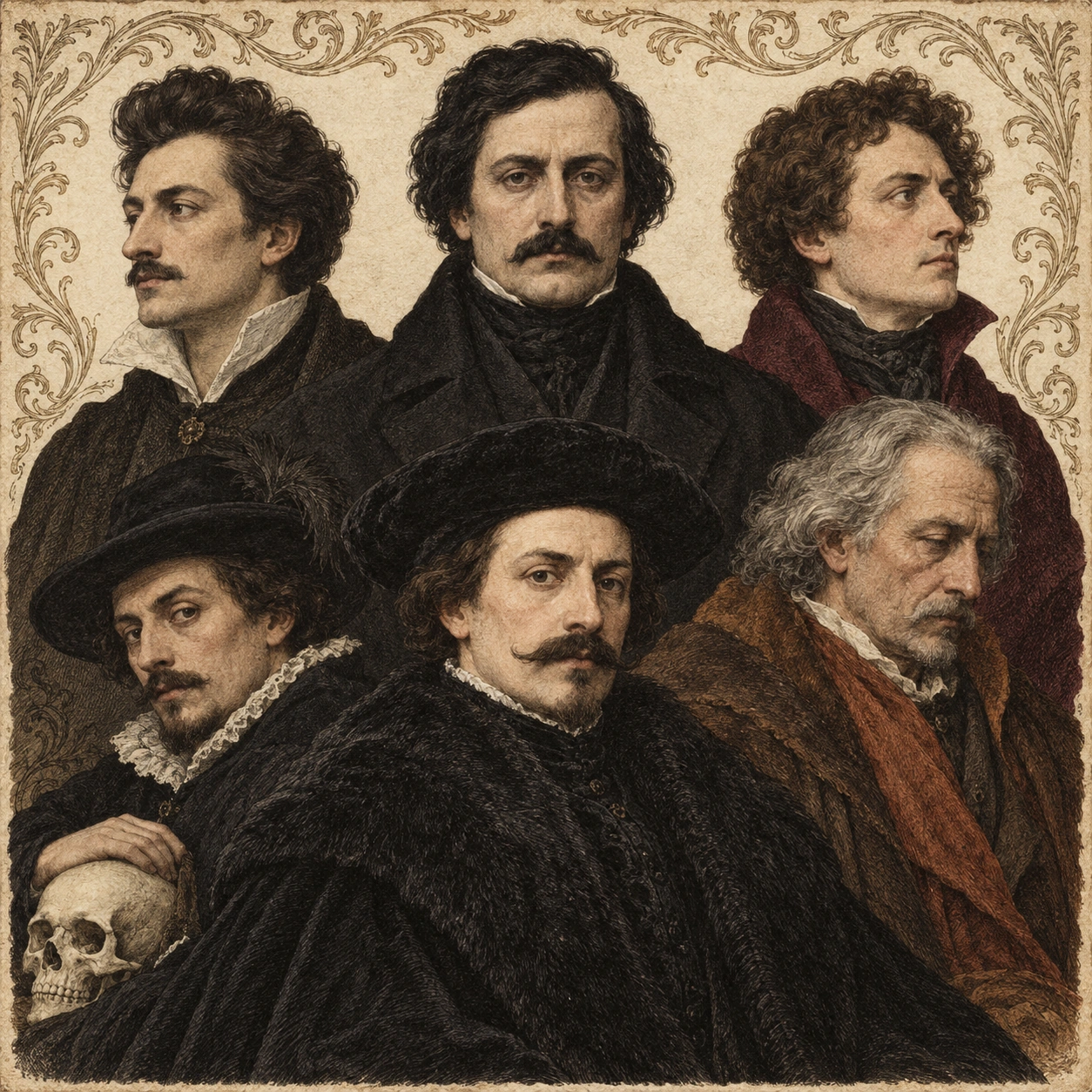 GPT Image 2.5
Reference details
- Reference ID
- 2123
- Category
- Ink & line
Reference prompts
Style prompt
Antique-looking illustration combines precise brown ink contours, tight directional hatching, and restrained watercolor-like fills on warm cream paper. Deep charcoal and umber shapes overlap in a compact tiered arrangement, with russet and burgundy accents interrupting the dark field. Pale openings appear in small separated patches and create the main light rhythm. Fine scrolling ornament frames the denser central forms without becoming a hard graphic border. Edges are carefully drawn yet softened by grain, uneven print density, and exposed paper tone. Illumination is diffuse, allowing subtle tonal volume in focal areas while broad dark masses stay comparatively flat. The image feels crowded, theatrical, and archival through layered silhouettes and patient small marks.Full example prompt
The image is a square antique-looking illustrated group portrait of six somber men in dark period clothing. A warm cream ground carries delicate tan scrollwork along the upper edge and around the sides, like the decorative border of an old print. The figures are arranged in overlapping tiers with almost no empty space between their shoulders. Three stand across the upper row: at left a dark-haired man with tall swept hair and a narrow mustache faces left in a high pale collar; at center a black-haired man with a thick mustache looks straight ahead from a broad black coat; at right a curly-haired man turns toward the right in a high burgundy collar. Below them, an older gray-haired man in brown and rust faces down toward the right. A smaller mustached figure in a dark hat stands at lower left beside a pale skull. The frontmost central man wears a rounded dark hat and a heavy black fur-like cape, with a curled mustache and direct gaze. Their coats form a connected wedge of charcoal, umber, and russet across the lower two thirds, while the pale faces and collars create a scattered rhythm of light. The drawing uses fine brown ink-like contours and small directional hatch marks for hair, cloth, wrinkles, and ornament. Muted watercolor or print-like color fills the shapes with slight grain and worn cream paper visible between marks. Light is soft and even, giving the faces clear tonal modeling but no strong cast shadows. The viewpoint is frontal at bust height, emphasizing heads, collars, and layered silhouettes over any physical setting. The whole composition reads as a crowded historical character plate, balanced by its restrained palette, decorative border, and carefully varied poses.