
Styles
#2133
Alexandre Deschaumes style reference and prompts
Explore the “Alexandre Deschaumes” reference with cool blue-gray tones, tonal contrast, and warm highlights. View the images, copy the style or example prompt, and discover related styles on Looksift.
Compare the Qwen Image 2.1 and GPT Image 2.5 examples, choose the visual qualities you want, and copy the style prompt for your own project.
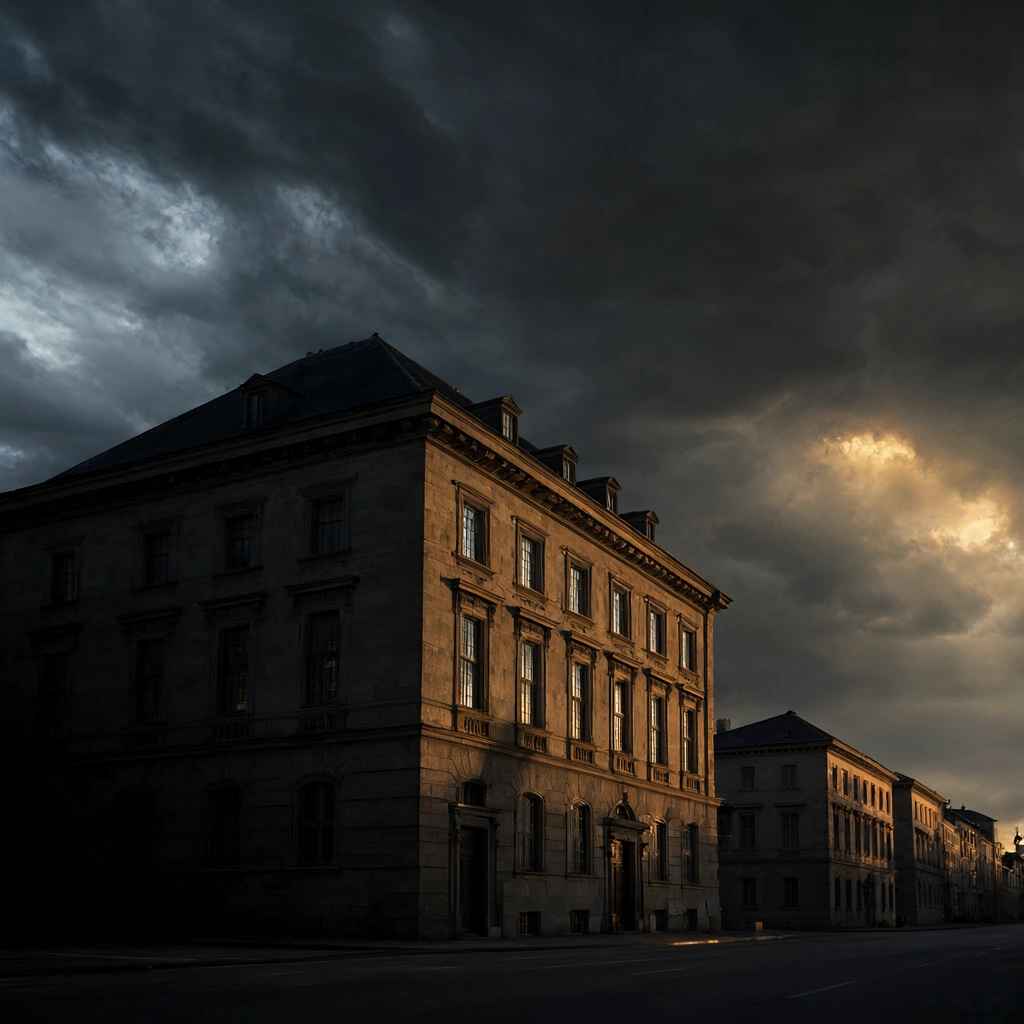 Qwen Image 2.1
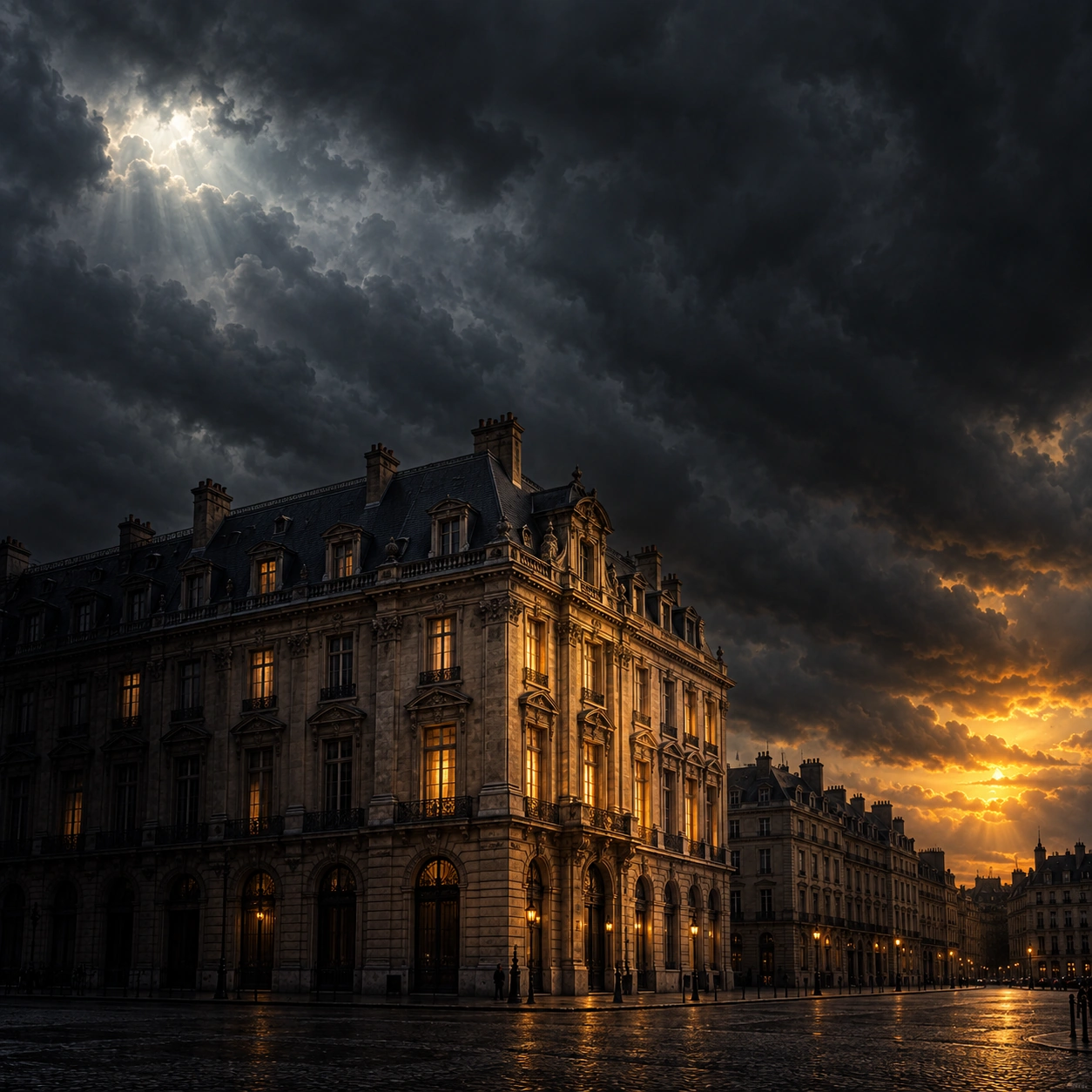 GPT Image 2.5
Reference details
- Reference ID
- 2133
- Category
- Photography
Reference prompts
Style prompt
The image has a dark cinematic photographic finish with a wide tonal range concentrated in a few selectively illuminated passages. Charcoal and blue-gray dominate broad upper and side areas, interrupted by small amber-gold breaks. Crisp repeated linear details anchor the lower field, while soft turbulent masses sweep across the upper field. Light grazes exposed planes and windows, leaving adjacent surfaces to fall rapidly into shadow. Edges range from sharply defined in the lit region to almost unreadable in dark haze. A low visual horizon grants most of the frame to atmosphere, making small grounded forms feel vulnerable beneath the larger movement. Fine environmental texture survives in the highlights, but broad shadow areas remain simple. The spatial mood is deep yet compressed by weather, with distant layers partially obscured. The overall effect is somber and suspenseful, built from restrained warm light, vast cool darkness and a strong contrast between stable geometry and shifting air.Full example prompt
A square cinematic city image places a large ornate stone building across the lower left and center beneath an immense dark storm sky. The building rises several stories, with rows of tall windows, carved surrounds, a steep roof and small dormers. Its left wing fades into deep shadow, while the projecting corner and right facade catch a warm amber glow. Several windows shine more brightly, making the illuminated stone appear to stand out from the murky surroundings. A smaller block of similarly aged buildings recedes down the street on the right. The street at the base is broad and nearly empty, with only tiny dark shapes near the entrances. Overhead, charcoal and slate clouds twist into a heavy layered canopy. A dim opening near the upper left releases a cold patch of light, while a brighter yellow-orange gap glows low on the right. The building occupies less than half the height of the frame, so the weather feels far larger than the built scene. Detailed window rhythm and cornices provide crisp vertical and horizontal structure beneath the more fluid cloud shapes. The illumination is sharply selective: exposed parts of the facade glow, but roof slopes, left wall and street remain almost black. Fine haze and deep tonal falloff reduce detail away from the lit corner. The palette is limited to blue-gray, charcoal, brown stone and small bands of orange-gold. The composition holds the architecture as a grounded, still anchor while the sky gathers turbulent movement above it. The whole view is dramatic and quiet, suggesting a brief, unstable interval of light before rain.