
Styles
#2180
Helene Schjerfbeck style reference and prompts
Explore the “Helene Schjerfbeck” reference with scratch-like marks, soft tonal transitions, and negative space. View the images, copy the style or example prompt, and discover related styles on Looksift.
Compare the Qwen Image 2.1 and GPT Image 2.5 examples, choose the visual qualities you want, and copy the style prompt for your own project.
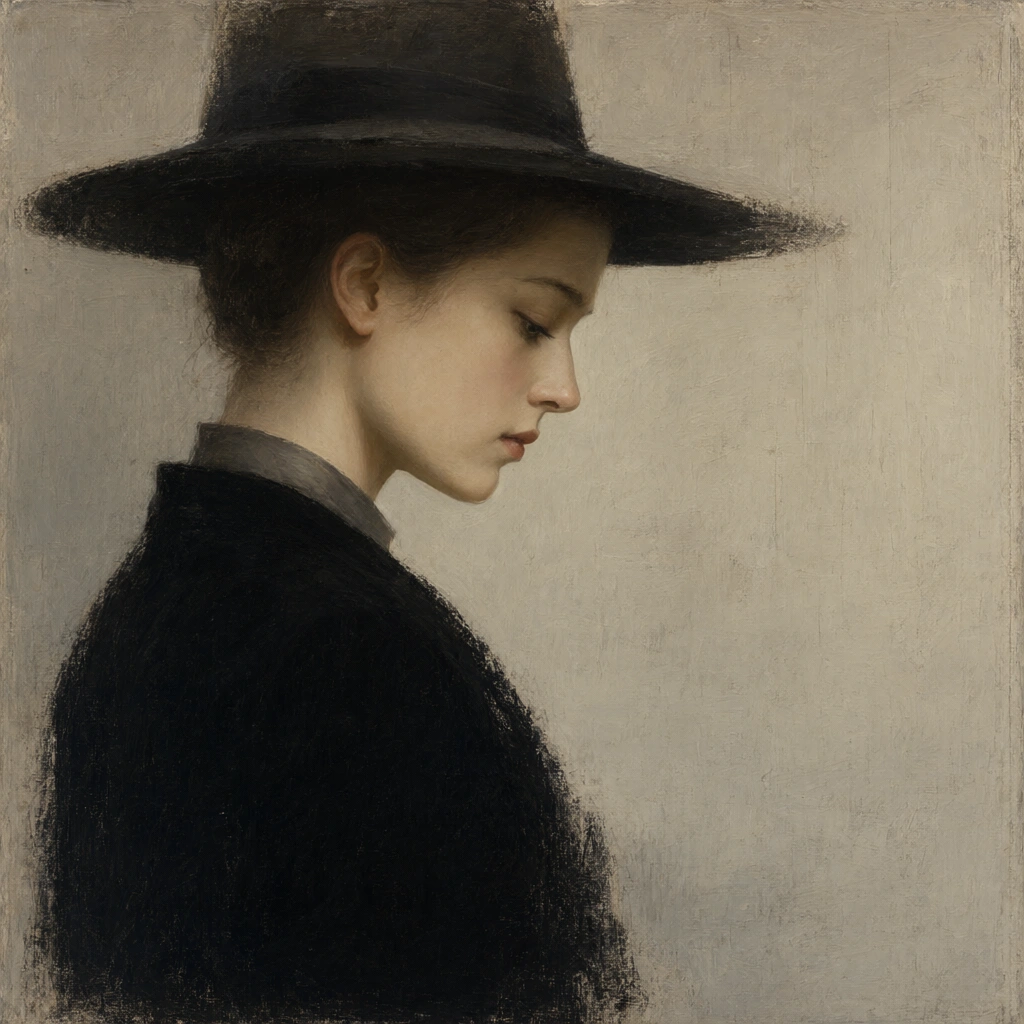 Qwen Image 2.1
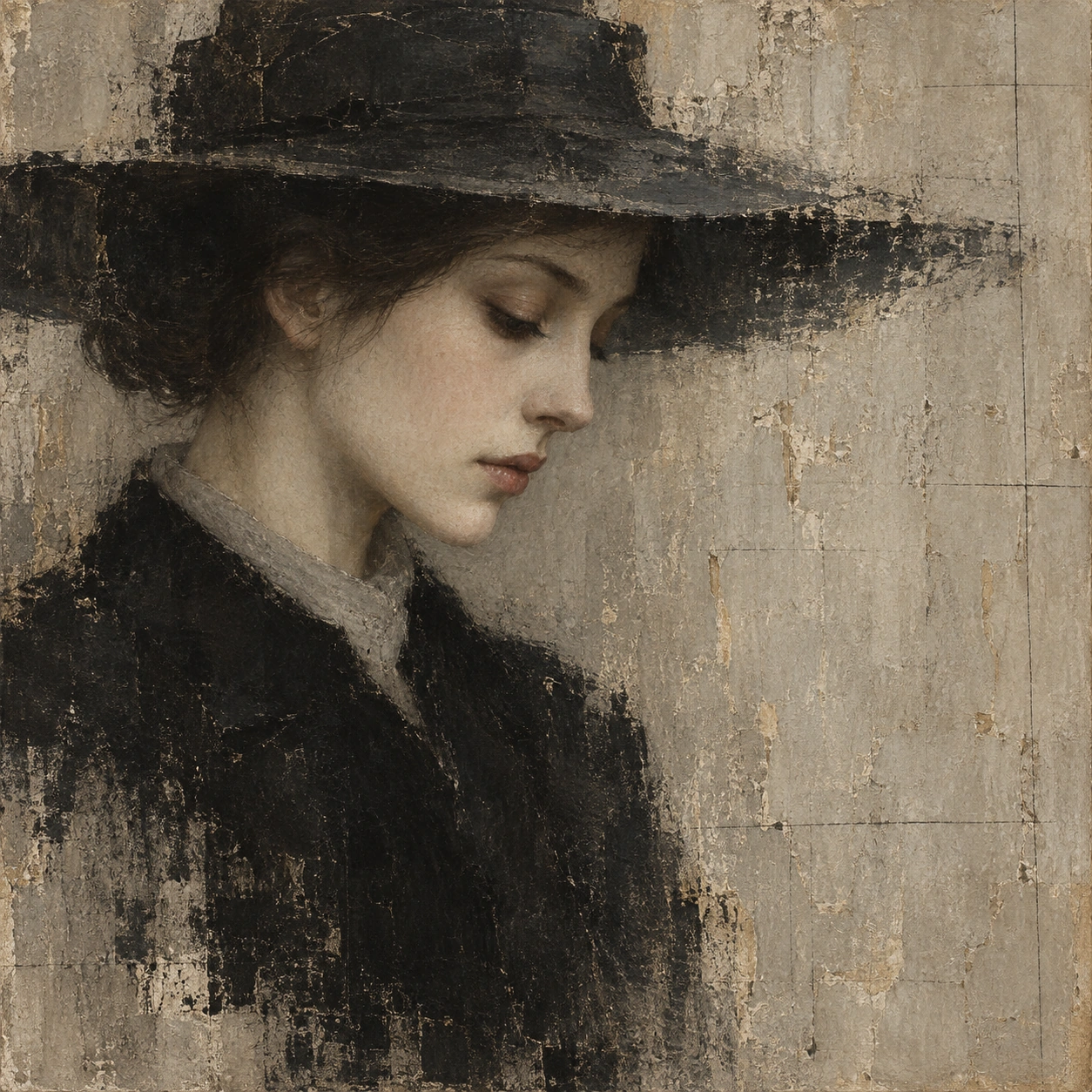 GPT Image 2.5
Reference details
- Reference ID
- 2180
- Category
- Painting
Reference prompts
Style prompt
The style is restrained tonal painting in which a softly modeled focal passage emerges from dry, abraded layers. Bone white, taupe, warm gray and charcoal form a narrow low-saturation palette. Broad dark masses fade at their edges, while a few delicate contours remain exact. Vertical scratches, rubbed patches and exposed support register process without becoming decoration. An off-center arrangement and generous pale negative space deepen the sense of quiet inwardness. Light is diffused and selective, lending the image a remembered quality.Full example prompt
A square painted portrait shows a woman in a wide, dark hat turning her head down and to the right. Her eyes are lowered, and a softly lit pale profile emerges from a warm gray-beige wall. A black jacket forms a broad dark shape below the face; a slender gray collar separates it from the neck. The hat brim sweeps horizontally across the upper third of the frame, with its far edge dissolving into the wall's thin, scratched texture. There is little descriptive detail in the clothing or setting. Instead, the image concentrates on the delicate transition from forehead to nose, lips and chin. The wall carries vertical scraping, faint ruled marks and patches where one layer seems rubbed away to reveal another. The lower jacket is similarly incomplete, with edges fading into a dry black scumble. Colors stay close to bone white, warm gray, taupe and charcoal. A muted light grazes the face, giving it a luminous stillness amid the worn surface. The figure occupies the left and central portions of the square, while the empty right field gives her downward gaze space. The portrait feels private, almost like a recollection: its recognizable features remain precise enough to hold attention, but the body and room retreat into unfinished paint, scratches and silence.