
Styles
#2302
Charles Ginner style reference and prompts
Explore the “Charles Ginner” reference with tactile surfaces, cool blue-gray tones, and pale neutral tones. View the images, copy the style or example prompt, and discover related styles on Looksift.
Compare the Qwen Image 2.1 and GPT Image 2.5 examples, choose the visual qualities you want, and copy the style prompt for your own project.
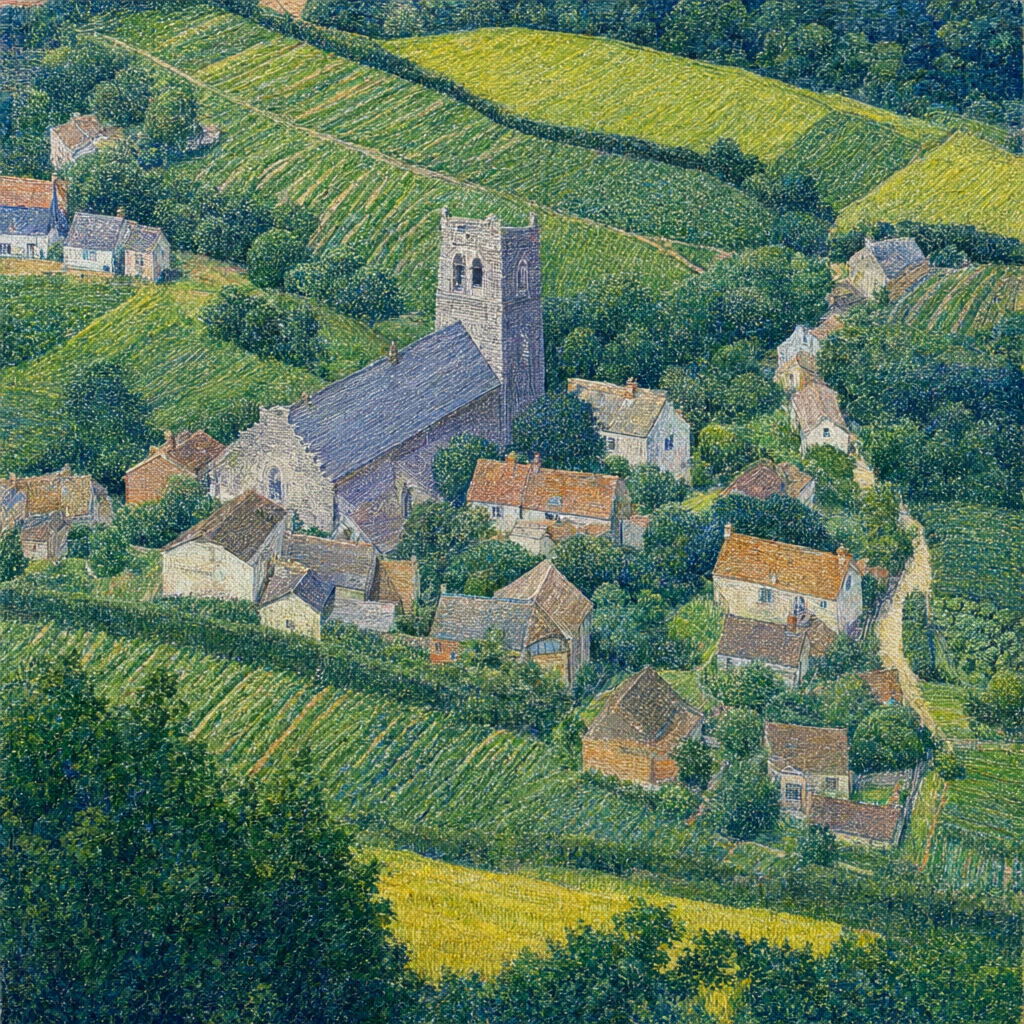 Qwen Image 2.1
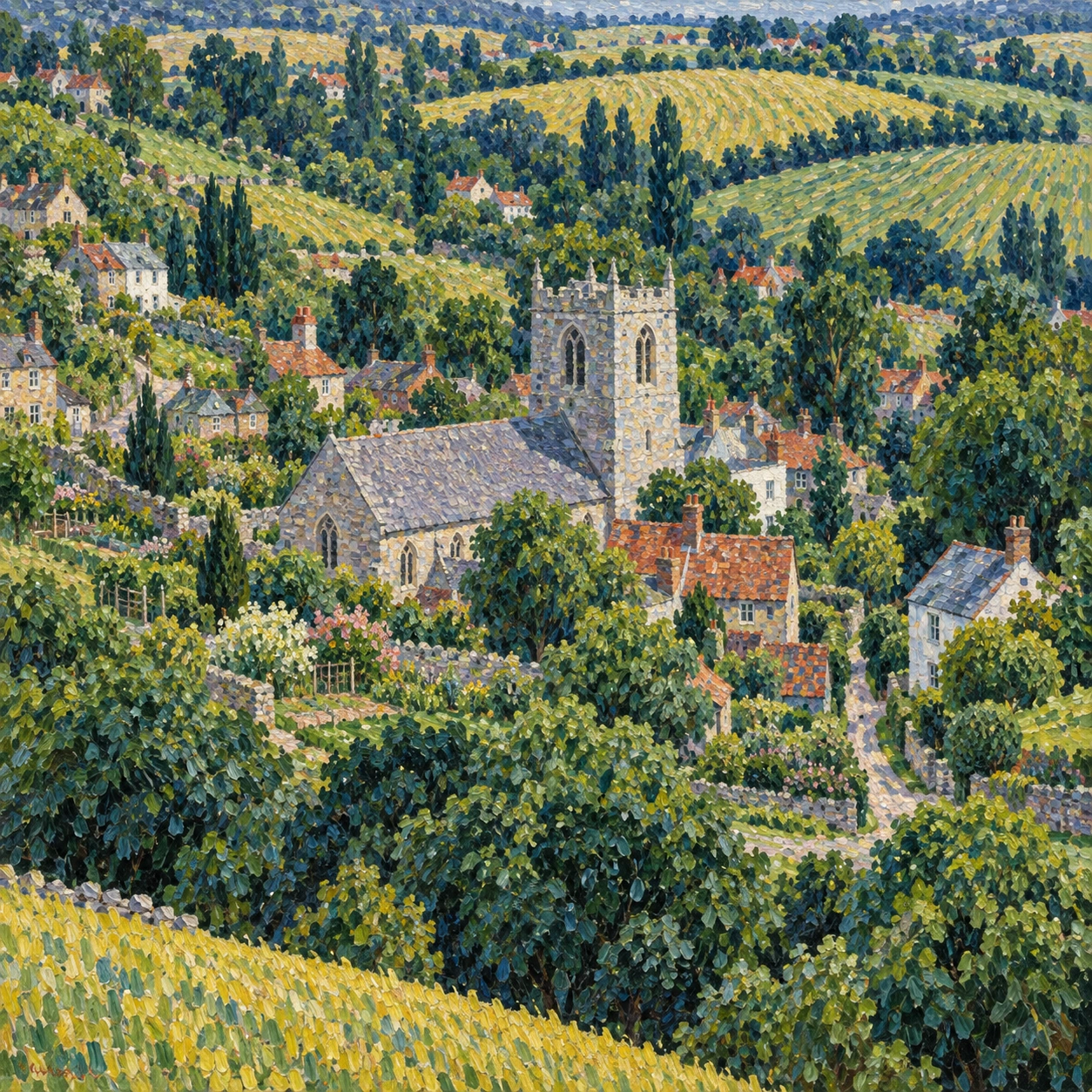 GPT Image 2.5
Reference details
- Reference ID
- 2302
- Category
- Painting
Reference prompts
Style prompt
The painted surface is constructed from short, closely packed strokes and small dabs of oil color, creating a granular, gently vibrating texture. Interlocking green, yellow-green, blue-green, warm brick red, cream, and cool gray areas make a dense but legible color mosaic. Rounded masses repeat at different scales, while slanted bands and compact angular shapes direct the eye through the frame. Edges emerge from adjacent shifts in hue and value rather than continuous hard contour lines; individual marks remain visible inside the larger forms. Clear daylight brightens upper planes, with saturated blue-green darks collecting in recessed areas and between overlapping masses. The space feels deep through stepped planes and a high viewpoint, yet its tight patterning keeps the surface strongly decorative. The effect is lively, orderly, and tactile.Full example prompt
A square oil-painted landscape presents a compact village gathered around a gray stone church amid densely patterned green hills. The view looks downward across an intricate patchwork of sloping fields, narrow paths, cottages, gardens, and closely packed trees. In the upper distance, yellow-green farmland curves around a dark hedgerow, while small red and pale roofs peek through deep blue-green foliage. Near the center, the church tower rises above surrounding houses, its arched openings and stone courses picked out in pale gray and muted lavender. The broad church roof angles down toward the lower left, and neighboring white walls and warm brick roofs break up the green masses around it. On the left side, smaller houses step down the hillside; on the right, a narrow lane and a modest white building are partially enclosed by rounded shrubs. Across the foreground, large dark green bushes and a sliver of yellow field form a substantial base to the crowded upper scene. Almost every surface is assembled from short, firm strokes or tiny dabs of color. The fields carry parallel marks that follow their contours, the trees are built from dense flecks of green and blue, and the masonry has a dry granular weave rather than a smooth finish. Outlines are present through changes of value and color, yet the many touches remain visibly separate, giving the landscape a vibrating decorative surface. Bright daylight strikes the open fields and pale stone, while dark blue-green hollows beneath the trees lend depth to the slopes. The overall composition is full but readable, using a high viewpoint and repeated small marks to turn the village into a lively mosaic of greens, warm roofs, and cool stone.