
Styles
#2310
Charles Tunnicliffe style reference and prompts
Explore the “Charles Tunnicliffe” reference with hatching, dense detail, and cool blue-gray tones. View the images, copy the style or example prompt, and discover related styles on Looksift.
Compare the Qwen Image 2.1 and GPT Image 2.5 examples, choose the visual qualities you want, and copy the style prompt for your own project.
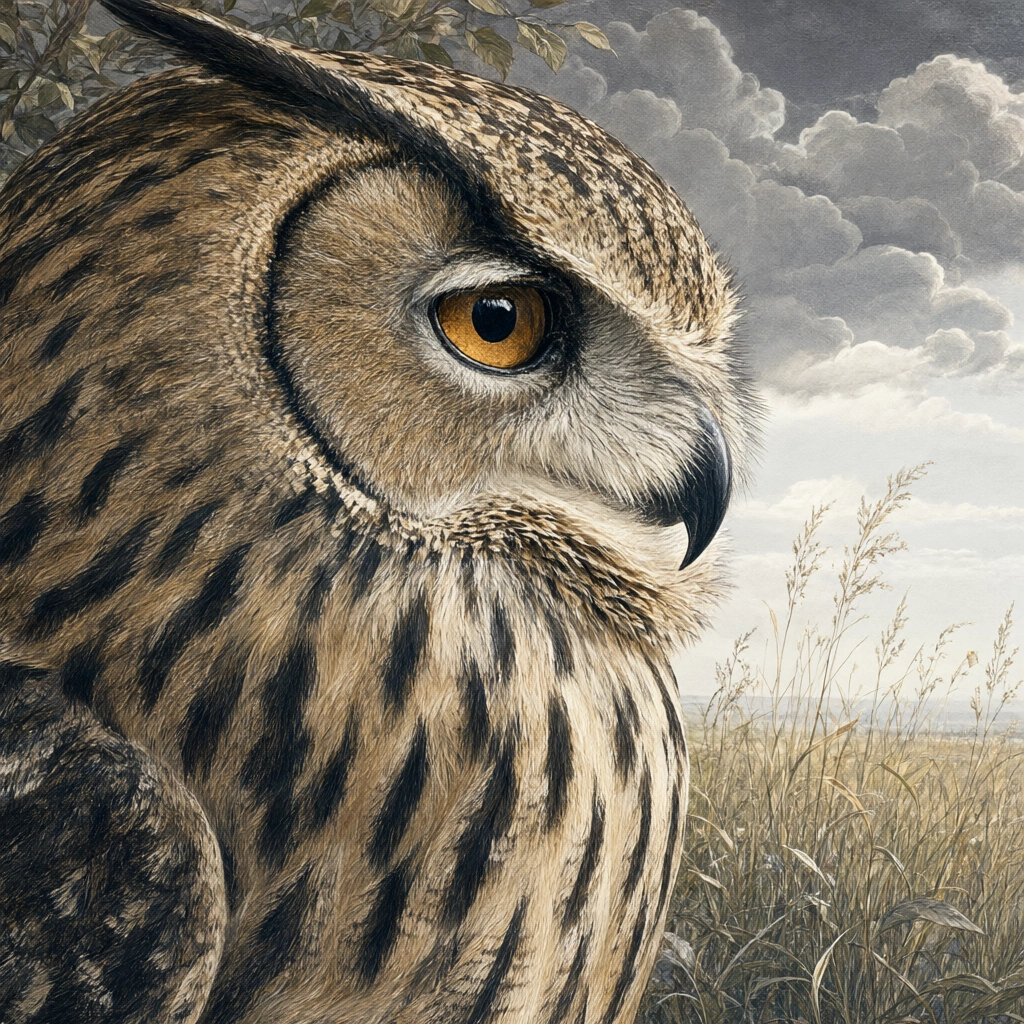 Qwen Image 2.1
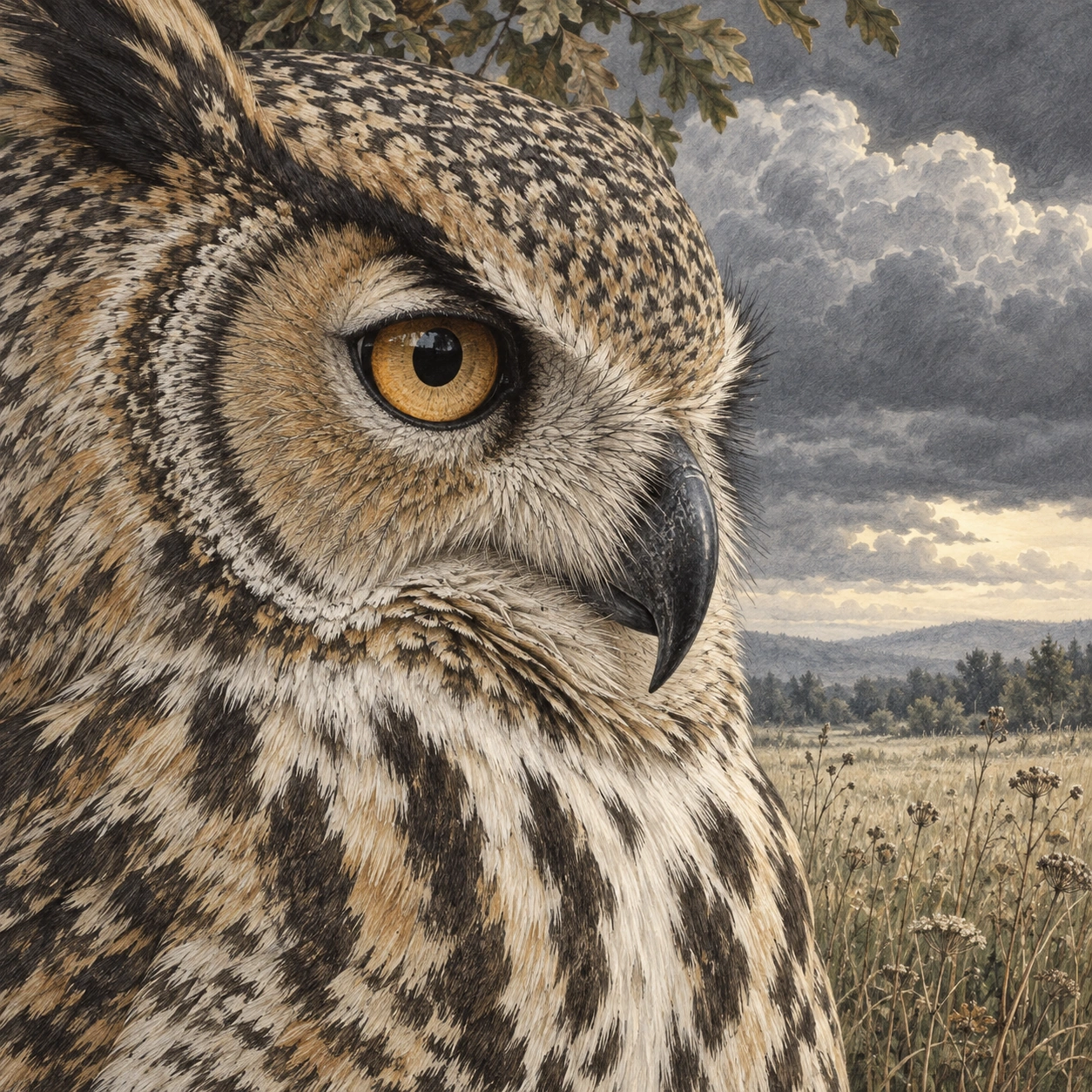 GPT Image 2.5
Reference details
- Reference ID
- 2310
- Category
- Ink & line
Reference prompts
Style prompt
The natural-history illustration combines densely observed, directional linework with subdued washes of earthy color. Short hatching and small interlocking marks build rough, layered surfaces; the stroke direction changes with each contour, keeping the intricate texture dimensional. Cream and amber highlights sit within buff, umber, charcoal, and cool gray, creating one compact warm focal area against broader pale and shadowed regions. Crisp edges and strong dark accents hold the near forms, while thin distant marks and softly graded clouds recede. Side light reveals the raised texture and lets recesses stay cool without a theatrical glare. The composition favors a large cropped foreground form and a much quieter background, giving close detail a sense of scale and natural stillness.Full example prompt
A square natural-history illustration gives an extreme close view of a large owl, its patterned head and upper breast set against a pale meadow and layered gray clouds. The bird fills the left and central areas, with the top of one dark ear tuft and much of its body cut by the image edges. Its round amber eye sits just left of center, sharply ringed in black and edged with pale feathering, so the pupil becomes the clearest point in the scene. A strong dark brow sweeps above the eye and leads toward the high, hooked black beak on the right. Fine cream, buff, umber, and charcoal marks articulate the feathers in overlapping bands: close barring across the crown, shorter hairlike strokes around the facial disk, and bold dark stripes down the visible breast. The separate textures follow the shape of each part rather than appearing as a uniform surface pattern. At the upper right, clouds build in scalloped gray layers, their edges softly lit against a darker sky. Below them a pale strip opens over thin upright meadow stems and seed heads, which remain small and delicate beside the owl. A few leaves and branches crowd the upper edge behind the bird, tying the foreground close-up to the surrounding habitat. Gentle light from the right brightens the cream feathers and the pale space behind the beak, while the left side of the bird and the cloud recesses hold cool gray shadow. The image has a finely engraved or colored-pencil-like density, with many short directional strokes and clear contour changes but no shiny finish. The overall composition contrasts monumental, closely observed feather detail with a compressed, quieter landscape in a restrained range of warm browns and cold grays.