
Styles
#2365
David Tutwiler style reference and prompts
Explore the “David Tutwiler” reference with broken brushwork, visual framing, and earth tones. View the images, copy the style or example prompt, and discover related styles on Looksift.
Compare the Qwen Image 2.1 and GPT Image 2.5 examples, choose the visual qualities you want, and copy the style prompt for your own project.
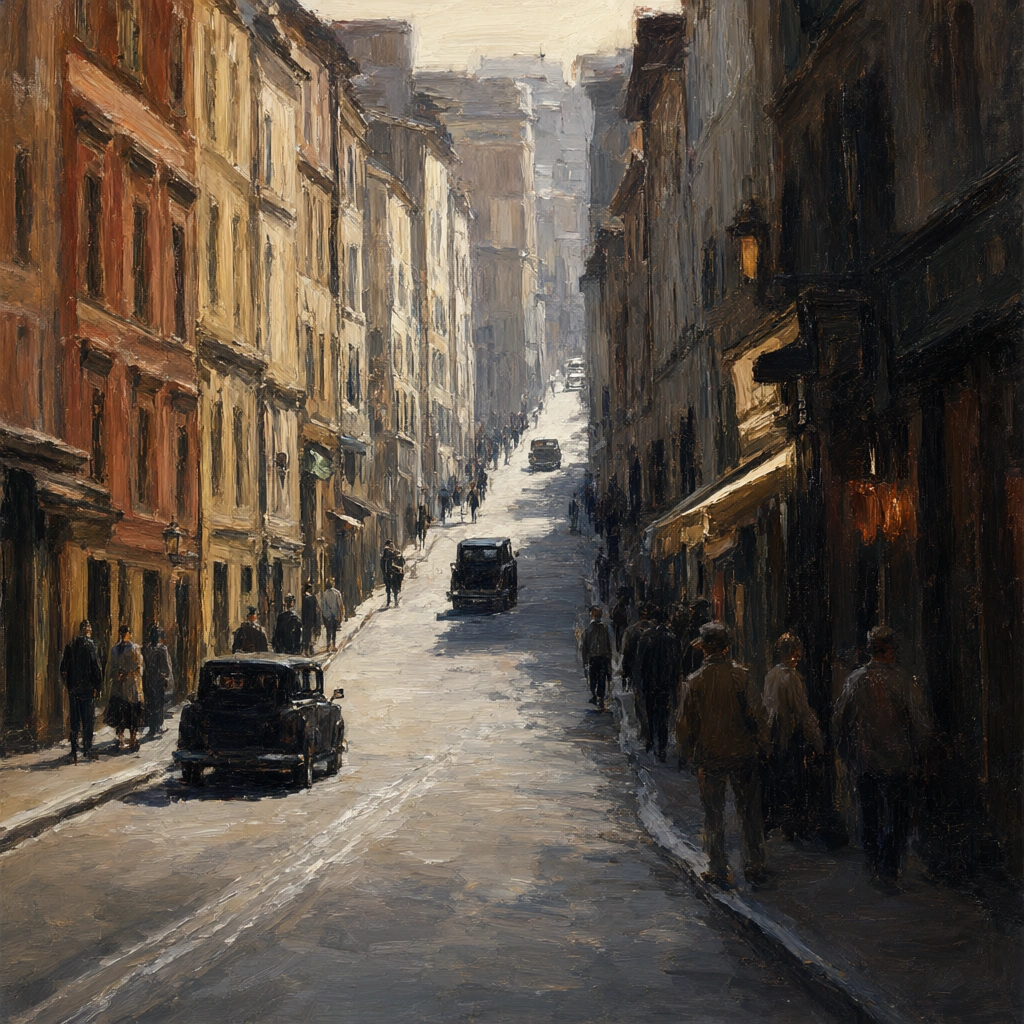 Qwen Image 2.1
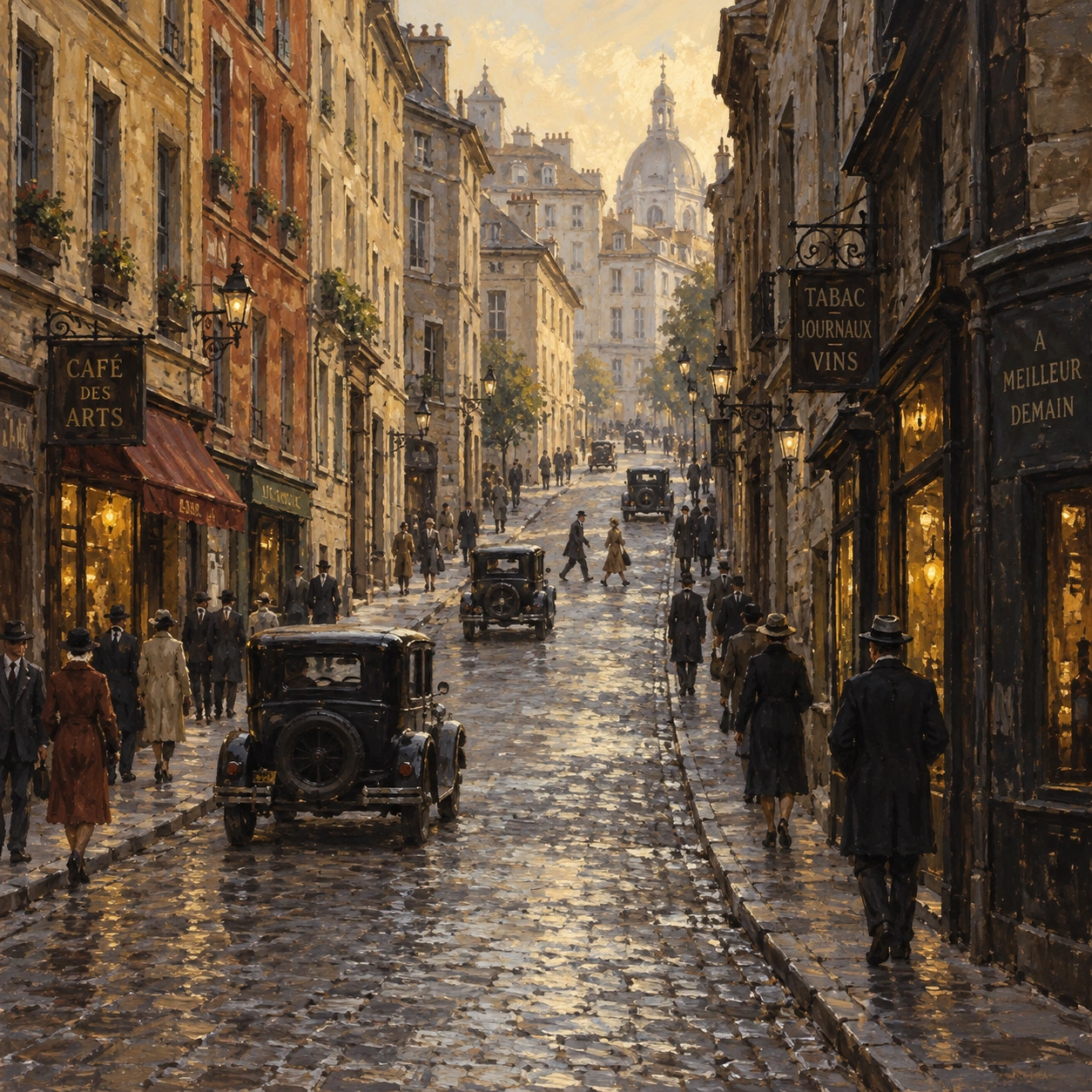 GPT Image 2.5
Reference details
- Reference ID
- 2365
- Category
- Painting
Reference prompts
Style prompt
Painterly urban realism uses brisk, broken strokes to suggest dense built surfaces and movement without polishing every detail. Ochre, warm brown, slate gray, and muted cream are organized around a bright receding center and darker framing sides. Vertical marks establish structure, while small dark accents and rough horizontal scuffs animate lower planes. Hazy distance softens edges and lowers contrast; near shapes remain heavier and more legible. Light filters along the main depth axis, catching selected upper and ground surfaces while leaving deep warm shadow between them. The overall rhythm is lively, weathered, and atmospheric.Full example prompt
A square painterly cityscape looks down a narrow old street lined with tall masonry buildings and dotted with pedestrians and early cars. The road begins wide at the lower edge and rises gently toward a bright opening in the distance. On the left, ochre and reddish facades stand in close sequence, their windows and cornices suggested by firm vertical strokes and small dark rectangles. On the right, darker buildings lean into shadow, with projecting signs and warm window glows visible near street level. A few boxy black cars sit or move along the lower and middle road, their simple silhouettes anchoring the historical setting without readable makes or signs. Small figures walk along both sides and cross the middle distance; they are loosely painted, recognizable by posture more than facial detail. The far end of the street is framed by pale gray and cream buildings that recede into hazy light. The sky appears only as a narrow warm strip above the rooftops. Thick, broken brush marks articulate the road, walls, and moving figures, leaving many details deliberately soft. Warm browns, muted gold, slate gray, and black dominate, with occasional pale highlights on the road and upper walls. Light enters from beyond the street and slightly above, brightening the distant center while the near right side remains in deeper shadow. Uneven reflections or pale scuffs on the roadway add a little movement to the foreground. The overall composition draws the eye uphill through converging facades and scattered human scale, giving the street a lived-in, nostalgic warmth.