
Styles
#2376
Charles Fazzino style reference and prompts
Explore the “Charles Fazzino” reference with tactile surfaces, negative space, and even lighting. View the images, copy the style or example prompt, and discover related styles on Looksift.
Compare the Qwen Image 2.1 and GPT Image 2.5 examples, choose the visual qualities you want, and copy the style prompt for your own project.
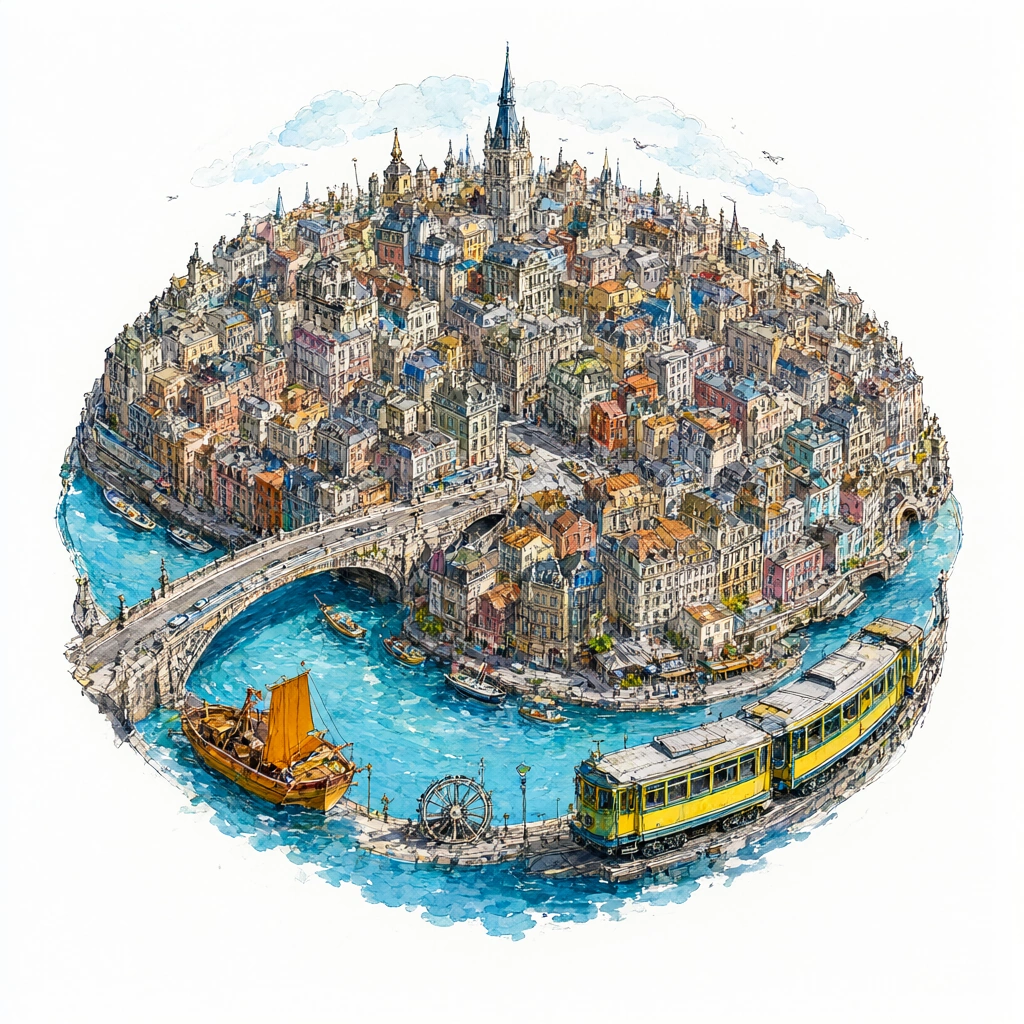 Qwen Image 2.1
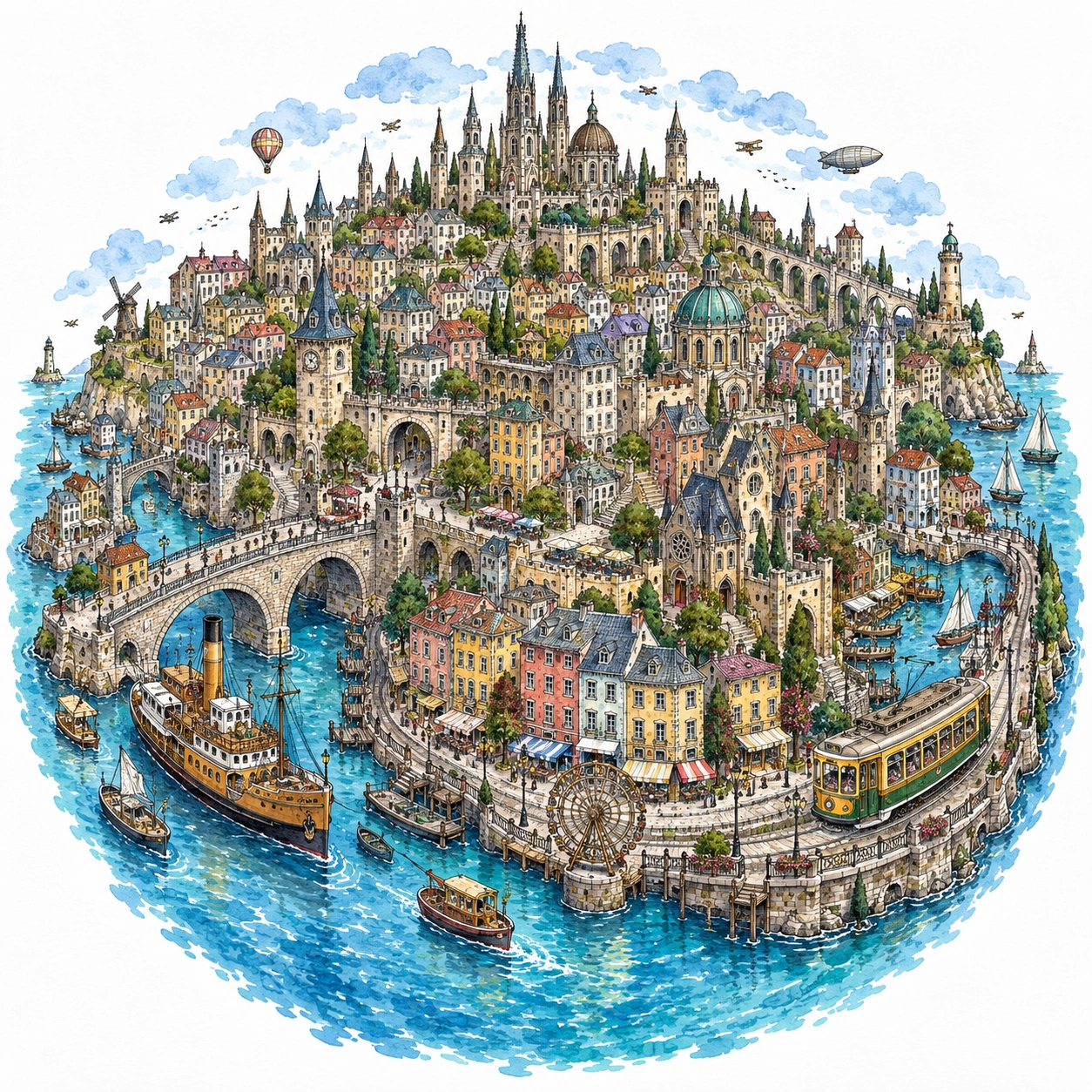 GPT Image 2.5
Reference details
- Reference ID
- 2376
- Category
- Painting
Reference prompts
Style prompt
The hand-rendered illustration compresses an abundance of fine dark linework and transparent color into one compact, nearly circular cluster against wide white negative space. Tiny repeated rectangles, arches, and dots create an intricate inner grain, while larger curved bands and a few bold foreground shapes prevent the detail from becoming uniform noise. Turquoise and blue organize the outer lower area; muted ochre, rose, violet, and gray mingle densely inside, with small saturated accents spaced throughout. Edges are precise at the level of individual marks but soft where watercolor washes overlap or fade into paper. An elevated, slightly playful spatial view reveals many layers at once. Gentle even light keeps the paper luminous and shadows shallow. The overall effect is encyclopedic, whimsical, and tactile, balancing miniature complexity with a clean spacious border.Full example prompt
A square, densely detailed ink-and-watercolor illustration presents an imagined city as a compact circular world surrounded by blue water and clean white paper. The city rises in a crowded dome of towers, older stone facades, colorful small buildings, pointed roofs, and bridges, with the tallest narrow spires near the upper center. At the top, a loose arc of pale blue clouds and tiny flying forms completes the rounded silhouette without filling the white corners. Building fronts stack at many scales, their windows and cornices recorded in fine dark linework while muted ochre, rose, turquoise, gray, and violet washes distinguish neighboring structures. Along the lower left, a broad arched bridge crosses a bright water channel; beside it sits a warm ochre vessel with a tall angular upper structure. Across the lower right, a yellow-and-green streetcar curves around the circular waterfront, much larger than the boats behind it and close to the front edge. Small boats occupy the waterways between these larger shapes, and a delicate wheel-like structure appears near the bottom center. The water itself wraps around the lower perimeter in lively blue and teal brush patches, giving the city a floating, map-like boundary. The elevated viewpoint lets roof surfaces, streets, and waterways be seen at once, but the many perspectives are compressed into one playful miniature rather than a strict architectural plan. Soft even daylight keeps the white ground bright; slight shadows under bridges and between buildings preserve depth without a strong directional drama. The fine drawn edges, tiny patterned marks, and transparent color have a tactile hand-rendered quality, with selective brighter accents drawing attention around the rim. The overall composition is exuberant and encyclopedic, holding intricate urban activity within a single round island-like form and broad surrounding white space.