
Styles
#2425
Pieter Bruegel the Elder style reference and prompts
Explore the “Pieter Bruegel the Elder” reference with an elevated viewpoint. View the images, copy the style or example prompt, and discover related styles on Looksift.
Compare the Qwen Image 2.1 and GPT Image 2.5 examples, choose the visual qualities you want, and copy the style prompt for your own project.
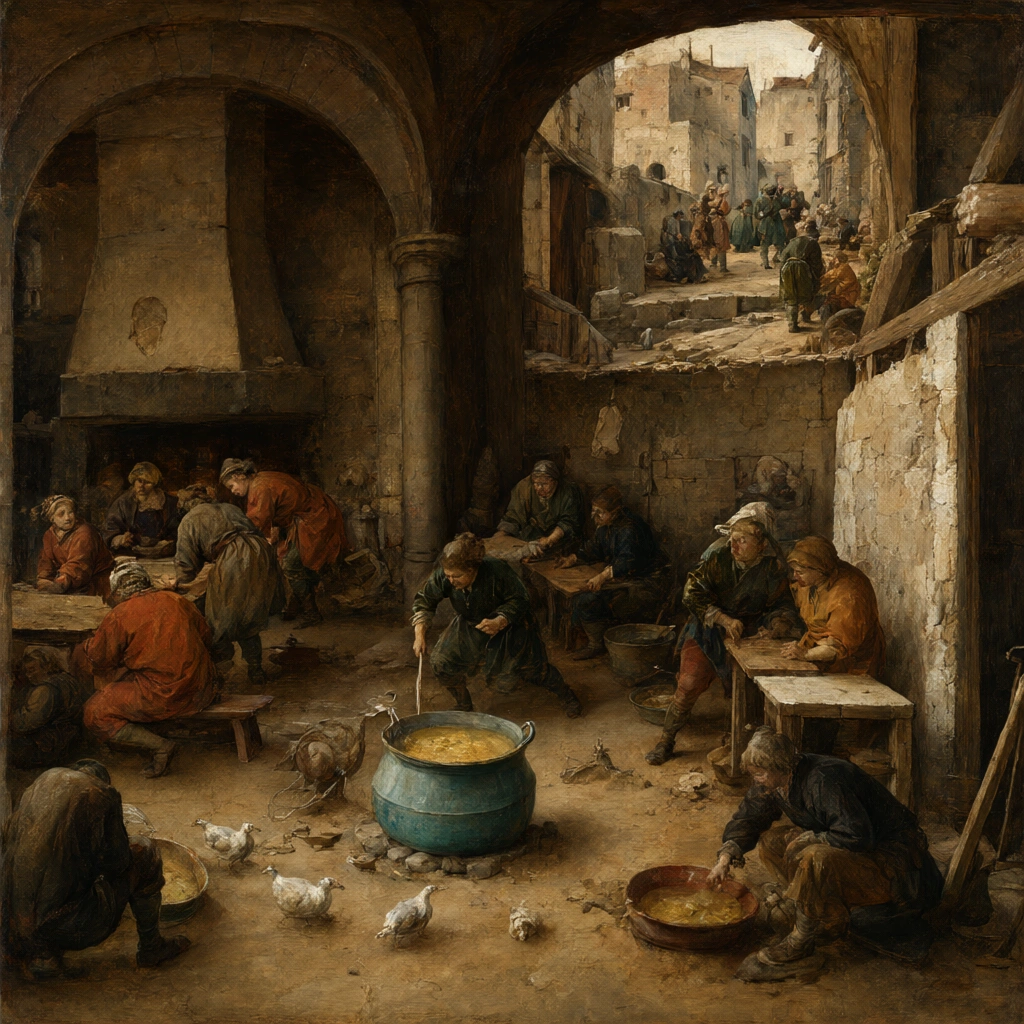 Qwen Image 2.1
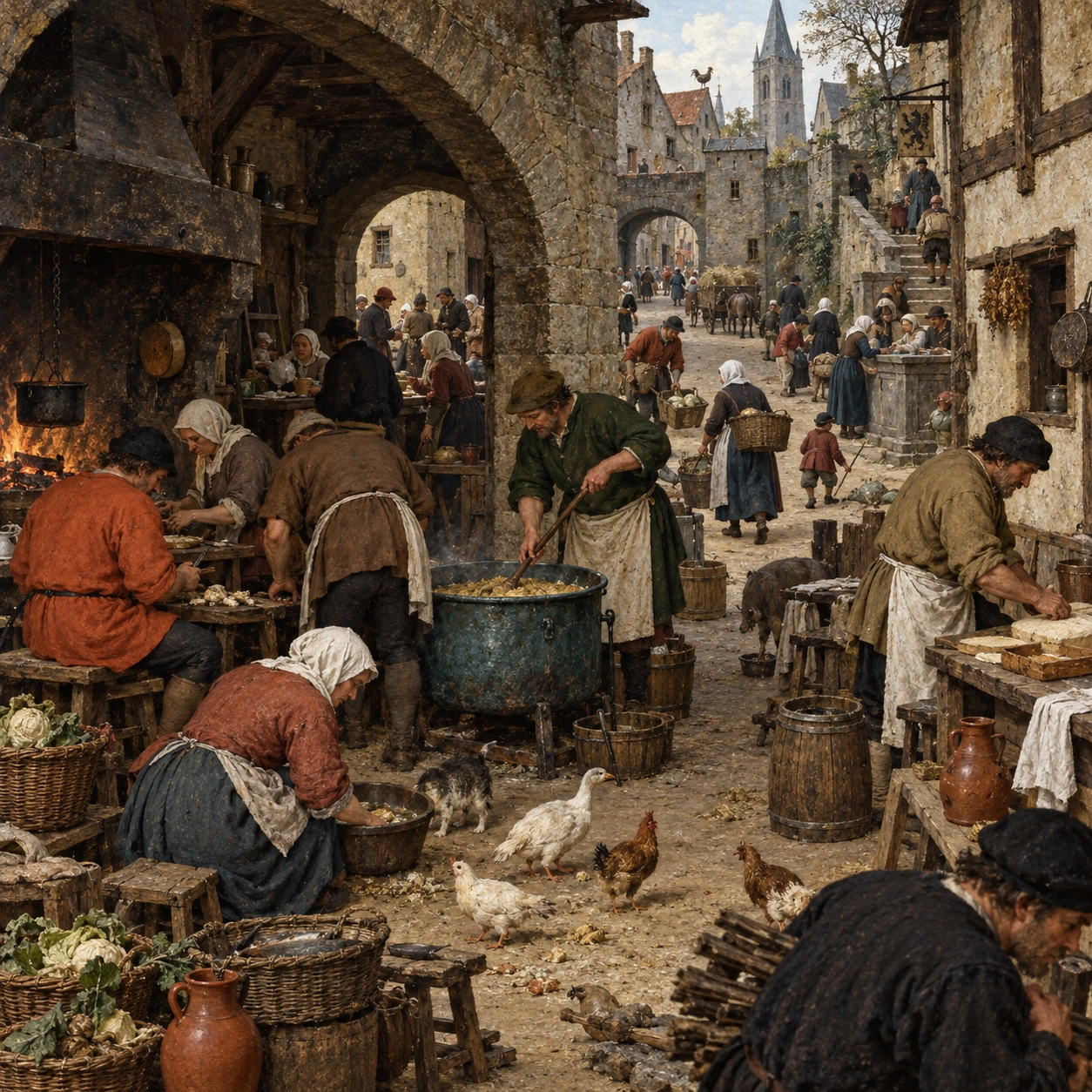 GPT Image 2.5
Reference details
- Reference ID
- 2425
- Category
- Painting
Reference prompts
Style prompt
A densely worked oil painting surveys an inhabited space from a slightly elevated angle. Small figures and objects repeat across several nested zones, creating a chain of simultaneous incidents rather than one isolated focal point. Old stone, rough plaster, timber, earth, and cloth receive precise but restrained texture. Warm umber, tan, russet, and olive dominate, interrupted by a single cooler blue-green accent. Daylight enters from an open side, illuminating raised edges and leaving arches and recesses in deep shadow. Narrow passages and overlapping built forms pull the eye back through the scene. Fine marks resolve close detail, while the overall composition remains a crowded, coherent pattern of human activity and aged surfaces.Full example prompt
A square, densely populated Northern Renaissance oil painting depicts a busy communal work area inside an old stone town. At the left, several villagers sit or crouch around a broad hearth and worktable beneath a large arch. One wears a bright rust-orange tunic, another bends over in dull brown, and smaller figures crowd the passage receding behind them. Near the center, a large blue-green cauldron is filled with yellowish food, and a person in dark green leans forward with a long implement. To the right, another worker handles a board on a low table beside rough plaster and timber walls. The foreground is packed with small objects and activity: a crouching figure tends a bowl, pale birds or small animals scatter nearby, and a person in dark clothes is partly cut off at the lower edge. Above, the stone arch and shadowed opening compress the scene; light comes from the open side and catches faces, garments, the pot rim, and worn masonry. Beyond the immediate work area, more figures spill into a courtyard and along uneven steps between buildings, giving the village a layered, lived-in depth. The color is earthy and subdued: umber stone, warm tan dirt, russet and olive clothing, and the cool blue-green pot as a focal accent. Fine, precise brushwork separates many tiny gestures and textures without isolating a single hero. Perspective is slightly elevated, allowing the viewer to survey several simultaneous acts. Deep recesses under the arch contrast with daylight on the right. The frame is intentionally crowded, full of small narrative incidents and tactile surfaces, yet the repeated human forms and architecture form a coherent rhythm of daily labor.