
Styles
#2482
Leon Kossoff style reference and prompts
Explore the “Leon Kossoff” reference with thick paint texture, tactile surfaces, and earth tones. View the images, copy the style or example prompt, and discover related styles on Looksift.
Compare the Qwen Image 2.1 and GPT Image 2.5 examples, choose the visual qualities you want, and copy the style prompt for your own project.
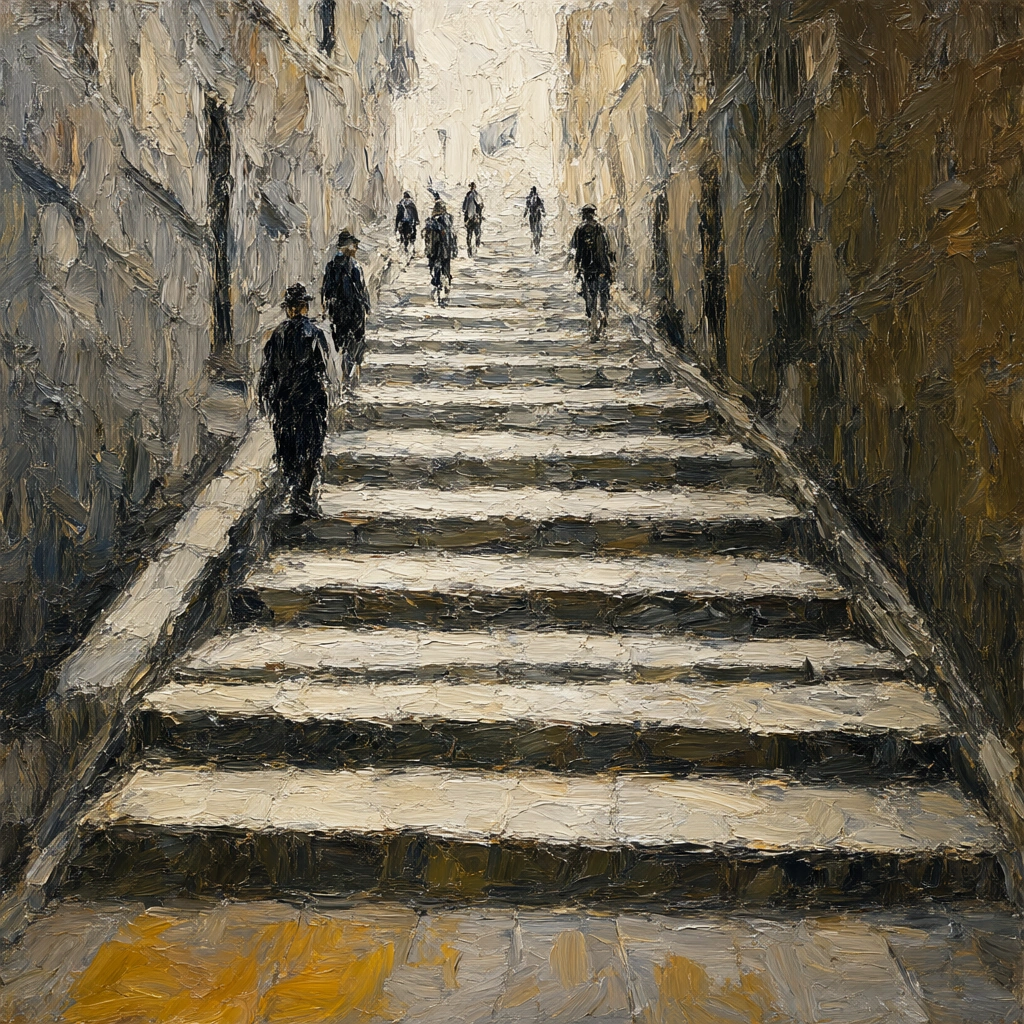 Qwen Image 2.1
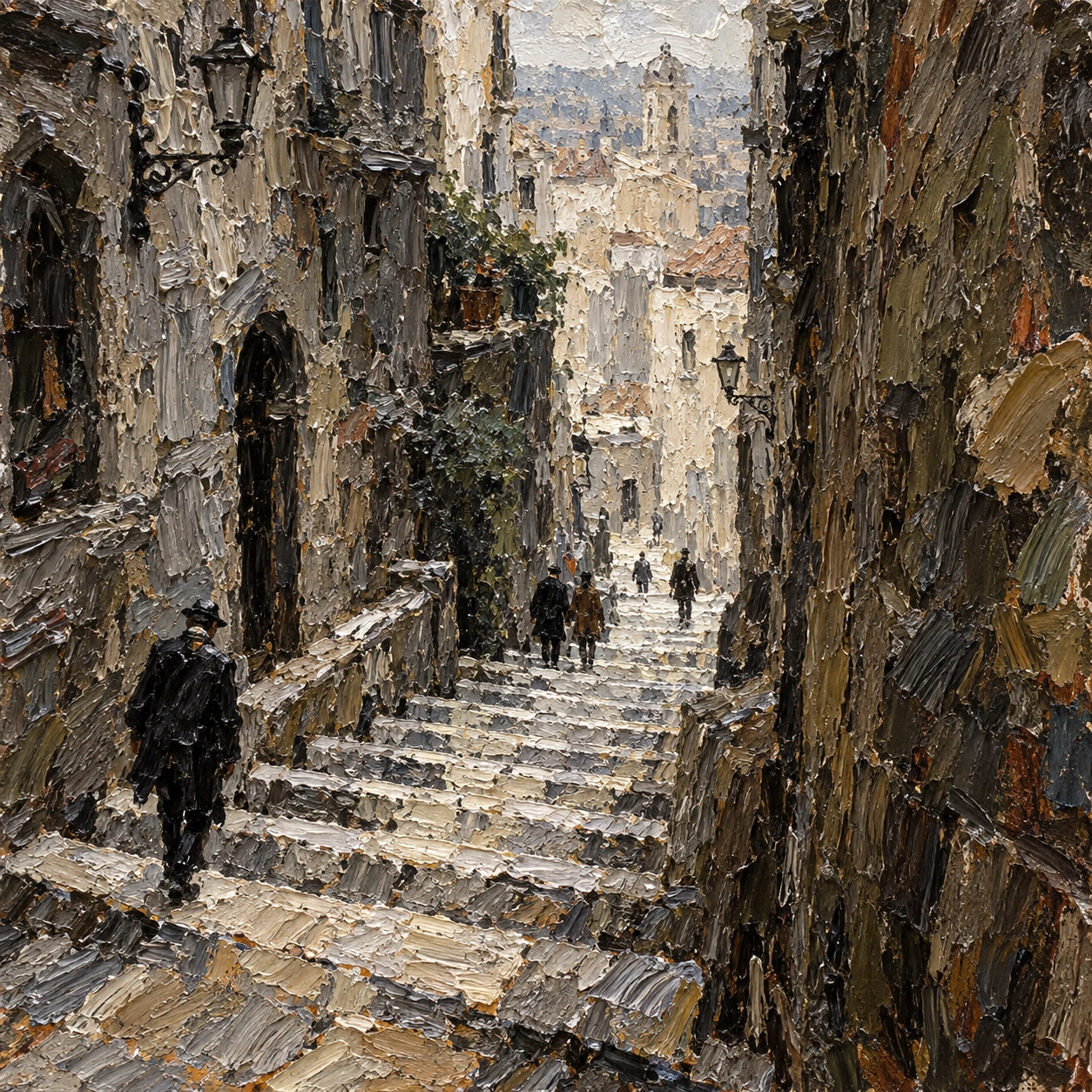 GPT Image 2.5
Reference details
- Reference ID
- 2482
- Category
- Painting
Reference prompts
Style prompt
The oil painting is dominated by thick impasto, palette-knife-like scraping, and short strokes stacked in conflicting directions. Cream, warm gray, ochre, olive brown, and charcoal form a compressed, largely low-saturation field. Forms are only partly resolved; a light passage and repeated dark accents establish the underlying structure. Edges constantly break into adjacent paint, making texture itself a primary source of movement. Diffuse light opens a pale center while nearer masses deepen into muddy shadow. The composition feels crowded and physical, with ridges of pigment carrying as much information as drawn line. The result is restless, tactile, and robust.Full example prompt
A square heavily impasto oil painting shows a descending city stairway with tiny pedestrians between densely worked walls. The upper and left edges are crowded with gray, cream, brown, and black strokes that imply tall masonry and surrounding structures. The stairway begins in the brighter center background and steps down toward the lower left foreground. Its pale treads are edged with dark irregular marks, giving a strong rhythm through the otherwise chaotic surface. Several small dark figures stand or walk along the steps; one is near the lower left, with others farther back toward the central opening. Their shapes are reduced to quick upright strokes and isolated darker heads, so the movement matters more than individual identity. Light cream and warm gray paint gathers across the central passage, while the flanking walls become deep olive-brown and charcoal. At the lower edge, broad scraped patches of ochre and gray suggest worn paving. The paint is unusually thick and ridged, with short strokes piled in different directions and occasional exposed undercolor. Forms appear and disappear as neighboring marks compete, yet the stair sequence and human scale remain visible. Diffuse daylight seems to enter from the far opening, brightening the steps and back wall, while the near edges sit in muddier shadow. The overall composition is energetic and compressed, using a corridor of pale steps to organize a rough, tactile urban field.