
Styles
#2515
James Paick style reference and prompts
Explore the “James Paick” reference with visible brushwork, pale neutral tones, and backlighting. View the images, copy the style or example prompt, and discover related styles on Looksift.
Compare the Qwen Image 2.1 and GPT Image 2.5 examples, choose the visual qualities you want, and copy the style prompt for your own project.
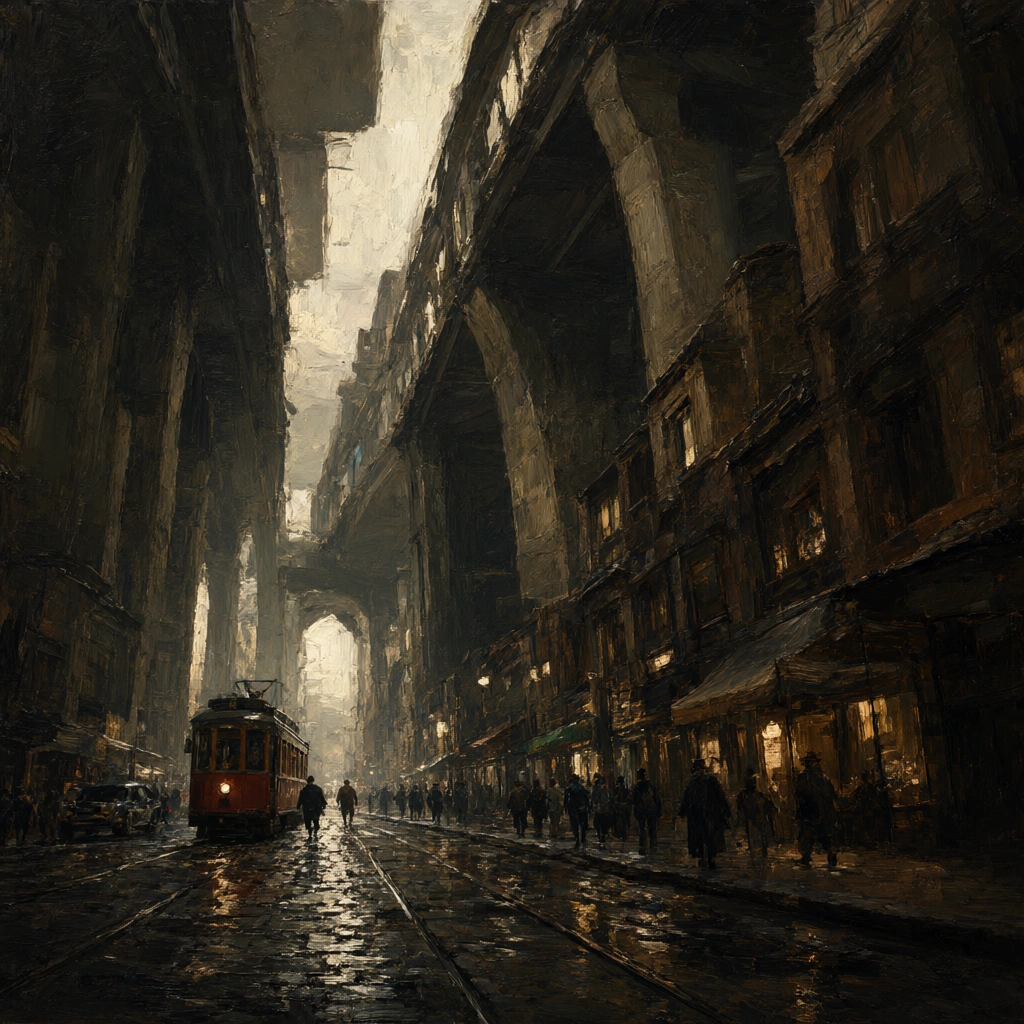 Qwen Image 2.1
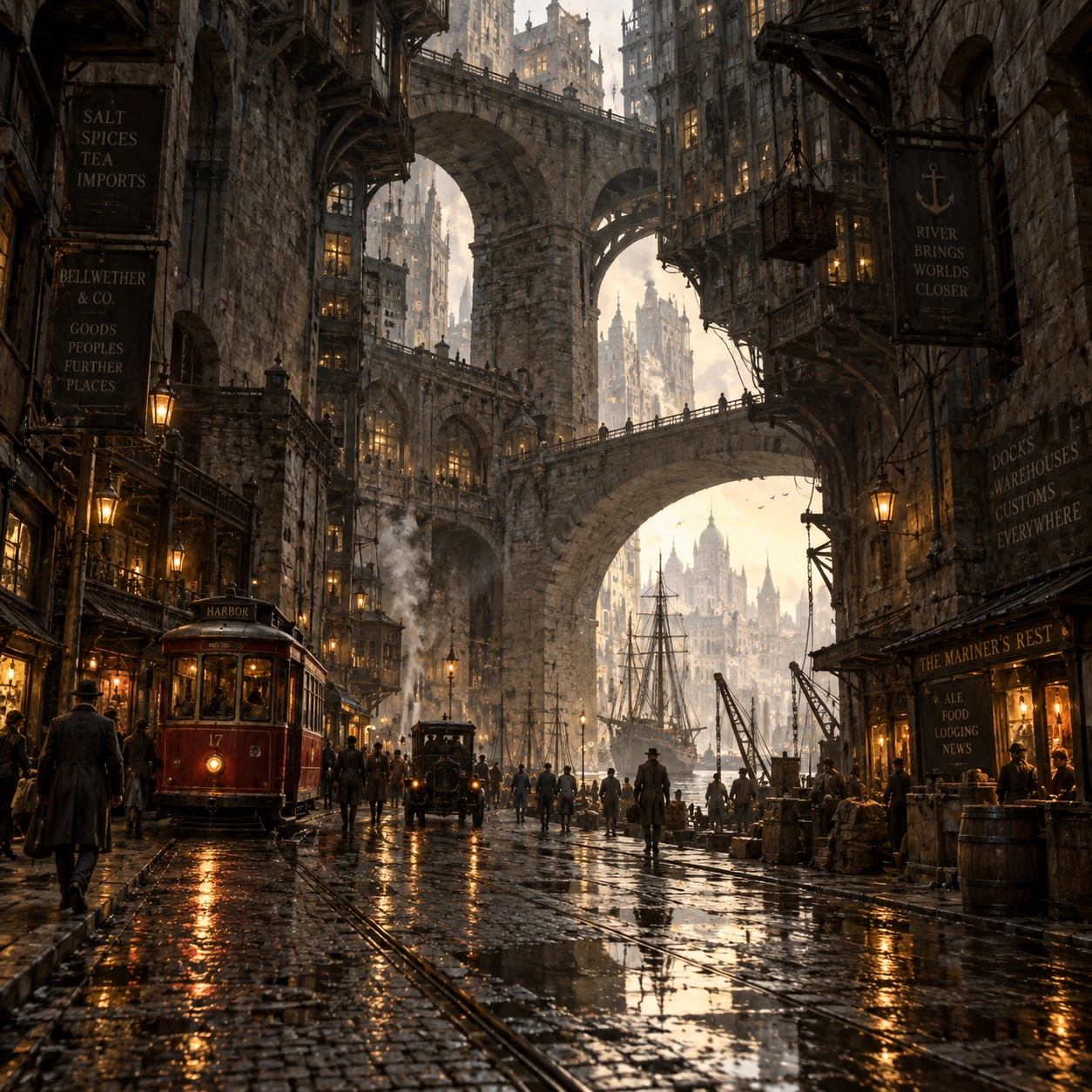 GPT Image 2.5
Reference details
- Reference ID
- 2515
- Category
- Painting
Reference prompts
Style prompt
Cinematic environment painting uses rough, energetic brushwork over strong perspective and broad architectural value blocks. Soot brown, charcoal, muted olive, and smoky cream dominate, with isolated warm and red accents. High structures frame a distant pale opening; diffuse backlight catches wet surfaces and pushes near masses into shadow. Small bright windows and broken reflections create rhythm inside the large dark forms. Edges sharpen along key supports and dissolve in smoke and distance. Dense layered detail is held together by a clear central recession, producing an immense, weathered, lived-in atmosphere.Full example prompt
A square cinematic environment painting looks along a crowded old harbor street beneath immense masonry bridges and overhanging buildings. The view begins low on a wet road in the foreground, where dark cobbles and puddles reflect thin streaks of amber light. On the left, a red streetcar and a few small vehicles sit among pedestrians, establishing the scale of the towering architecture. Massive stone supports and connecting arches climb up both sides, while distant façades fade into pale smoky light at the far end of the street. The upper frame is dense with angled beams, hanging structures, windows, and recessed shadows. Warm shop or window lights punctuate the gloom near ground level. The palette is primarily soot brown, charcoal, desaturated olive, and smoky cream, with the streetcar's red as a small saturated accent. Brushwork is energetic and rough, especially in the shadowed stone, but strong perspective and broad value masses keep the architecture readable. Light pours from the distant opening and filters down between high structures, creating bright haze behind the small foreground figures. The composition feels compressed, immense, and lived in. Human movement remains tiny against the built mass, while damp reflections carry a thread of brightness through the dark lower frame.