
Styles
#2639
Paul Nicklen style reference and prompts
Explore the “Paul Nicklen” reference with tactile surfaces, a low viewpoint, and cool blue-gray tones. View the images, copy the style or example prompt, and discover related styles on Looksift.
Compare the Qwen Image 2.1 and GPT Image 2.5 examples, choose the visual qualities you want, and copy the style prompt for your own project.
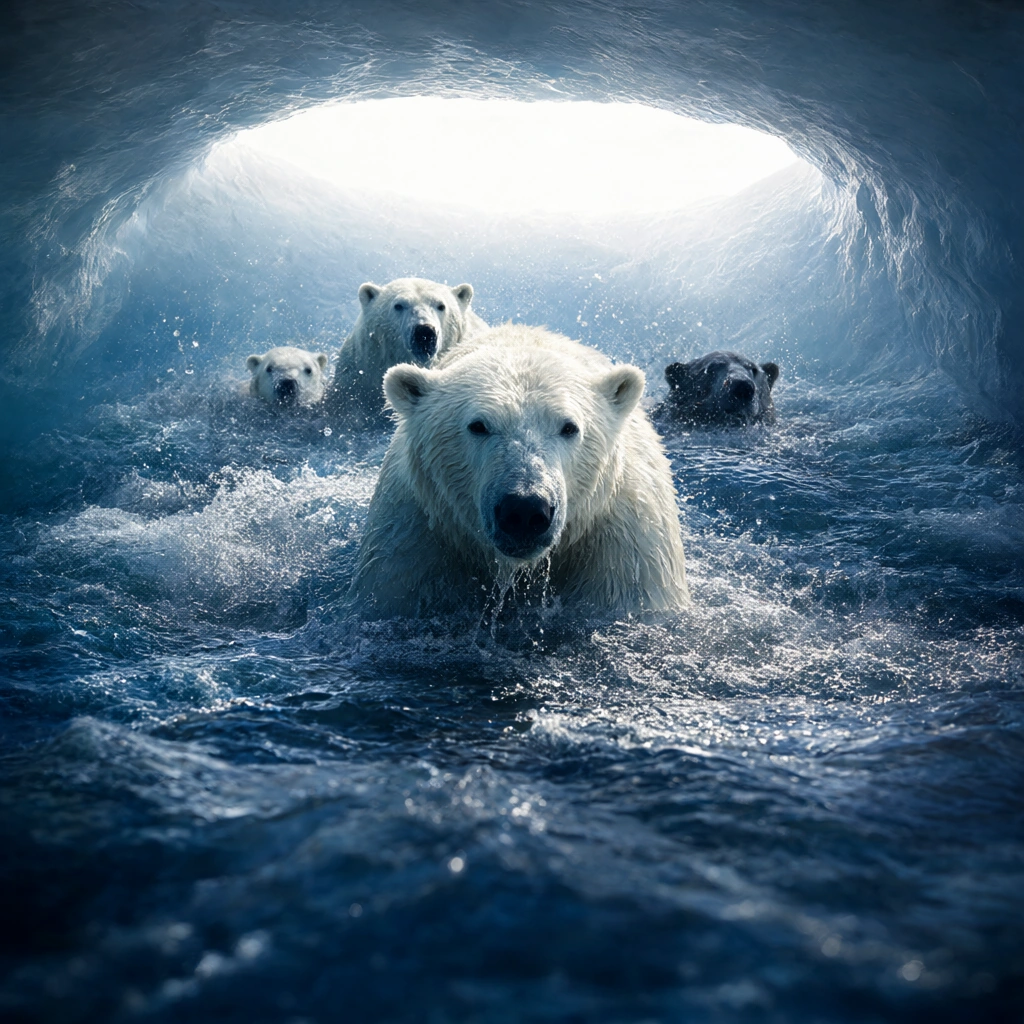 Qwen Image 2.1
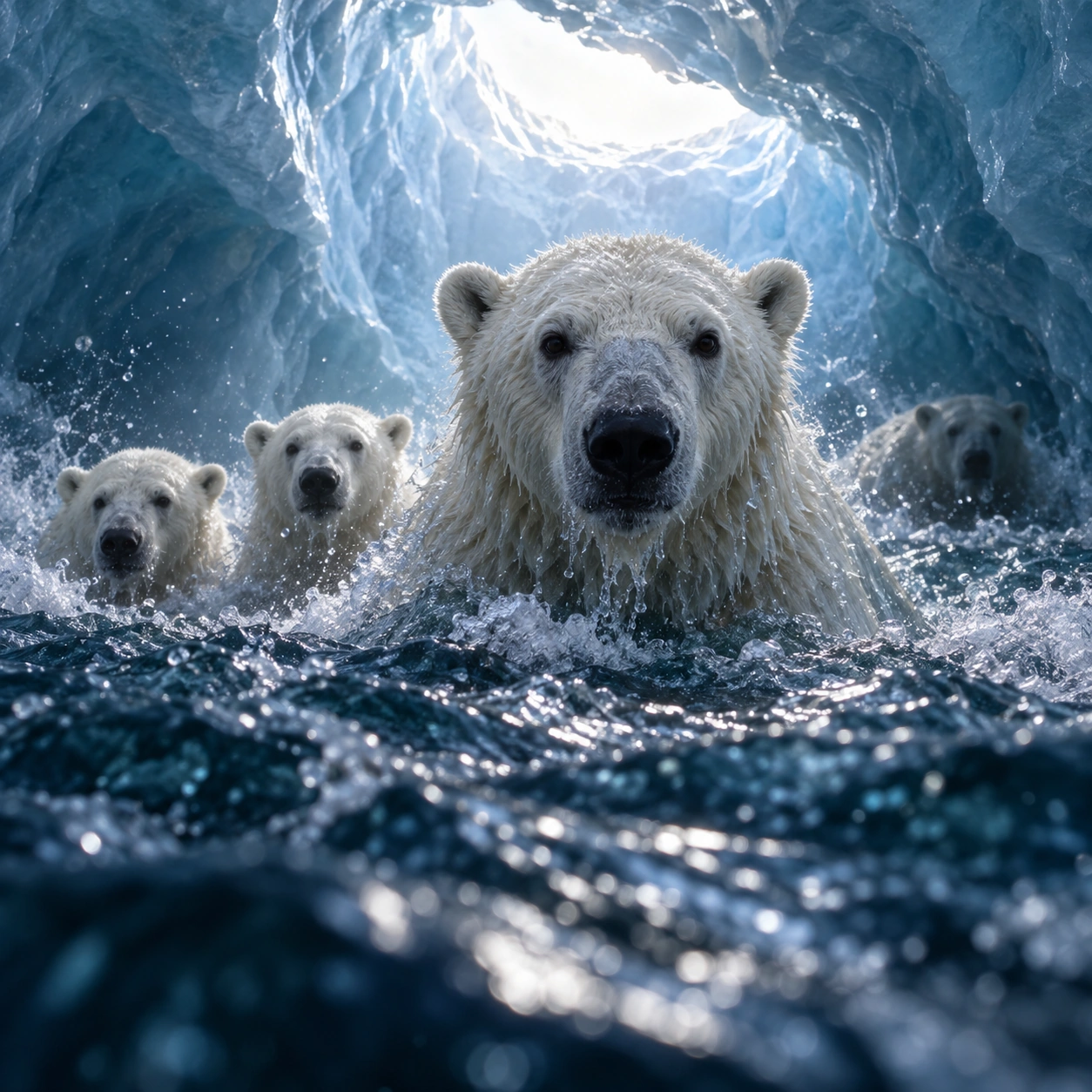 GPT Image 2.5
Reference details
- Reference ID
- 2639
- Category
- Photography
Reference prompts
Style prompt
The wildlife photograph is immersive and cool-toned, with a low viewpoint, close foreground texture, and sharply receding focal layers. Deep navy and cyan masses surround silver-white highlights; pale forms receive blue-gray color from nearby reflective surfaces. Curving dark edges frame a bright upper opening, making backlight outline the central shapes while lower regions remain richly shadowed. Water or particulate texture breaks the view into countless small moving flecks, but the closest focal details stay legible. Distant forms soften behind spray and atmospheric haze rather than by a flat blur. Strong scale changes create depth and urgency within a compact frame. The overall treatment is tactile, cold, and luminous, with movement made visible through reflective fragments and contrasting soft and crisp edges.Full example prompt
A square, immersive wildlife photograph shows several polar bears moving through churning dark water beneath a bright opening in a blue ice enclosure. The camera sits very low, nearly at water level, making the rippled foreground surge across the bottom of the frame. Above, curved ice walls form a cool tunnel or cavern shape around a broad luminous opening near the upper center. Its ridged surface catches silver light and fades through pale blue to deep slate along the edges. One large white bear occupies the front center, close enough that its rounded ears, dark eyes, long muzzle, and black nose are clearly visible. Wet fur around its chest and shoulders takes on blue-gray tones from the water and surrounding ice. Slightly behind it to the left, two smaller white bears stand at different depths, their faces and shoulders emerging from spray. Farther back on the right, another darkened bear shape is partly veiled by water and shade. The animals appear to advance toward the camera through the rough current, with droplets and white flecks suspended around their bodies. The near water is a dense textured field of navy, cyan, and silver, crossed by small foam bursts and reflections from the overhead opening. No land, vegetation, or man-made element appears within the selected scene. Light filters down from the ice opening behind and above the bears, outlining pale fur and sparkling on droplets while the lower water and side walls remain dark. The strong depth shift from the close central face to the smaller rear forms gives a sense of movement inside a confined, cold space. The overall composition is dramatic and immediate, with luminous ice and white fur emerging from layered blue shadow and restless water.