
Styles
#2672
John Pawson style reference and prompts
Explore the “John Pawson” reference with tactile surfaces, negative space, and pale neutral tones. View the images, copy the style or example prompt, and discover related styles on Looksift.
Compare the Qwen Image 2.1 and GPT Image 2.5 examples, choose the visual qualities you want, and copy the style prompt for your own project.
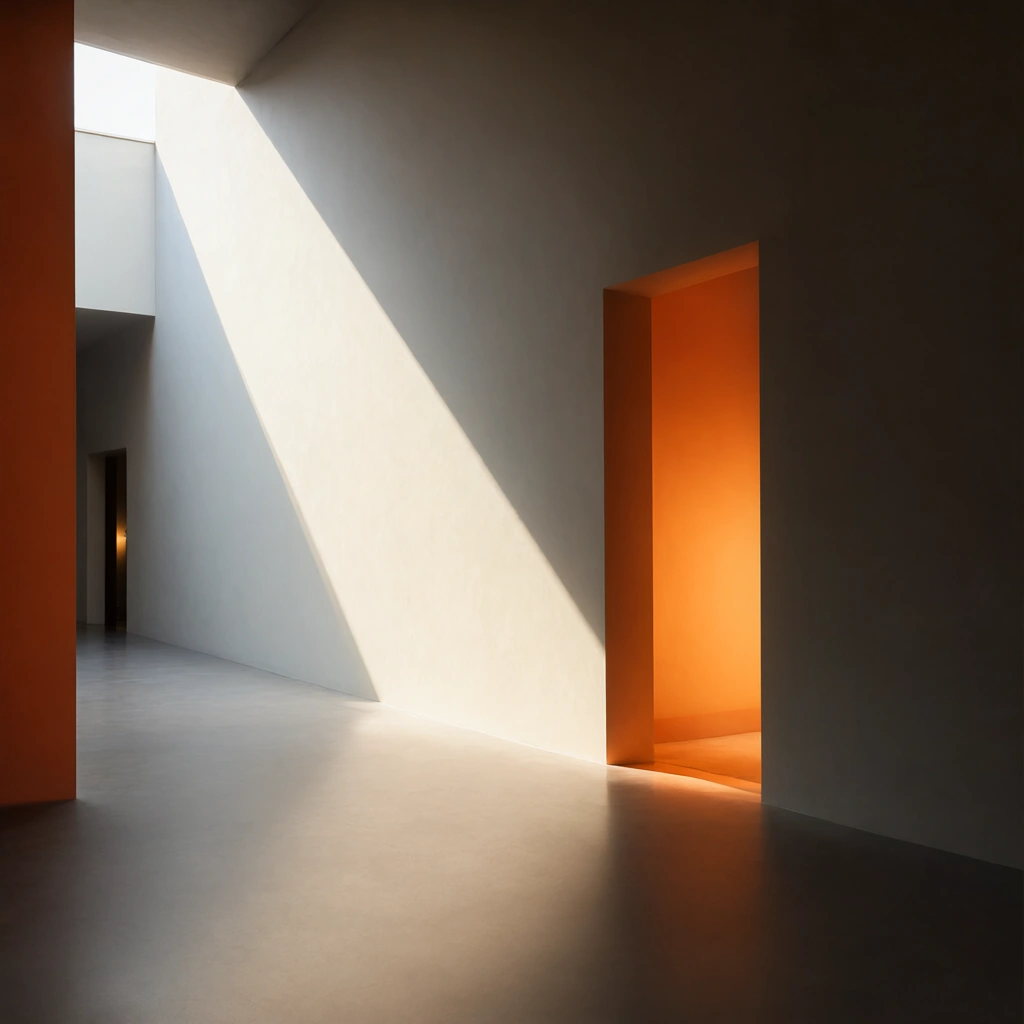 Qwen Image 2.1
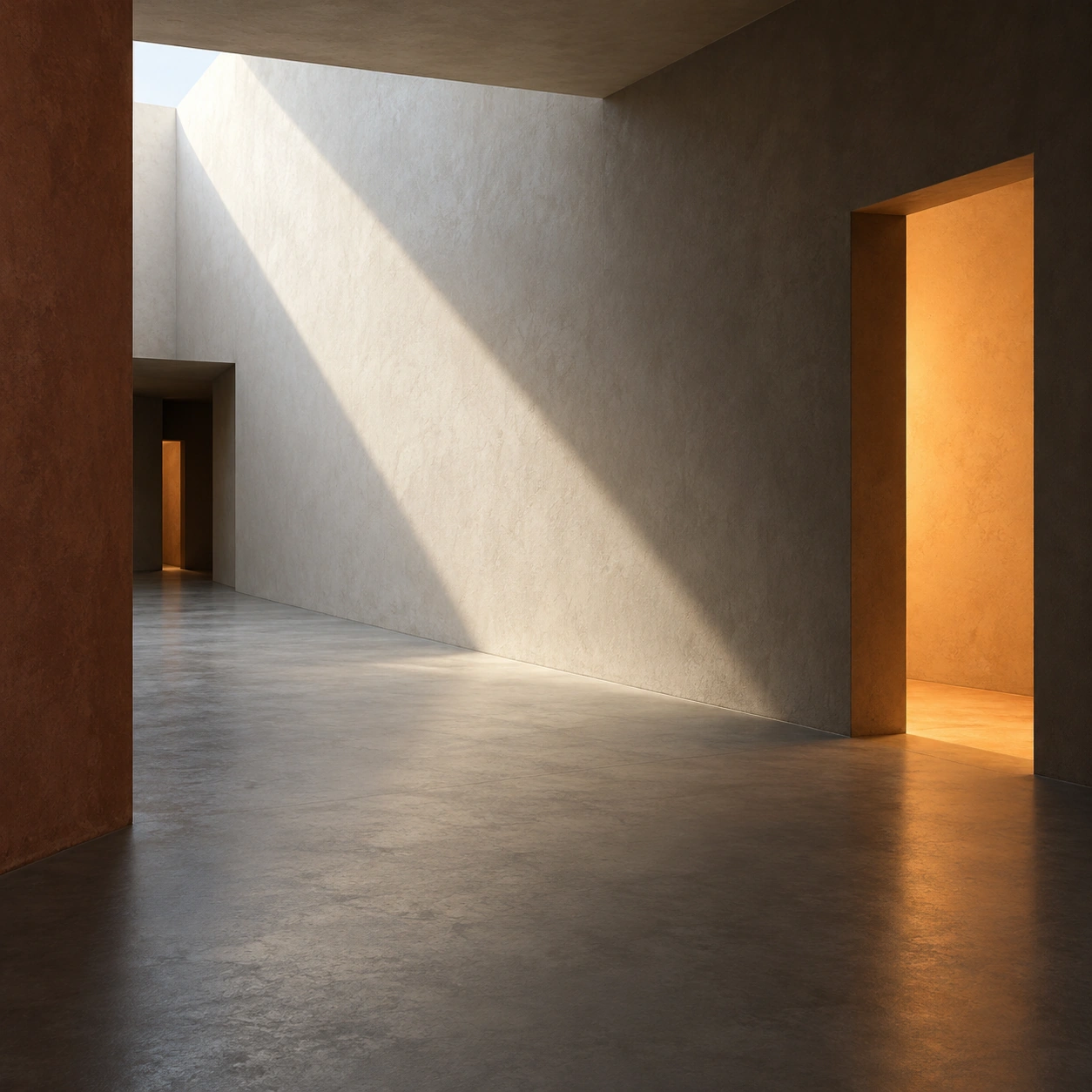 GPT Image 2.5
Reference details
- Reference ID
- 2672
- Category
- Photography
Reference prompts
Style prompt
A restrained color photographic treatment builds visual depth from broad matte planes, precise rectangular cuts, and one strong diagonal of light. Cool cream and stone gray occupy large open areas; charcoal shadow and a concentrated amber glow supply the main contrast. Smooth surfaces retain subtle grain and plasterlike irregularity, preventing the quiet fields from becoming digital solids. Daylight moves obliquely across the frame, while a separate warm source leaks from a recess and touches the adjacent plane. The edges of openings are clear, and depth arises from successive thresholds and changing brightness rather than decoration. Large negative space gives the few illuminated regions weight. The overall effect is calm, exact, and tactile, with the interaction of geometry and light carrying the image.Full example prompt
The image is a square, restrained color photograph of an empty minimalist interior, where a diagonal wash of daylight crosses pale walls and a warm orange doorway glows at the right. The foreground is a broad smooth gray floor, darker near the lower corners and lightly warmed in the center by reflected light. At the far left, a tall reddish-brown vertical plane enters the frame and partly hides the space beyond. Above it, a flat ceiling edge frames an opening that admits bright daylight from the upper left. That light falls diagonally down a high cream wall, creating a sharply readable triangular zone that tapers toward the floor. The wall is not glossy; subtle plasterlike texture and gentle mottling remain visible within the bright area. A long passage extends toward the left background, its floor and wall planes converging on a small dark doorway. A faint warm light appears inside that distant opening, adding a second point of depth. On the right, a large rectangular doorway cuts into a deep charcoal-brown wall. The opening is filled with warm orange light, brightest near its inner side and lower edge, and the orange spill reaches a narrow strip of the adjacent floor. No door panel or object fills the threshold. The room has no people, furniture, signage, or decoration; its few edges define the entire scene. Natural daylight from above and warm artificial-looking light from the right opening work together, making cool pale surfaces and warm recesses clearly distinct. Deep shadow stays along the high right wall and under the ceiling, while the illuminated diagonal acts almost like a solid geometric shape. The camera angle is slightly low and oblique, so the left passage recedes while the right doorway remains near and vertical. The overall composition is quiet and spacious, balancing dark mass, pale angular light, and one concentrated amber opening in a simple sequence of planes.