
Styles
#2783
Archibald Thorburn style reference and prompts
Explore the “Archibald Thorburn” reference with directional brush marks, lustrous surfaces, and pale neutral tones. View the images, copy the style or example prompt, and discover related styles on Looksift.
Compare the Qwen Image 2.1 and GPT Image 2.5 examples, choose the visual qualities you want, and copy the style prompt for your own project.
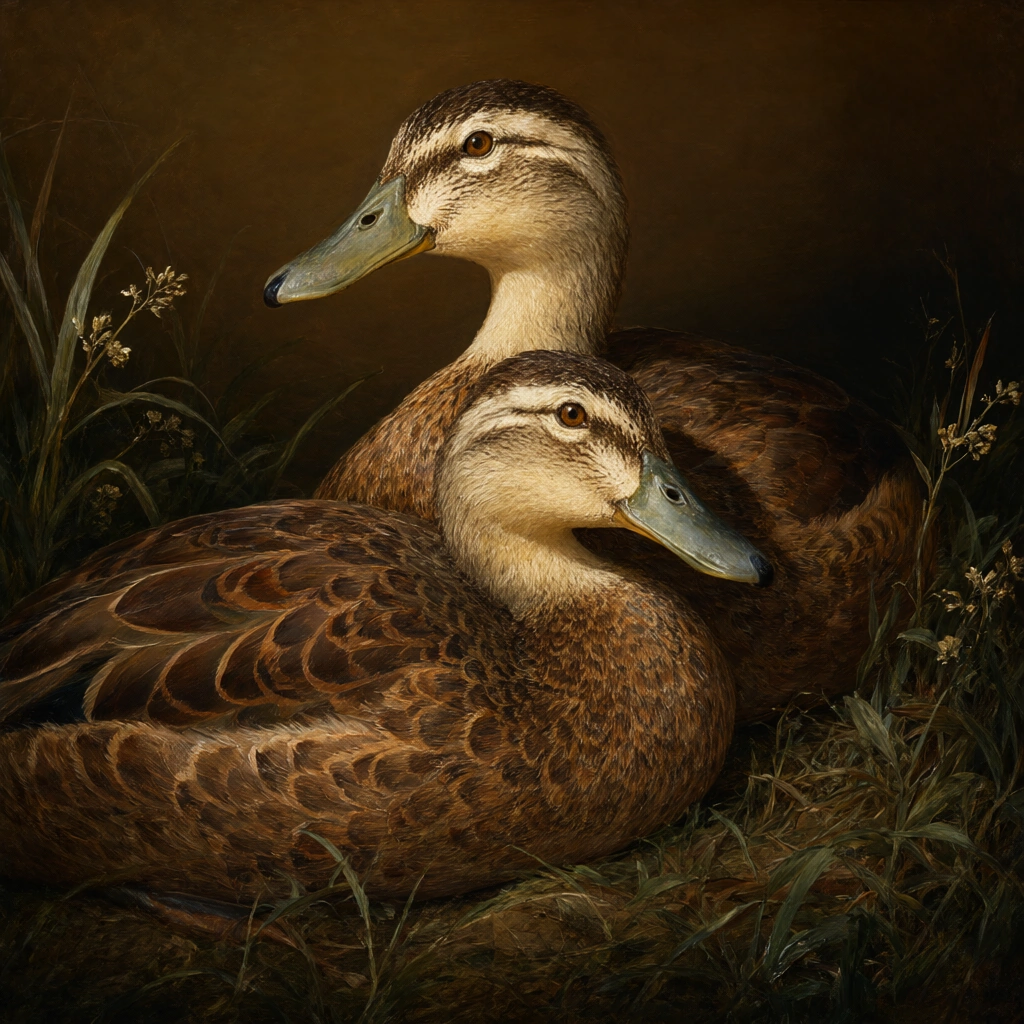 Qwen Image 2.1
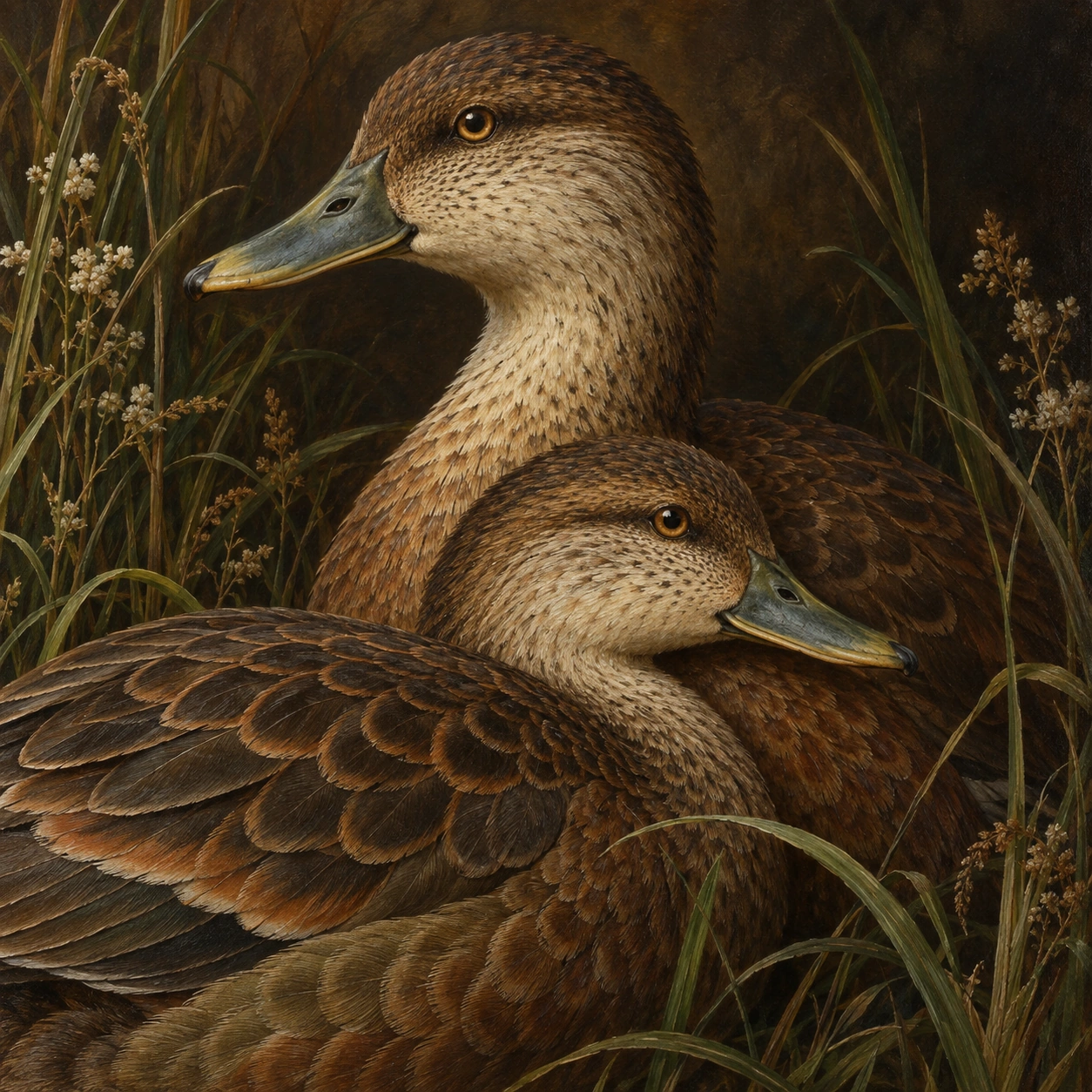 GPT Image 2.5
Reference details
- Reference ID
- 2783
- Category
- Painting
Reference prompts
Style prompt
Naturalistic wildlife painting combines anatomical precision with a soft, dark atmospheric setting. Fine directional strokes distinguish layered feathers, fur, leaves, or similar organic surfaces; warm brown, cream, olive, and rust tones shift gradually within each form. Small glossy eyes or other focal points receive carefully placed highlights. A shaded ground makes pale edges emerge without hard theatrical light. Thin grasses and tiny blossoms can form a delicate secondary network around the main shapes. Cropping stays close enough to reveal tactile surface detail, while the overall silhouette remains calm and legible. The result is patient, intimate, and warmly observed.Full example prompt
The image is a square natural history painting of two brown ducks nestled close together among waterside vegetation. The larger duck rises behind, its head held high and turned toward the left. A smaller duck rests lower in the foreground, its head extending to the right across the larger bird's breast. Both have warm amber eyes and blue-green bills edged with dull yellow. Pale cream feathers cover the necks and cheeks, marked by short dark strokes. The bodies are richly layered in brown, rust, and olive feathers, with individual rows and curved edges carefully observed. The smaller bird's wing occupies much of the lower left, patterned with dark scalloped feathers and warm orange-brown margins. Thin reeds and grass blades rise around the birds. Tiny pale seed heads and flowers interrupt the dark vegetation near the left and right edges. The background is a deep warm brown, gradually becoming almost black in shaded corners, so the bright faces and textured feathers emerge clearly. Light enters softly from the upper left and touches the top duck's neck, both eyes, and the lower wing. It does not create a dramatic cast shadow; volume is built through many layered color strokes and tonal transitions. The composition is intimate and close, cropping the bodies at the frame edges and placing the bills in opposing directions. No open lake or broad landscape is visible. The surrounding plants provide a habitat, but the birds remain the unmistakable focus. The painting has a patient, tactile finish, balancing accurate anatomical detail with warm atmospheric shadow. Its quiet mood comes from the paired forms, close attention to feathers, and the gentle movement of the eye between their two profiles.