
Styles
#2795
Alan Moore style reference and prompts
Explore the “Alan Moore” reference with directional strokes, sepia tones, and crosshatching. View the images, copy the style or example prompt, and discover related styles on Looksift.
Compare the Qwen Image 2.1 and GPT Image 2.5 examples, choose the visual qualities you want, and copy the style prompt for your own project.
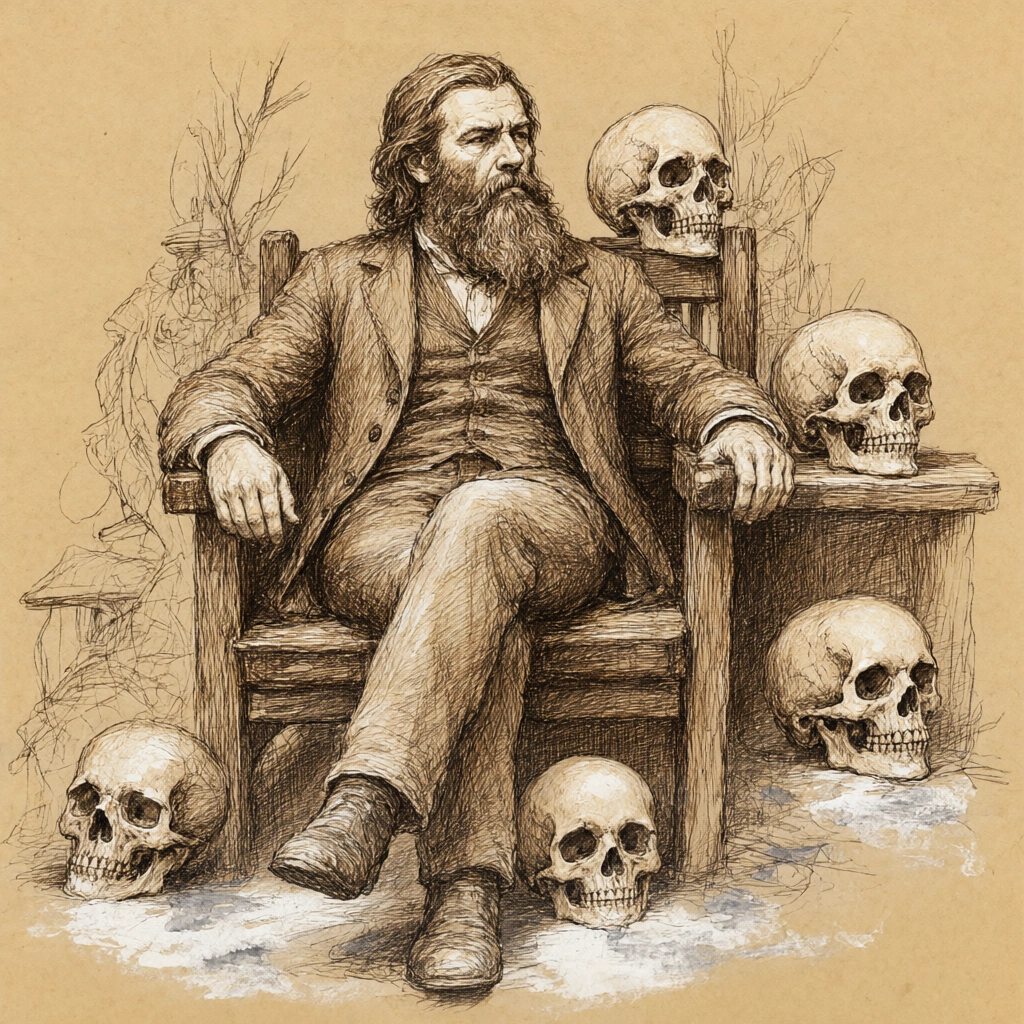 Qwen Image 2.1
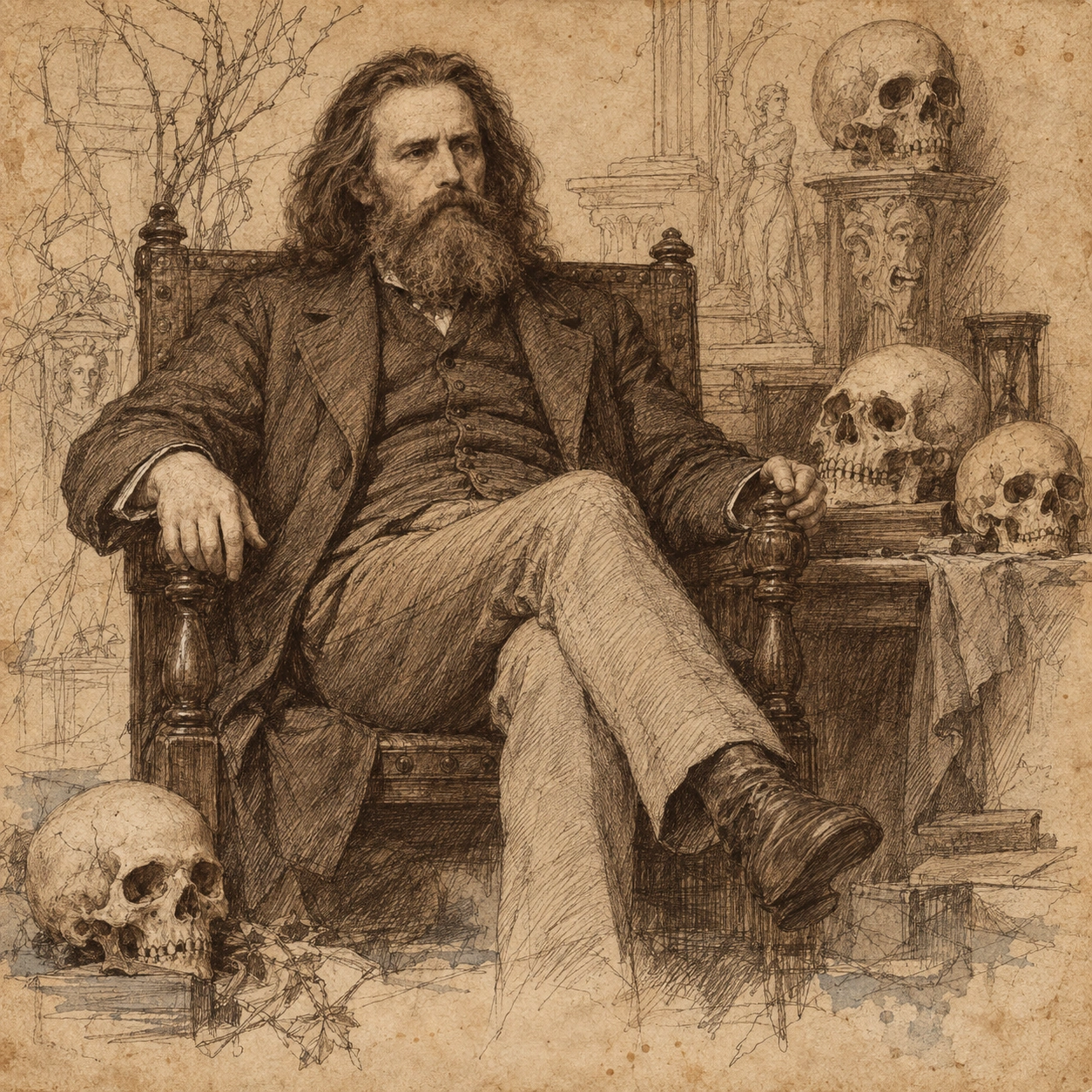 GPT Image 2.5
Reference details
- Reference ID
- 2795
- Category
- Ink & line
Reference prompts
Style prompt
Sepia draftsmanship combines dense pen or pencil hatching with open paper and loose exploratory lines. Warm tan ground carries dark brown contours, crosshatched recesses, and occasional faint wash. Figures and objects receive careful anatomical and material detail, while surrounding architecture or foliage may remain partly unresolved. Unmarked paper acts as light; shadow accumulates through repeated directional marks instead of smooth tone. The edges can fade into sketches, stains, and small marks, retaining an archival handmade quality. The result is reflective, textured, and slightly macabre, balancing formal central weight with informal drawing process.Full example prompt
The image is a square sepia drawing of a bearded man sitting in a sturdy chair among several human skulls. He is placed slightly left of center, his torso facing forward while one leg crosses over the other. Long hair and a full beard surround a stern, thoughtful face. He wears a jacket over a buttoned vest and trousers. One hand rests on the chair arm at the left, and the other holds or grips the right armrest. Skulls appear on a shelf or table to his right, one high behind his head, and others near the lower corners. Their rounded craniums, dark eye sockets, and teeth are rendered with the same careful linework as the man's face and clothing. Behind the chair, fine sketch lines suggest branches, carved forms, and architectural elements without resolving into a single definite room. The background is an aged tan paper field, not a fully painted space. Dark brown pen or pencil hatching models the jacket folds, beard, wood grain, and skull cavities. Some lines are precise and dense, while others remain loose exploratory marks. The lower area has more white or lightly toned paper showing through, with small gray-blue washlike touches near the base. Illumination is implied by unmarked paper on the face and trousers, contrasted with crosshatched shadows beneath the chair and around the objects. The composition has an informal archival look, as though a detailed study and a symbolic tableau occupy the same page. Its mood is reflective and macabre rather than violent. The drawing's visual character comes from monochrome sepia ink, granular paper texture, irregular sketch edges, and the strange calm of a seated figure amid skulls.