
Styles
#2813
Architectural Trompe-l’œil Painting
Painted wall openings, converging floor lines and a coastal view create an illusion of architectural depth. View the images, copy the style or example prompt, and explore related references on Looksift.
Compare the Qwen Image 2.1 and GPT Image 2.5 examples, choose the visual qualities you want, and copy the style prompt for your own project.
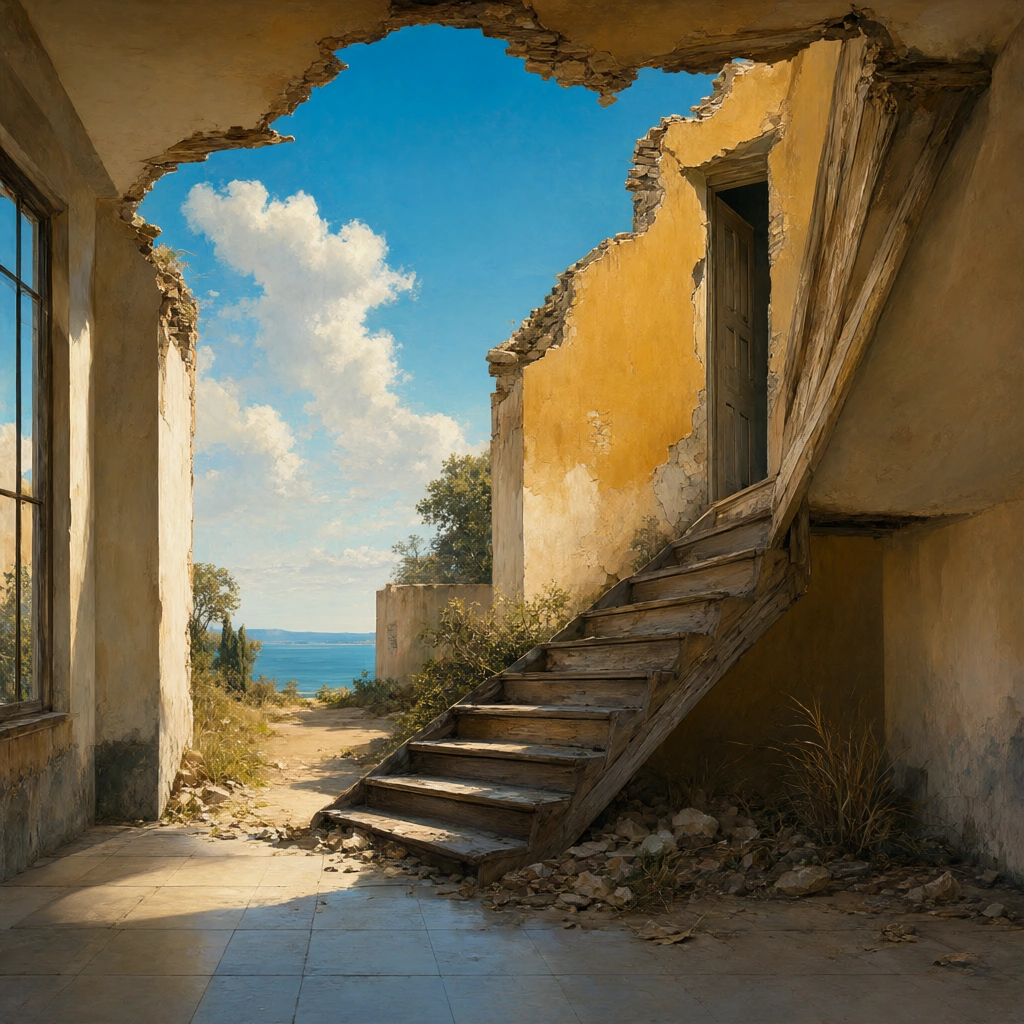 Qwen Image 2.1
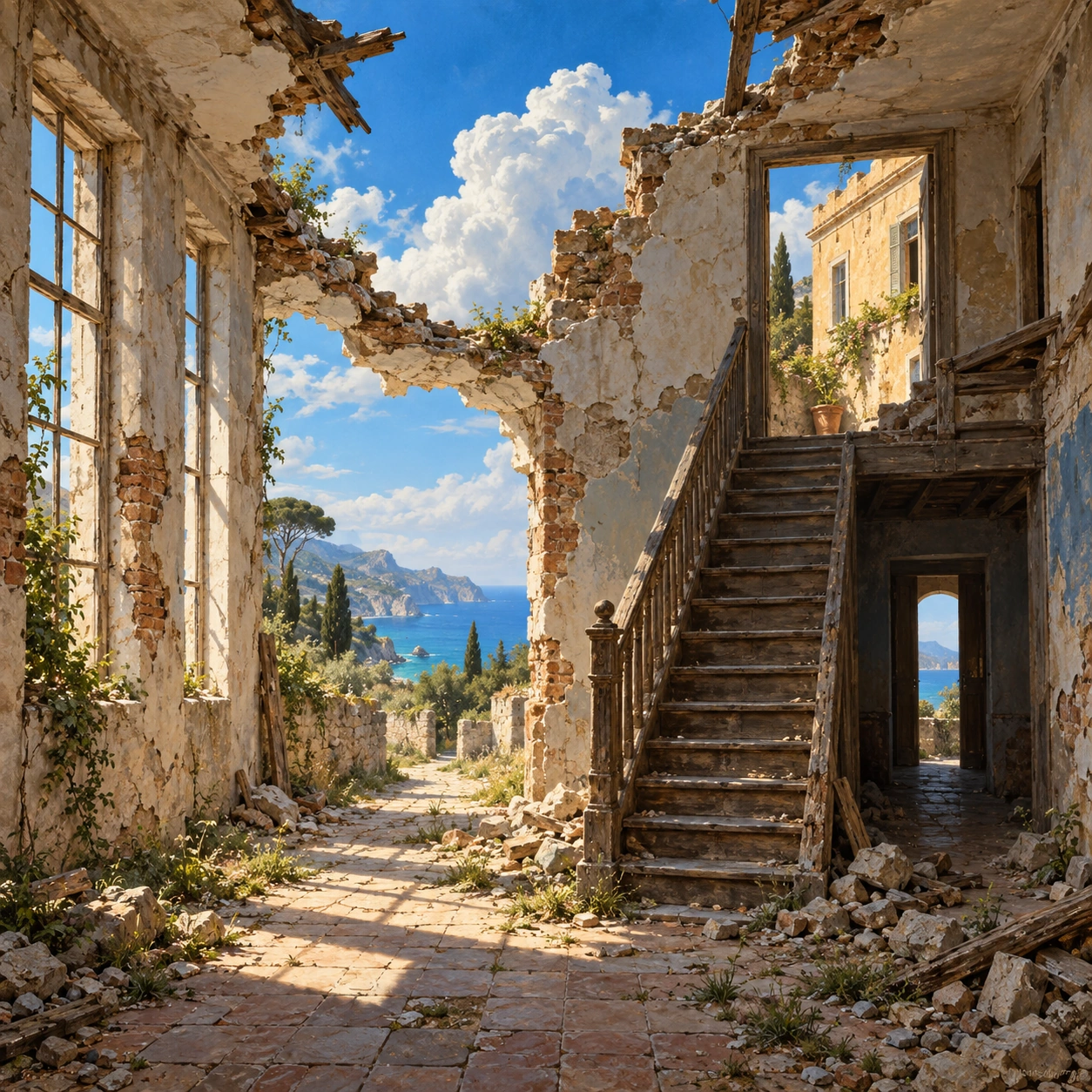 GPT Image 2.5
Reference details
- Reference ID
- 2813
- Category
- Painting
Reference prompts
Style prompt
An illusionistic painted surface aligns strong perspective lines with irregular broken openings. Warm ochre and pale plaster planes meet vivid turquoise-blue and luminous cream-white beyond, creating a sharp transition between enclosed shadow and open light. Fine material marks distinguish peeling matte layers, rough granular edges, fibrous structural lines, and smooth distant color. Sunlight from upper openings catches fractured rims and projects clear tonal shifts into cooler interior recesses. The composition uses converging floor and stairlike rhythms to pull attention inward, then a large bright void expands the space unexpectedly. Crisp near detail and softer far atmosphere maintain physical plausibility within the visual surprise.Full example prompt
A square illusionistic architectural painting shows a ruined interior whose broken walls open directly onto a bright coastal landscape. A worn wooden staircase climbs up the right center toward an upper doorway and a sunlit ochre facade. At left, tall windows and a pale wall frame a narrow path leading to blue water, shrubs, and distant trees. The ceiling is torn away in broad irregular patches, revealing intense turquoise-blue sky and towering white clouds where a roof should be. Crumbling plaster exposes brick and timber along the fractures. Rubble, sparse grass, and small stones scatter across the tiled ground at the foot of the stair. Warm afternoon light enters from the upper left and through the roof opening, striking the outer facade and broken edges while the doorway and underside of the stairs remain cooler and darker. The painted perspective is carefully aligned: floor joints and stair treads pull the eye inward, then the impossible opening releases it into open air. Fine material detail distinguishes peeling plaster, rough masonry, weathered wood, foliage, and smooth distant water. No readable lettering appears. The overall composition is both believable and surprising, using precise spatial depth and sunlit color to turn a damaged building into a window onto another place.