
Styles
#2818
Pinhole lens style reference and prompts
Explore the “Pinhole lens” reference with a circular opening. View the images, copy the style or example prompt, and discover related styles on Looksift.
Compare the Qwen Image 2.1 and GPT Image 2.5 examples, choose the visual qualities you want, and copy the style prompt for your own project.
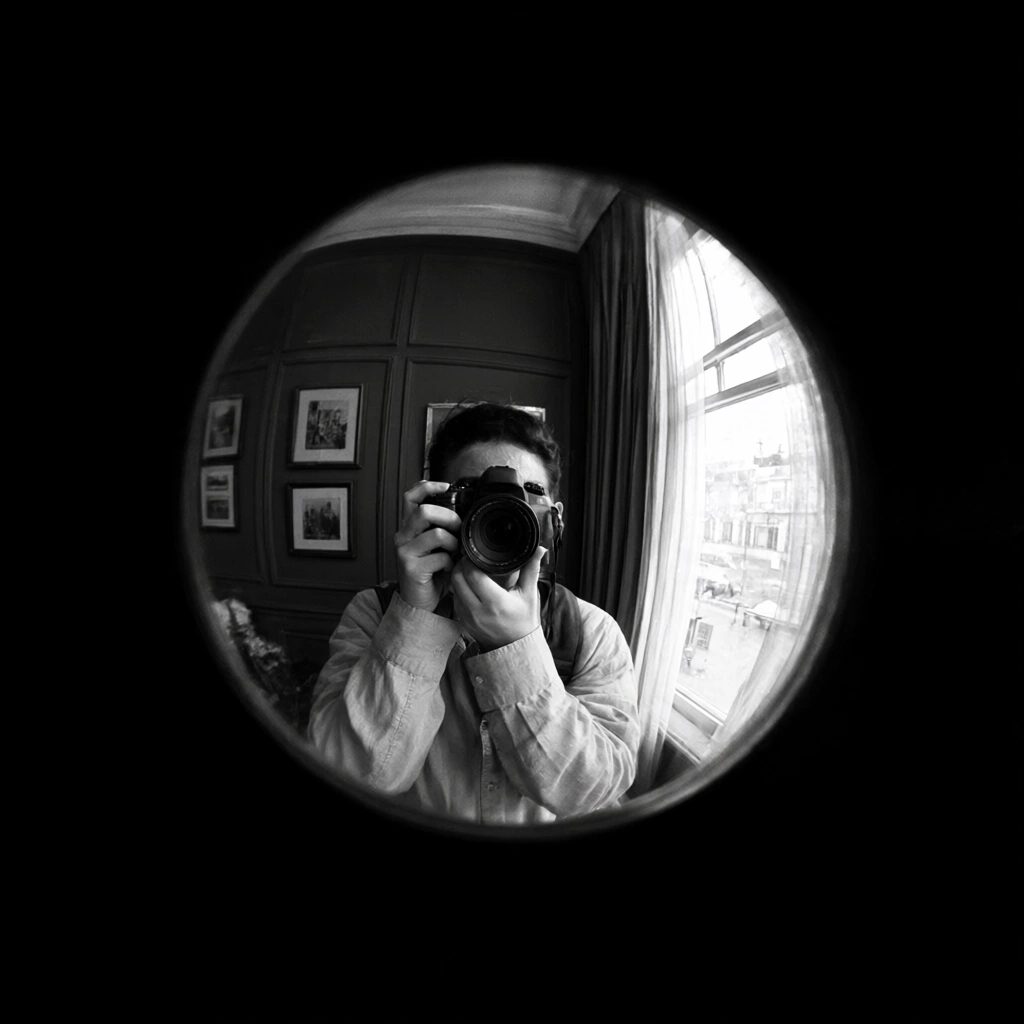 Qwen Image 2.1
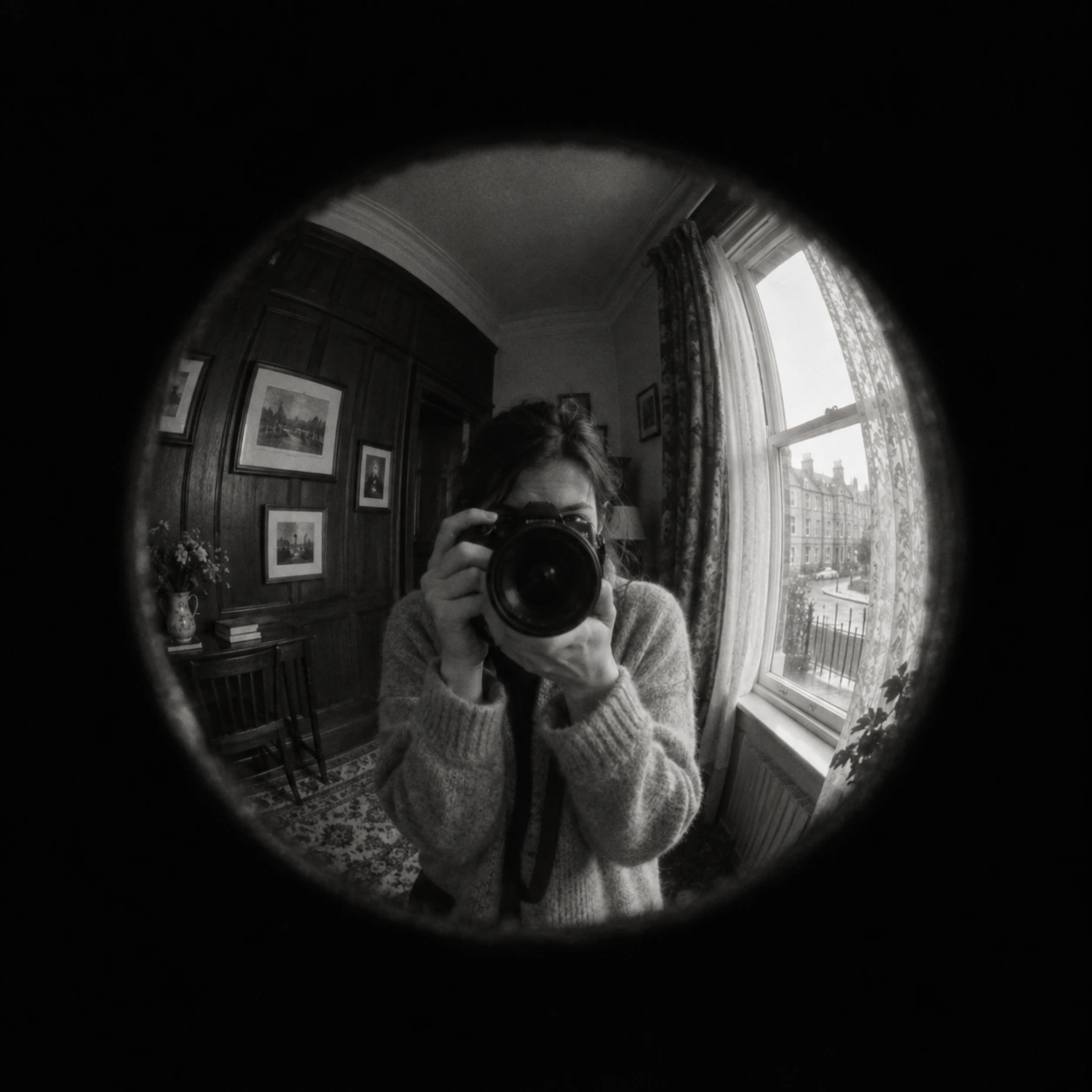 GPT Image 2.5
Reference details
- Reference ID
- 2818
- Category
- Photography
Reference prompts
Style prompt
Analog-looking photographic treatment encloses a distorted scene inside a small circular opening surrounded by expansive black. The aperture edge is soft and uneven, with focus and brightness falling toward its perimeter. Extreme wide-angle curvature bends nearby straight lines and makes the interior feel compact. Bright windows or highlights oppose deep shadow within the circle, while grain and tonal variation keep the optical effect physical. The empty black outer field becomes a major compositional mass. A central focal point can remain recognizable despite the surrounding blur. The result is curious, intimate, and self-conscious about the act of seeing through a limited lens.Full example prompt
The image is a square black-and-white photograph in which the visible scene appears only inside a small circular window. Most of the frame is deep black. The circle lies near the center and contains a distorted view of an interior with a person holding a camera up to the face. Pale sleeves and hands are visible around the dark lens, which points directly toward the viewer. The photographer's eyes and upper head appear behind it. A dark paneled wall with framed pictures occupies the left side of the circular image. On the right, a bright window and layered curtains reveal a pale street or buildings outside. The extreme wide-angle or pinhole-like view bends vertical lines near the circle's perimeter. The wall and window curve inward, and clarity falls off quickly toward the dark edge. The round vignette itself has a blurred uneven rim rather than a hard graphic border. Within the circle, bright window light contrasts with the dark wall and black camera. Fine grain, soft focus, and a little tonal unevenness give the image an analog character. There is no information in the black surrounding field; its large area makes the small captured world feel isolated and discovered through a narrow aperture. The photographer is centrally placed, but the window on one side and shadowed interior on the other create asymmetric light. The image is simple in subject yet unusual in framing. It emphasizes the act of looking through a hole, the optical bend of a wide circular view, and the distance between an enclosed observed scene and the black outside it. The overall mood is curious and intimate, with a playful self-reflective quality grounded in physical lens distortion.