
Styles
#2870
James Stirling style reference and prompts
Explore the “James Stirling” reference with translucent color layers, paper texture, and warm color tones. View the images, copy the style or example prompt, and discover related styles on Looksift.
Compare the Qwen Image 2.1 and GPT Image 2.5 examples, choose the visual qualities you want, and copy the style prompt for your own project.
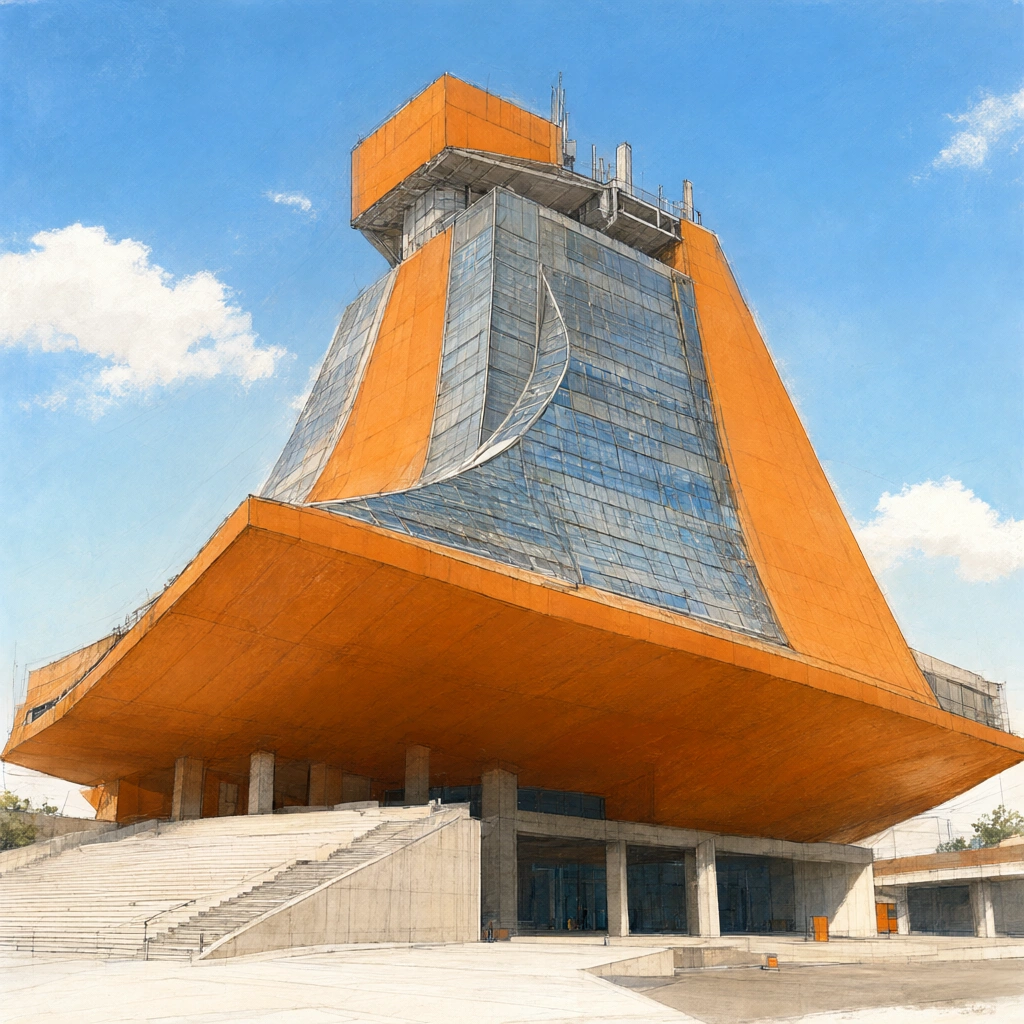 Qwen Image 2.1
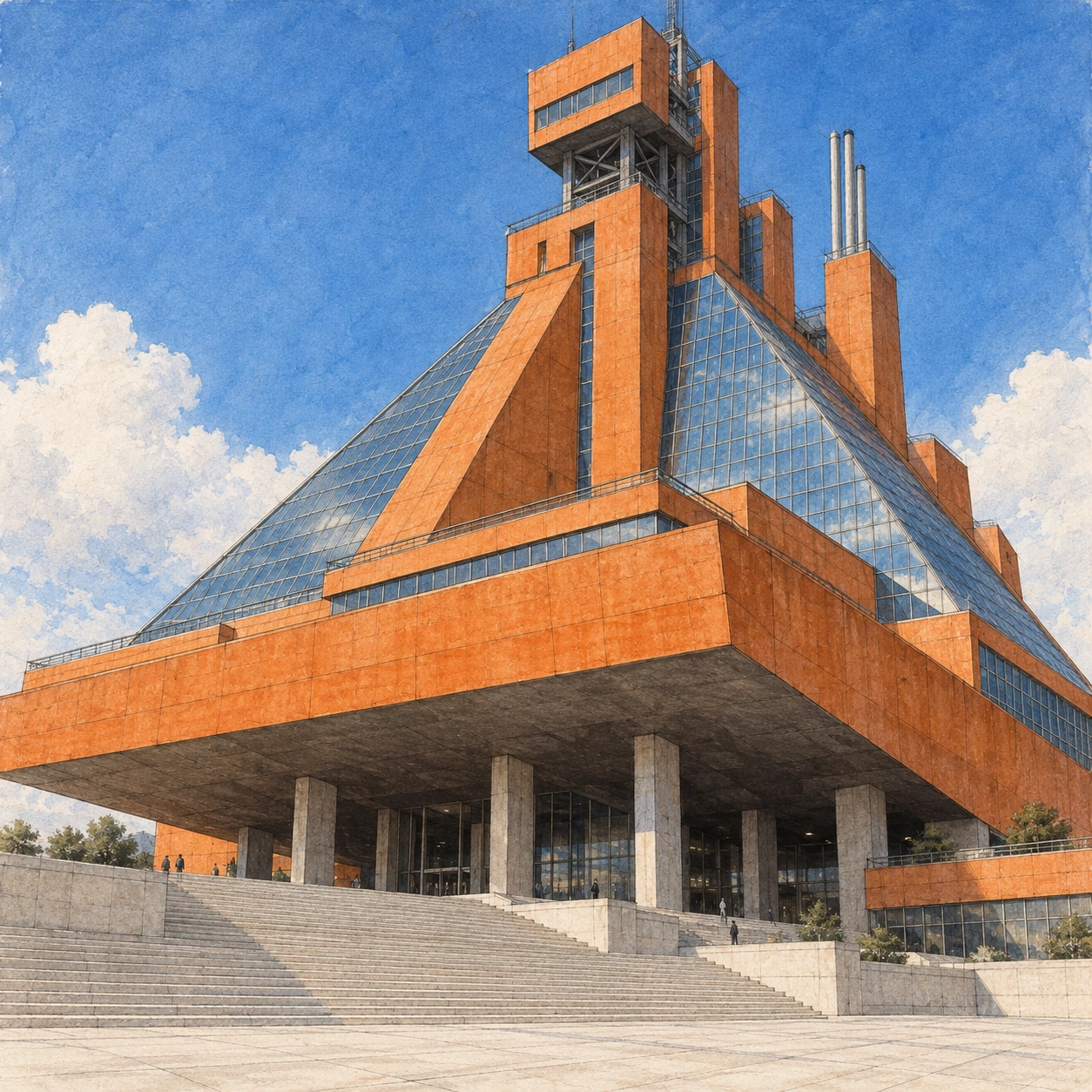 GPT Image 2.5
Reference details
- Reference ID
- 2870
- Category
- Painting
Reference prompts
Style prompt
Hand-rendered architectural illustration combines assertive angular massing with exposed pencil construction, watercolor-like color, and precise glazing grids. Warm orange planes meet cool blue-gray reflective surfaces and clear sky. Large cantilevers or projecting forms cast substantial shadow underneath, giving the drawing true volumetric depth. Thin lines map stairs, joints, windows, and smaller structural details without competing with the main silhouette. A low oblique perspective makes diagonal planes rise dramatically while tiny scale cues remain at the base. Slightly uneven pigment and paper grain prevent the geometry from feeling digital. The effect is experimental, optimistic, and materially grounded, with structural rhythm and color contrast defining the image.Full example prompt
The image is a square architectural drawing or painted rendering of a monumental modern building under a clear blue sky. A broad orange structure dominates the frame. Its lower portion flares outward into a large projecting roof, casting deep shadow over an open ground level supported by pale columns. Wide stairs rise from the lower left toward that shaded entrance. Above the projecting mass, steep sloped planes climb to a narrow orange tower. Large sections of the slopes are covered in blue-gray gridded glass, reflecting the sky in small rectangular panes. At the top, a boxlike orange cap sits above an exposed steel-gray platform, with additional narrow vertical elements and chimneylike structures nearby. The building's geometry is emphatic but complex: diagonals, terraces, ledges, glazing bands, and vertical stacks intersect while retaining a clear upward hierarchy. The foreground is mostly pale stone steps and pavement, drawn with finer, lighter lines than the main orange mass. A few tiny human-scale marks near the base help show its size. White clouds sit low in the sky on both sides. Warm orange cladding contrasts with cool blue glazing and sky, while gray structural undersides give depth to the cantilevered areas. Visible pencil-like construction lines, textured watercolor washes, and slightly uneven pigment reveal the hand-rendered surface. Light appears to come from above and left, brightening outer slopes and leaving recesses under the overhang dark. The camera angle is low and oblique, emphasizing the building's dramatic rise. The image feels optimistic and experimental, balancing rigorous built geometry with the soft grain and imperfect edges of an architectural illustration.