
Styles
#2904
Brush pen drawing style reference and prompts
Explore the “Brush pen drawing” reference with crosshatching. View the images, copy the style or example prompt, and discover related styles on Looksift.
Compare the Qwen Image 2.1 and GPT Image 2.5 examples, choose the visual qualities you want, and copy the style prompt for your own project.
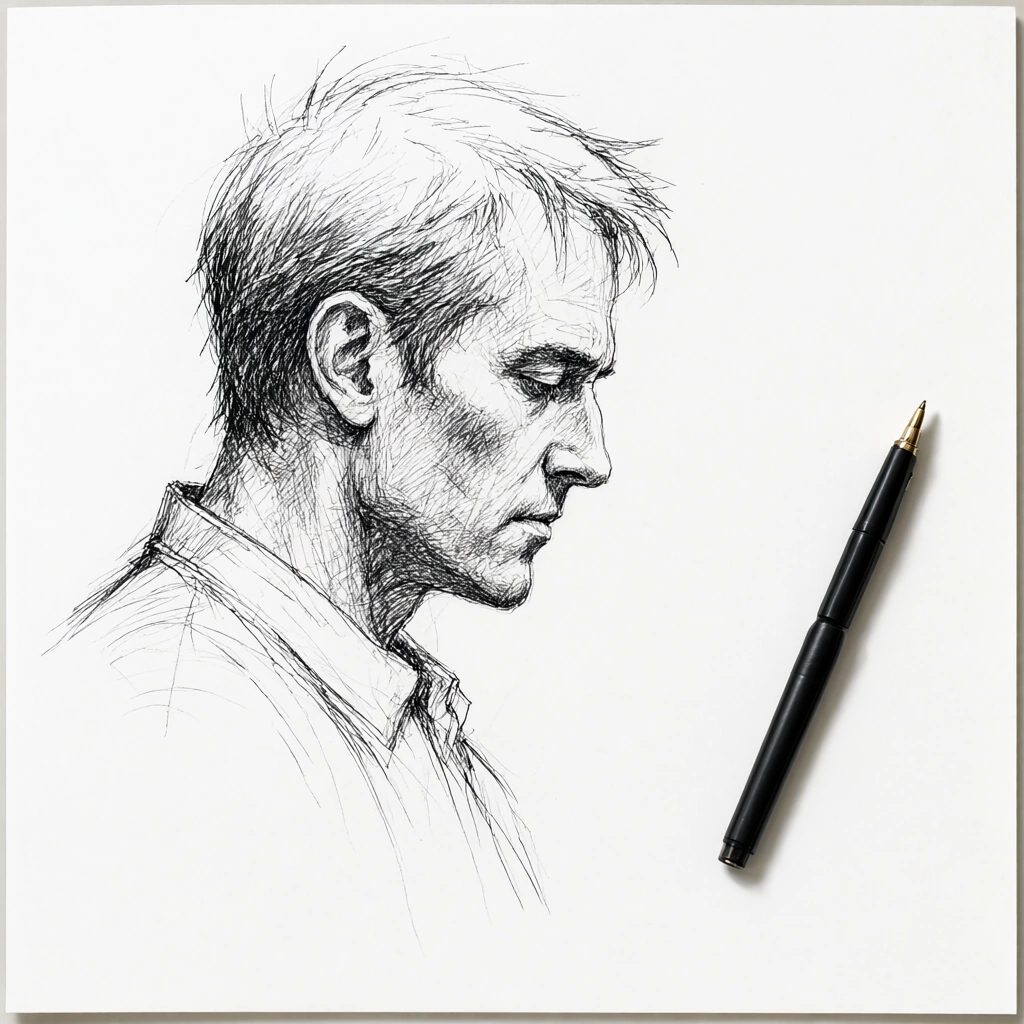 Qwen Image 2.1
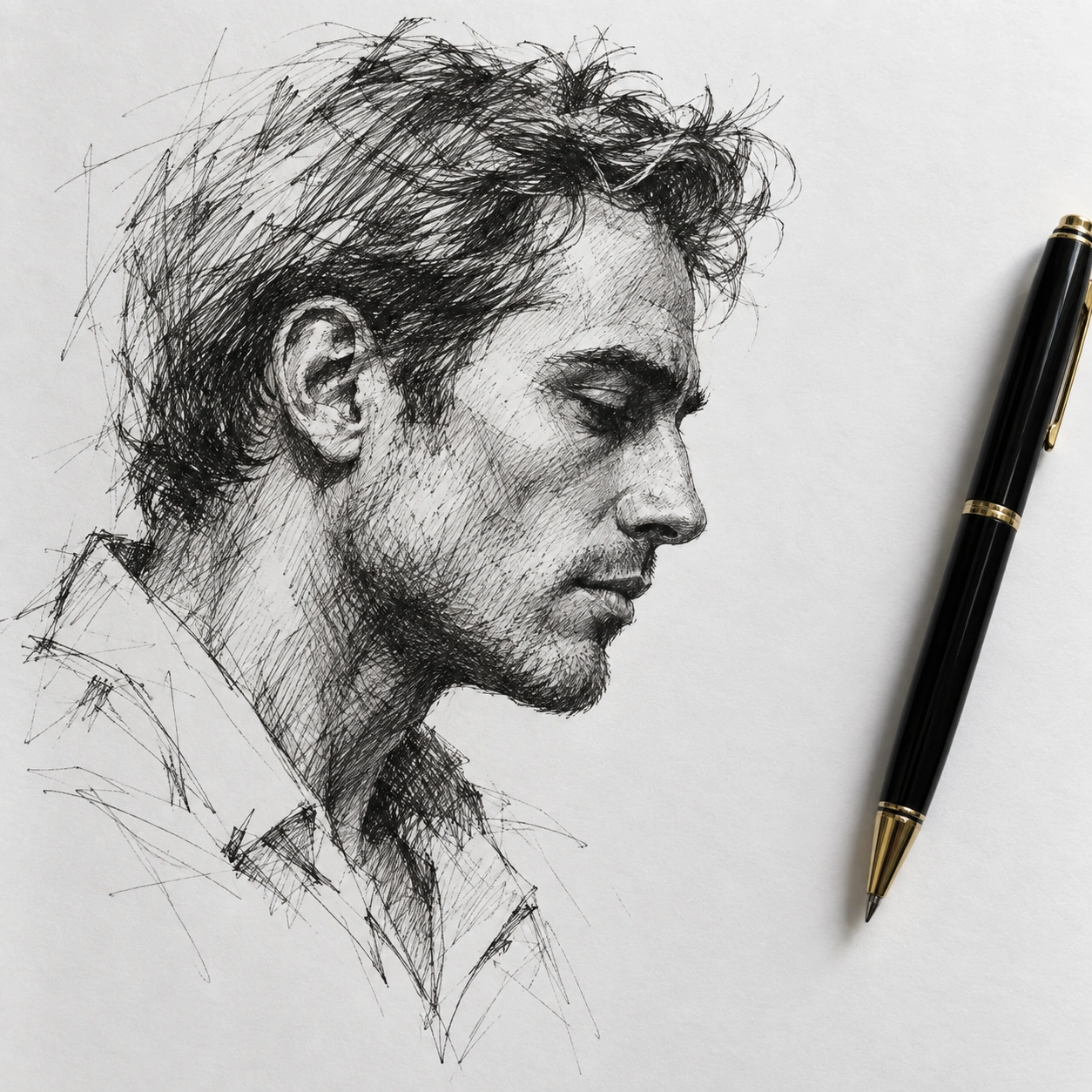 GPT Image 2.5
Reference details
- Reference ID
- 2904
- Category
- Photography
Reference prompts
Style prompt
The drawing-oriented image uses varied black pen pressure and direction over clean white paper. Fine searching lines remain visible outside the resolved contour, while dense crosshatching and short parallel strokes build shadow and structure inside it. Large untouched paper areas allow the dark focal marks to breathe. Edges alternate between decisive ink cuts and broken sketch lines, creating immediacy without losing form. Even overhead light reveals a faint physical page grain and slight real-object shadows, but tonal modeling comes mainly from mark density. The finish feels observational, vigorous and unfinished in a deliberate way.Full example prompt
A square photograph of a drawing shows a man's left-facing profile sketched in black ink on a bright white sheet, with a dark pen placed diagonally along the right side. The paper fills nearly the whole frame and has no printed grid or border. The drawn head occupies the left and center, beginning with loose, spiky hair at the top and continuing into a strong forehead, nose and chin facing right. His eyes appear lowered or nearly closed, and his expression is contemplative. The ear, cheekbone and jaw are built from short slanted hatching, with darker clusters under the brow and along the neck. A suggested collared shirt and shoulder fade into sparse exploratory lines near the lower left, leaving much of the surrounding page open. Light gray construction strokes run beyond the finished contour at the crown and back of the head, revealing the drawing's active process. The black pen to the right has a gold-colored tip and small metal accents, its point aimed down toward the lower middle. It casts a faint shadow on the paper, distinguishing the real object from the drawn portrait. The image is lit evenly from above with mild shading at the page edge and under the pen. Ink marks vary from fine hairlines to dense scratched blocks, giving the profile volume without washes of color. The overall composition pairs a concentrated, energetic face study with clean white negative space and one simple drawing tool.