
Styles
#2916
Carl Spitzweg style reference and prompts
Explore the “Carl Spitzweg” reference with scumbled paint, teal and ochre tones, and earth tones. View the images, copy the style or example prompt, and discover related styles on Looksift.
Compare the Qwen Image 2.1 and GPT Image 2.5 examples, choose the visual qualities you want, and copy the style prompt for your own project.
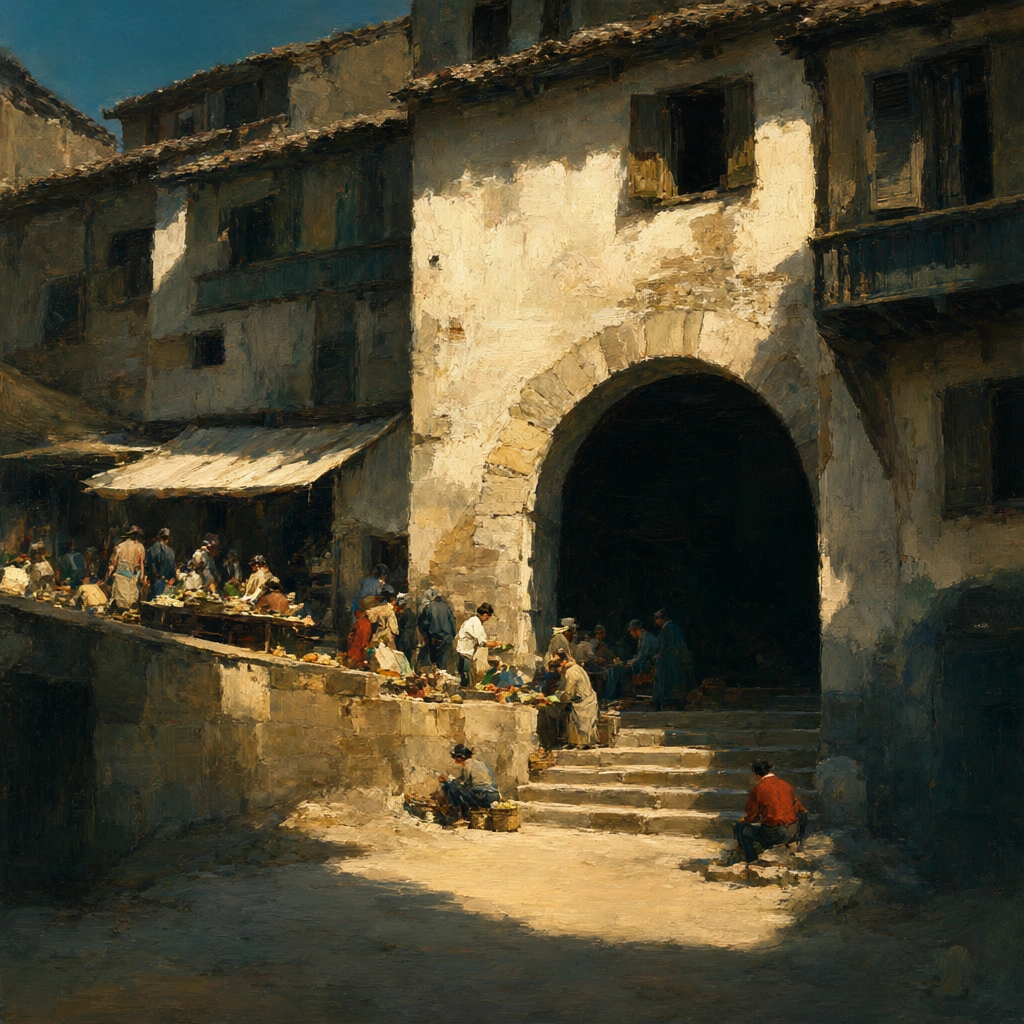 Qwen Image 2.1
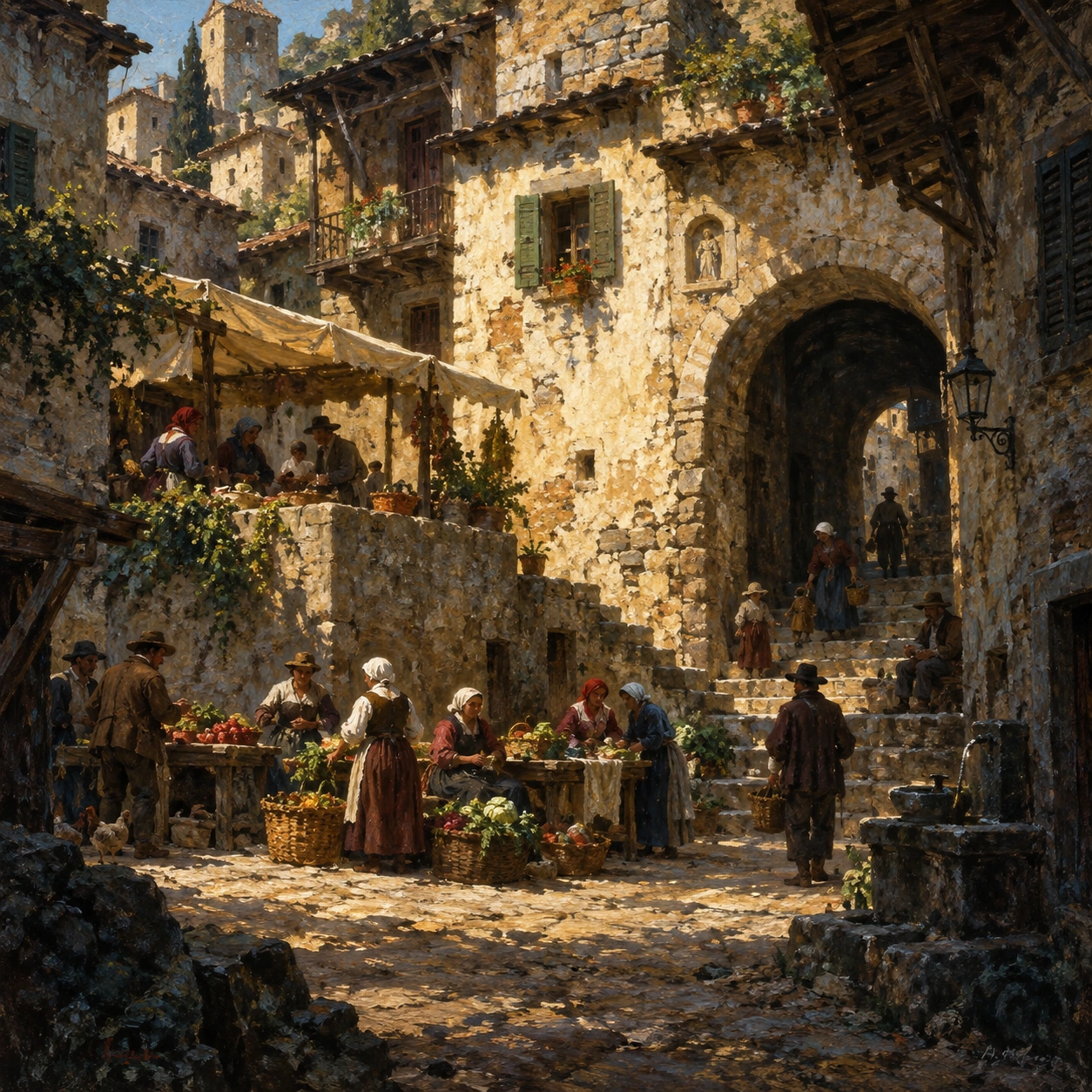 GPT Image 2.5
Reference details
- Reference ID
- 2916
- Category
- Painting
Reference prompts
Style prompt
The painting uses textured oil color and broken, visible strokes to build a dense but readable scene. Warm cream, dusty ochre, and small muted red notes emerge from large pools of cool teal and brown shadow. Light falls in selective patches rather than covering the frame evenly, so rough surfaces and projecting edges gain volume while recessed areas remain deep. Contours loosen around small distant forms and tighten around major structural divisions. Scumbled color and granular, worn texture make the surface feel aged and lived in. The composition gathers many modest details around a bright middle area, with darker margins giving the crowded arrangement calm focus.Full example prompt
A square oil painting presents a small village market in an old stone street, with warm sunlit masonry set against deep blue-green shade. The upper half is crowded with irregular buildings whose dark roofs, shuttered openings, and projecting wooden beams overlap at different depths. Near the center, a pale weathered wall catches the strongest light, its chipped plaster and exposed stone painted in warm cream, ochre, and muted gray. A broad arched passage opens beneath it on the right, almost black inside, while rough steps lead down from the arch into the market space. At the left, a low awning projects over a raised terrace. Small figures gather beneath it, their colored clothing and faces indicated with economical touches of red, blue, and brown. Across the lower center, people sit and stand around tables and baskets, with small piles of produce creating a broken line of warm accents. A few figures occupy the steps and the arch's edge, linking the shadowed passage to the brighter open square. The ground is uneven and dusty, painted in scumbled earth tones rather than a clean, uniform plane. The lower corners fall into deep cool shadow, making the illuminated wall and market activity appear more intimate. Sunlight enters from the upper left and lands unevenly on plaster, terrace edges, and shoulders; dark doorways and the right-hand building retain their weight. Visible brushwork softens distant faces and busy details without flattening the architecture, while the heavy shadows preserve the thickness of walls and recesses. The overall composition is a lively yet quiet cluster of people and worn structures held together by a strong contrast between golden daylight and cool blue-green shade.