
Styles
#3042
Hans Bellmer style reference and prompts
Explore the “Hans Bellmer” reference with fine linear detail, close cropping, and a nearly monochrome palette. View the images, copy the style or example prompt, and discover related styles on Looksift.
Compare the Qwen Image 2.1 and GPT Image 2.5 examples, choose the visual qualities you want, and copy the style prompt for your own project.
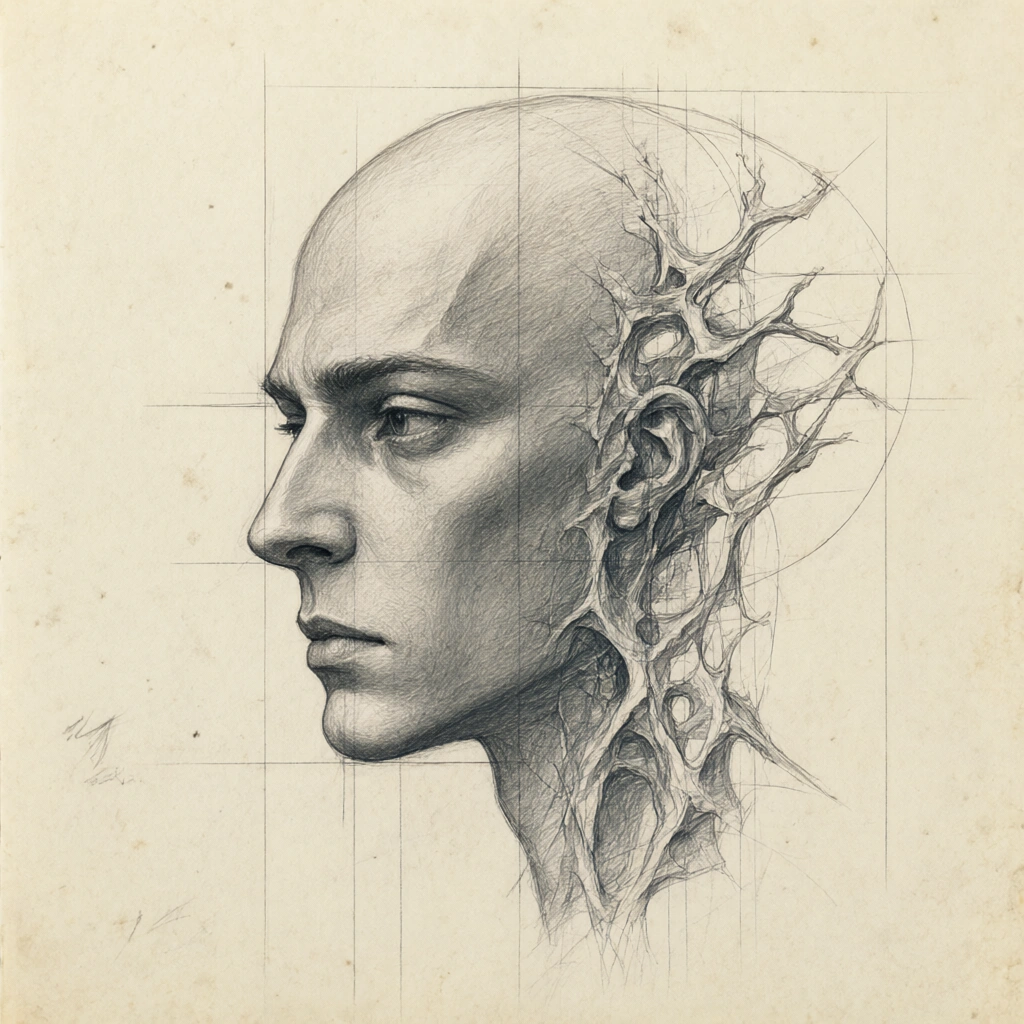 Qwen Image 2.1
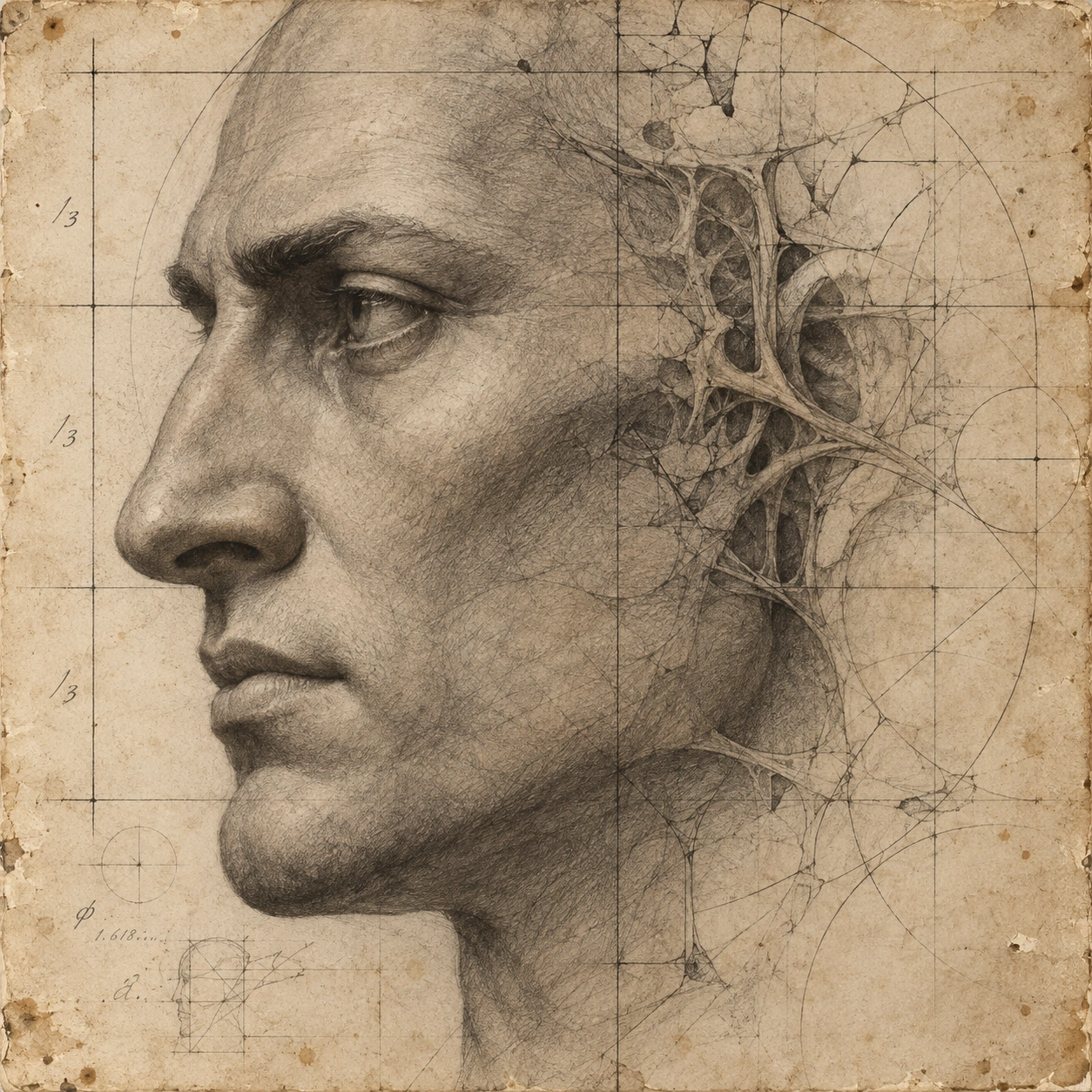 GPT Image 2.5
Reference details
- Reference ID
- 3042
- Category
- Ink & line
Reference prompts
Style prompt
The graphite-and-paper treatment layers precise tonal modeling with translucent construction marks. Aged cream, warm gray, and deep charcoal make a restrained near-monochrome field. Dark focal contours coexist with pale grids, arcs, and branching fine lines that extend beyond the main mass. Smooth shaded planes contrast with scratchier, more diagrammatic passages. Even light reveals paper stains and rubbed graphite rather than producing cast shadows. Depth is strongest where hatching gathers in tight recesses; peripheral marks remain airy and provisional. The composition uses close cropping and measured alignment to make a small area feel monumental. The overall effect is analytical, delicate, and uncanny, as if careful observation and speculative reconstruction occupy the same surface.Full example prompt
This is a square, sepia-gray graphite drawing of a human head in close side profile on aged cream paper. The face turns toward the left, with a heavy brow, sharply observed eye, long nose, closed mouth, and strong chin occupying most of the left and middle of the frame. The forehead and cheek are smoothly shaded with fine pencil hatching, while the rear of the head dissolves into branching, wirelike and bone-like forms. Thin straight construction lines cross the image vertically and horizontally, forming a measured grid around the face. Fainter circles, arcs, and lightly sketched fragments extend behind the cheek and temple, as if the portrait is being analyzed and reassembled on the page. Near the lower left, a few loose pencil strokes and faint notation-like marks remain too indistinct to read. The paper shows small stains, scratches, and uneven warm discoloration, giving the drawing an archival quality. Soft light appears even across the sheet; depth comes from graphite value, especially the dark eye socket, nose underside, and the branching recesses near the ear. The farthest technical lines stay pale, while the face's main contour is dark and decisive. No fully rendered room surrounds the head. The composition is cropped tightly, so the face feels monumental despite the delicate lines. The overall image is analytical and uncanny, joining precise portrait observation with fragile geometric scaffolding and weathered paper texture.