
Styles
#3084
Scratchboard art: side-lit portrait on black
Explore the “Scratchboard art” reference with etched linework, tactile surfaces, and close cropping. View the images, copy the style or example prompt, and discover related styles on Looksift.
Compare the Qwen Image 2.1 and GPT Image 2.5 examples, choose the visual qualities you want, and copy the style prompt for your own project.
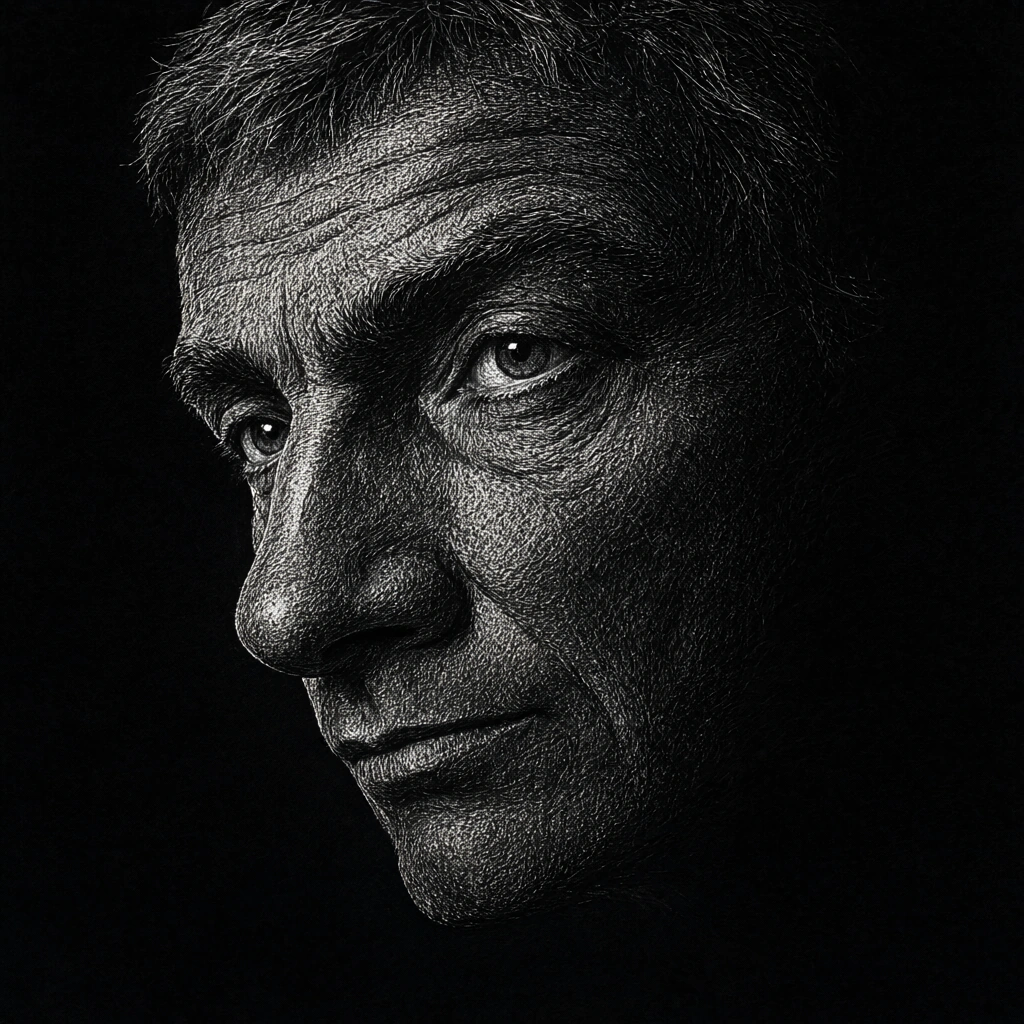 Qwen Image 2.1
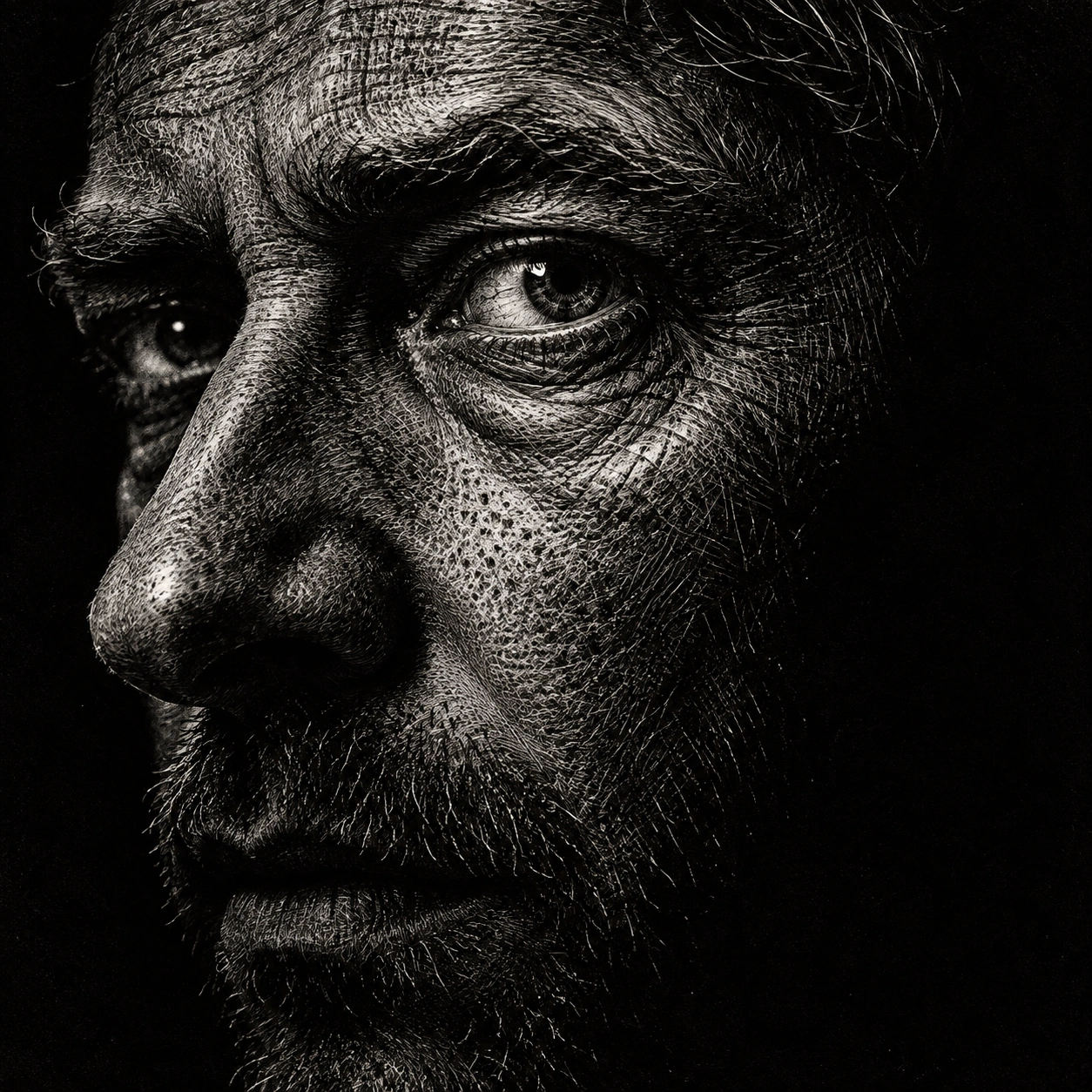 GPT Image 2.5
Reference details
- Reference ID
- 3084
- Category
- Painting
Reference prompts
Style prompt
The scratchboard treatment constructs light by removing black, not by laying a smooth pale wash over it. Fine white cuts, stipples, curved hatch lines, and dense crosshatching accumulate into rounded volume. Nearly solid black areas remain essential, holding the detail together and making tiny highlights decisive. An upper-side light establishes a sharp value gradient across the focal mass, while secondary edges vanish into darkness. The surface has a tactile engraved rhythm: short marks for roughness, longer arcs for smooth curvature, and untouched black for depth. Close cropping magnifies the mark-making. The overall effect is stark, intimate, and almost forensic, with tonal precision arising from thousands of visible incisions.Full example prompt
This is a square, black-and-white scratchboard-style close-up of an adult face emerging from an almost solid black field. The head is turned three quarters toward the left, with the nose projecting strongly into the lower left and both eyes visible near the upper half. The nearer eye is large and reflective, surrounded by deeply etched rings and fine wrinkles; the farther eye catches a smaller pale highlight beneath a heavy brow. Short irregular hair and forehead texture are made from many tiny white cuts through dark ground. The cheek and nose carry dense stippling and crosshatched scratches, while the mouth remains partly swallowed by shadow along the lower edge. A broad dark area occupies the right side, making the lit face seem to push forward from a void. The eye highlights are the brightest points, with narrow glints on the nose and cheek following them. Illumination appears to come from the upper left, exposing the facial relief but leaving the underside and far contour in deep black. The surface is intensely tactile: thin curved lines follow skin folds, shorter cuts describe pores and hair, and thicker black gaps preserve the larger structure. No environment, prop, or writing is visible. The crop is so close that parts of the head disappear beyond the top and side edges. The overall composition is direct and unsettling, using thousands of small pale marks to build volume and expression inside a severe monochrome contrast.