
Styles
#3150
Anaglyph Art with Red and Cyan Edge Offsets
Red and cyan edge offsets surround near-grayscale pillars and coast, evoking a vintage stereo-print look. View the images, copy the style or example prompt, and explore related references on Looksift.
Compare the Qwen Image 2.1 and GPT Image 2.5 examples, choose the visual qualities you want, and copy the style prompt for your own project.
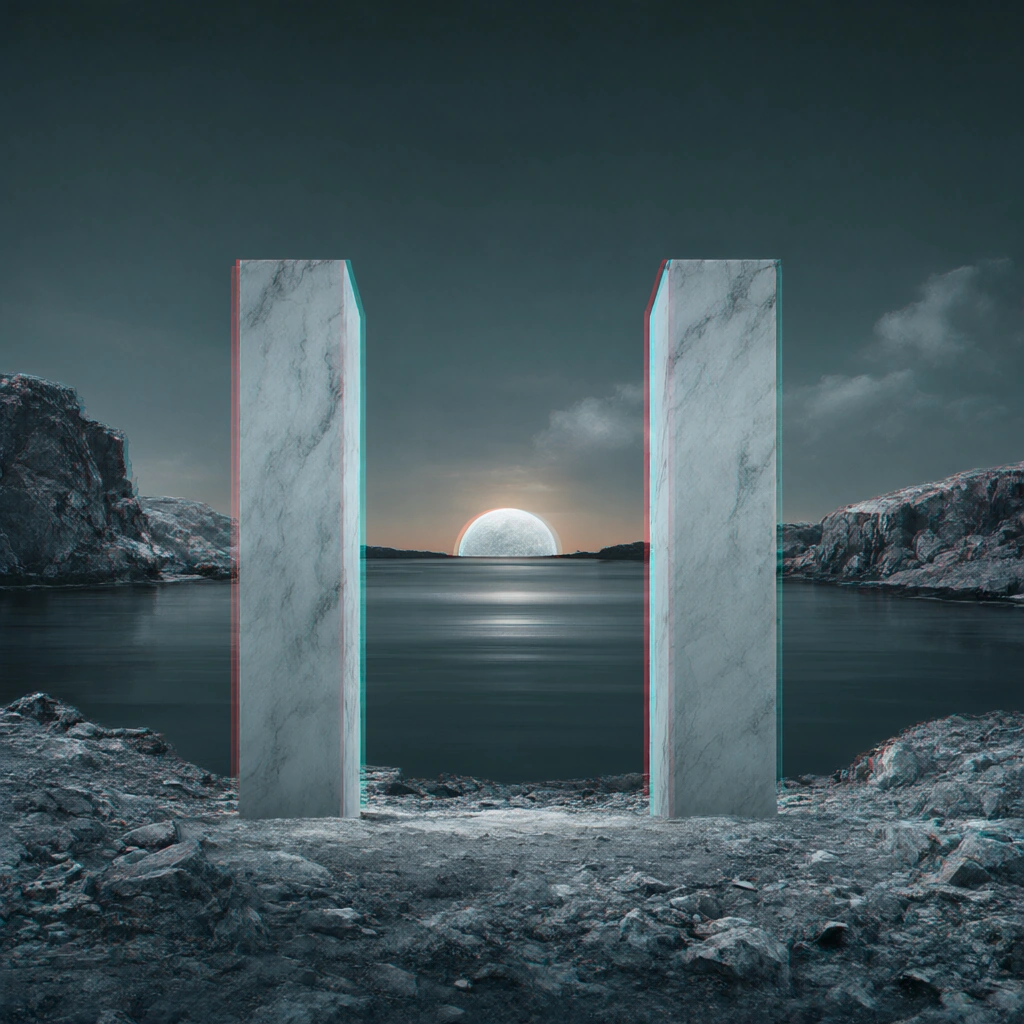 Qwen Image 2.1
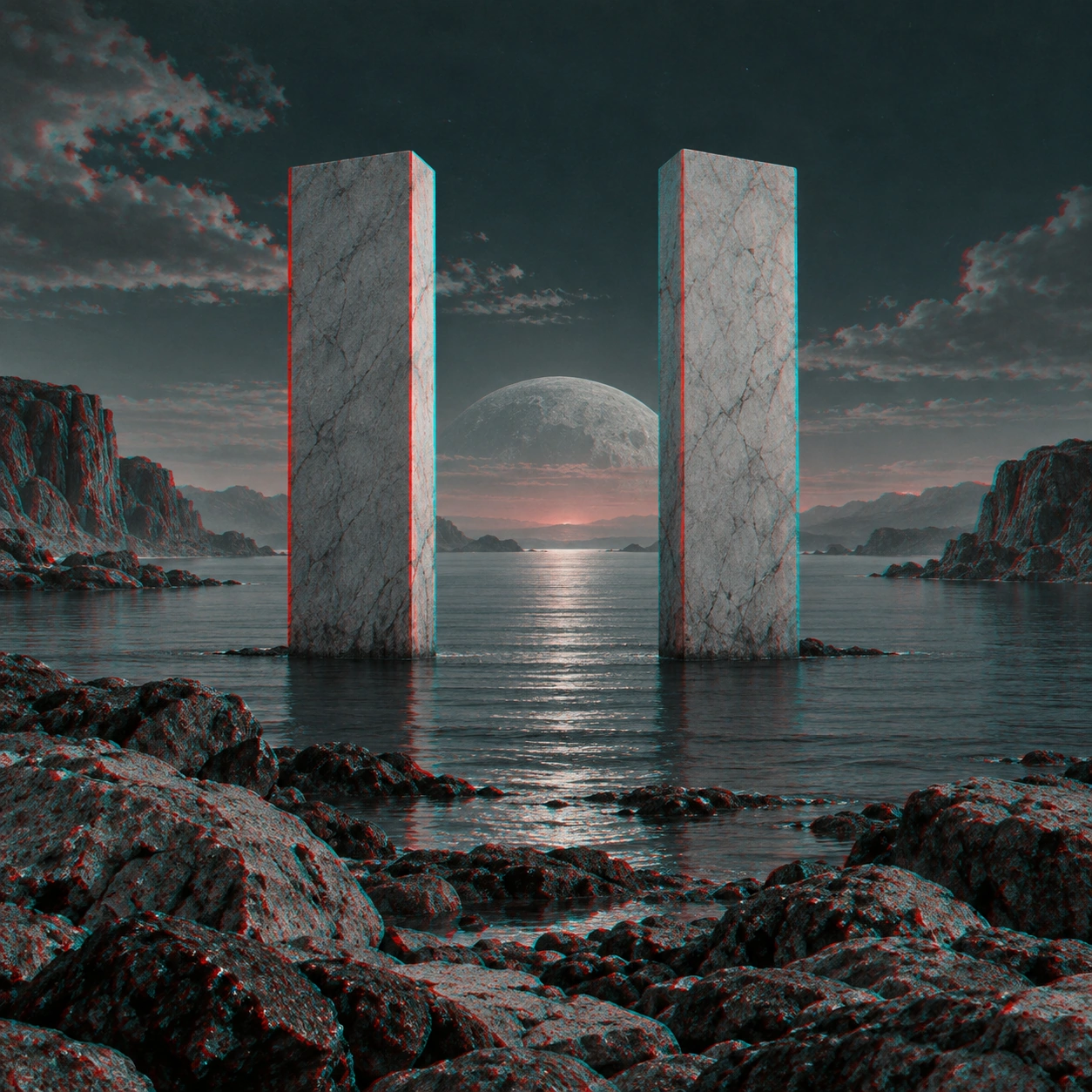 GPT Image 2.5
Reference details
- Reference ID
- 3150
- Category
- Photography
Reference prompts
Style prompt
A vintage anaglyph image built from near-monochrome slate and chalk with deliberate red and cyan edge offsets. Two clean vertical masses stand before broad horizontal bands, their doubled contours appearing closer than the grainy distant field. Rough foreground texture, faint water-like striations, and a hazy pale center establish depth. Low diffuse light and a muted teal-to-dark gradient keep the scene quiet; a small warm blush touches the horizon. The image feels slightly displaced rather than sharply colored, using simple geometry and paired outlines to create the stereo illusion.Full example prompt
An anaglyph landscape places two pale rectangular monoliths beside a quiet inlet. They stand near the center, separated by a narrow gap that frames a distant moonlike dome over the water. Rocky ground fills the lower foreground, and low cliffs bracket the scene at both sides. The underlying image is nearly monochrome, made of cool slate and chalky gray, but every contour carries a slight red offset on one side and cyan offset on the other. This deliberate doubled edge produces the look of a vintage three-dimensional print: the pillars seem to advance toward the viewer while the coast and celestial shape sink back. The pillars are the cleanest forms, with straight vertical edges and gently marbled surfaces; rocks, water, and clouds have rougher, grainier texture. The water reflects a dim central light in narrow horizontal bands. The sky is a muted deep teal that darkens upward, and a small warm blush lies near the horizon behind the distant dome. Lighting is low and diffuse, making the red-cyan separation more visually important than any cast shadow. The composition is balanced and still, using a pair of strong verticals against broad horizontal water and shoreline. Its otherworldly feeling comes from simple geometry, atmospheric depth, and the slight visual dislocation of the offset colors.