
Styles
#3154
Edward Lear style reference and prompts
Explore the “Edward Lear” reference with visible brush marks, translucent color layers, and even lighting. View the images, copy the style or example prompt, and discover related styles on Looksift.
Compare the Qwen Image 2.1 and GPT Image 2.5 examples, choose the visual qualities you want, and copy the style prompt for your own project.
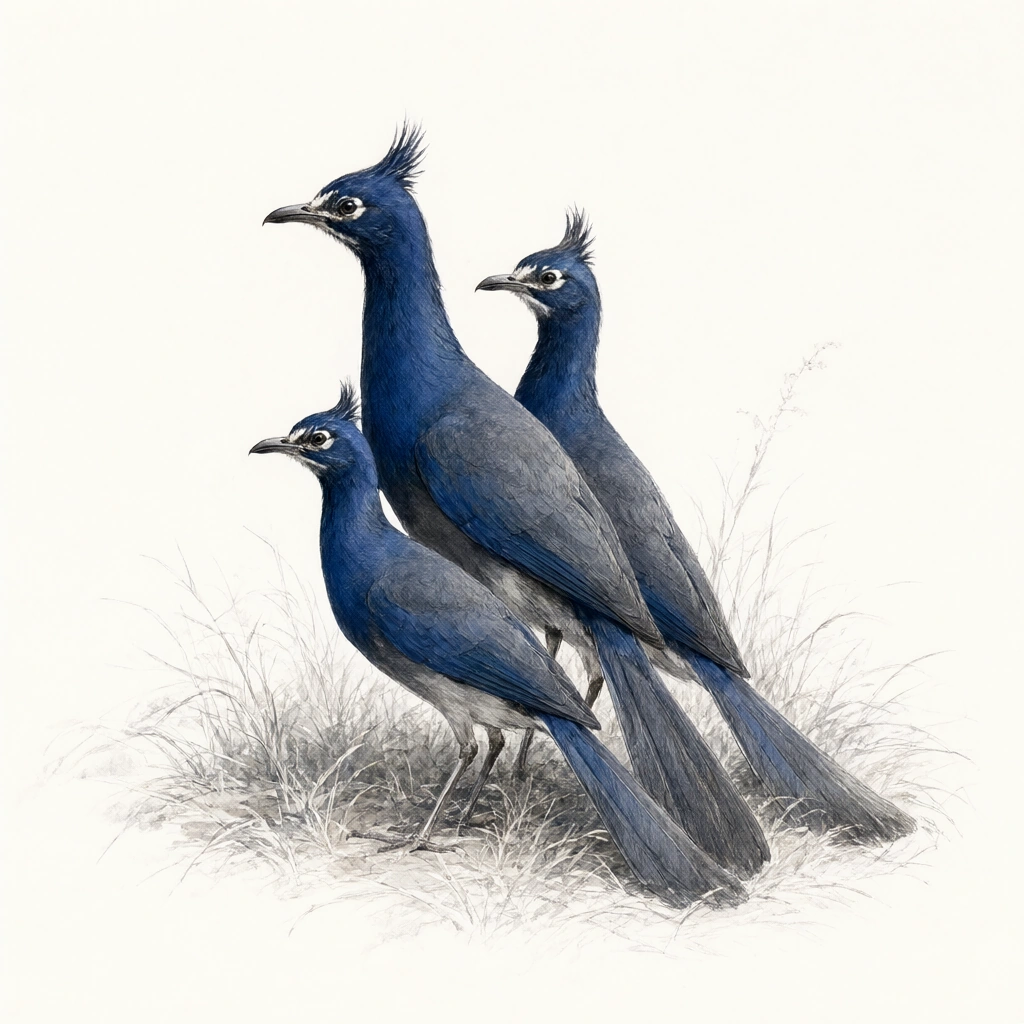 Qwen Image 2.1
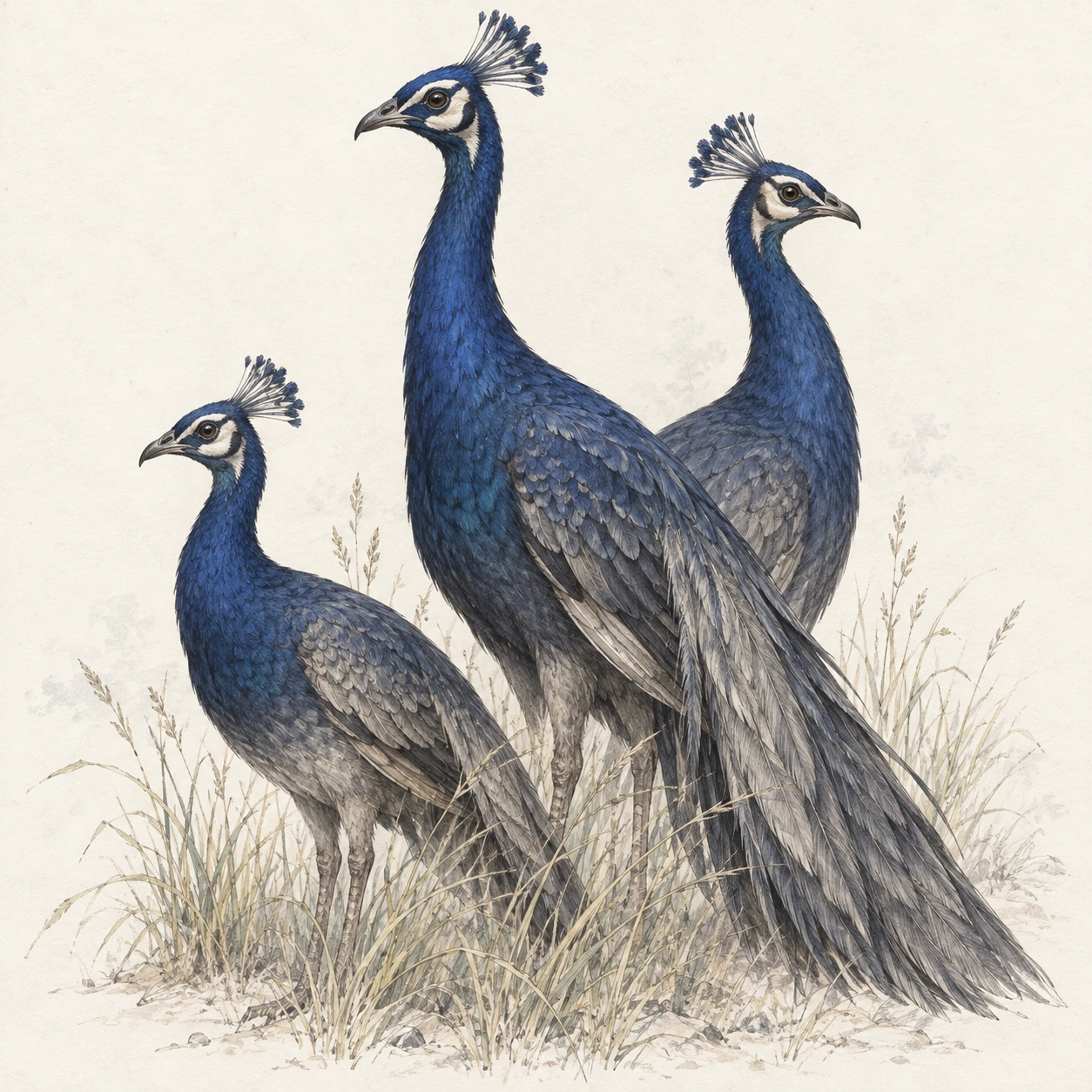 GPT Image 2.5
Reference details
- Reference ID
- 3154
- Category
- Ink & line
Reference prompts
Style prompt
The natural history illustration combines precise fine outlines with transparent watercolor modeling. Deep indigo, blue gray and charcoal concentrate in a small cluster against a broad off-white paper field. Light is even and observational, revealing shape through restrained gradients rather than strong shadow. Tapered linear marks suggest fine texture, while a few loose strokes barely define the ground. Related upright silhouettes repeat at varied heights, giving a calm and airy rhythm.Full example prompt
A square natural history illustration presents three crested blue birds standing close together in a sparse grass clump. The tallest is near the center, its long neck rising almost to the upper edge. A second bird stands behind it to the right, and the smallest is slightly forward at the left. Their heads turn in related directions, creating a gentle rhythm rather than a scene of action. Each has a small upright crest, a dark curved beak and pale markings around the eye and face. Deep indigo blue covers the neck and upper body, fading to gray and charcoal in the long trailing feathers. The legs and lower bodies are partly hidden by lightly drawn grasses. Much of the background is bare off-white paper, with only faint gray marks to suggest ground and air. The open space makes the precise shape and color of the birds the clear focus. Fine pencil or ink lines trace feather edges and grass blades, while layered washes build soft depth in the blue plumage. Light is even and neutral, as on a specimen study, with modest highlights along necks and crests rather than dramatic shadows. The composition has a quiet scientific elegance: three related forms, subtle changes of scale, and an airy field that allows each silhouette to remain distinct.