
Styles
#3289
Porco Rosso style reference and prompts
Explore the “Porco Rosso” reference with dry-brush texture, paper texture, and pale neutral tones. View the images, copy the style or example prompt, and discover related styles on Looksift.
Compare the Qwen Image 2.1 and GPT Image 2.5 examples, choose the visual qualities you want, and copy the style prompt for your own project.
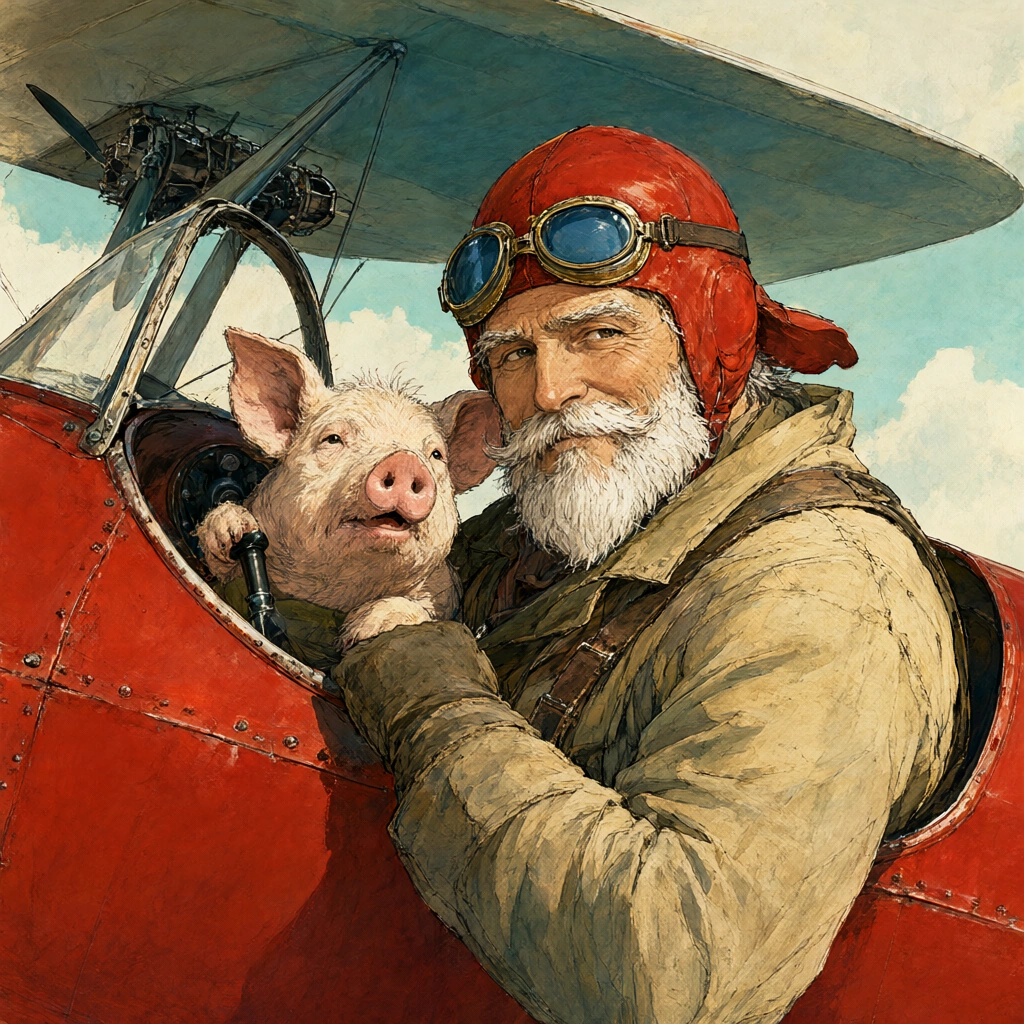 Qwen Image 2.1
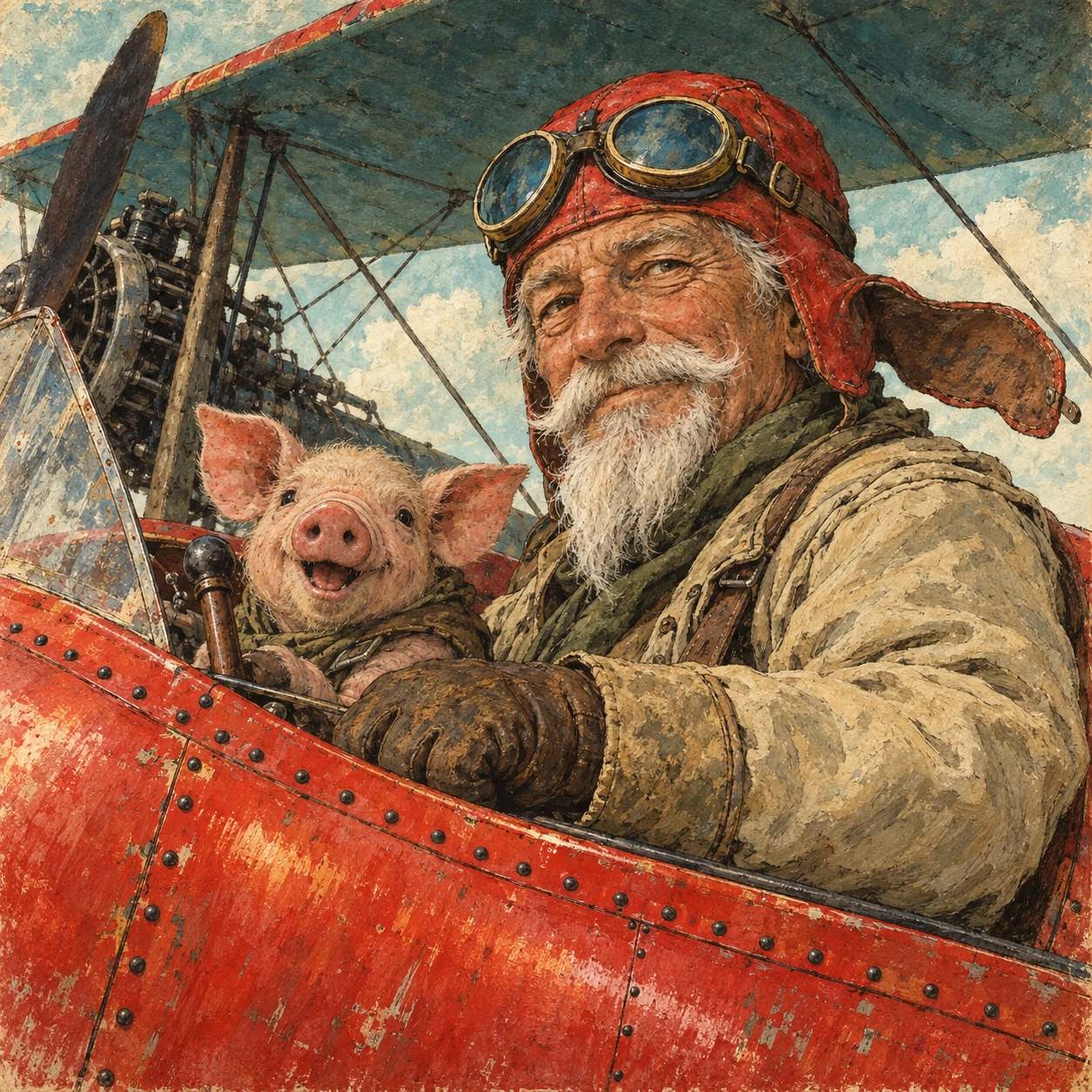 GPT Image 2.5
Reference details
- Reference ID
- 3289
- Category
- Ink & line
Reference prompts
Style prompt
Use an aged hand-painted adventure-illustration treatment with lively ink drawing beneath translucent, slightly uneven color. Establish a clear foreground silhouette with bold vermilion or rust-red shapes, then layer darker teal structures and pale turquoise atmospheric openings behind it. Vary black-brown contour weight: crisp around constructed edges and focal details, broken and sketchlike through soft surfaces. Add short hatching, dry brush patches, weathering marks, and subtle mottled paper grain rather than smooth digital gradients. Build convincing volume through overlapping planes, warm highlights, and cool olive-blue recesses. Let diffuse daylight illuminate the main forms without hard glossy reflections. Keep the palette limited to faded turquoise, teal, khaki, warm cream, smoky brown, and concentrated red. Compose at close range with a strong diagonal structural rhythm, readable negative spaces, and enough small mechanical marks to suggest a lived-in world while preserving the broad hand-painted shapes.Full example prompt
A square hand-painted aviation illustration shows an elderly pilot and a small piglike companion seated together in the open cockpit of a red biplane. The pilot occupies the right half in a close three-quarter view. His weathered face turns toward the viewer with a restrained smile under a broad white moustache and pointed white beard. A bright red leather flying cap covers his head, with round brass-rimmed blue goggles resting above his eyes and a loose ear flap projecting to the right. He wears a pale khaki jacket over darker olive layers; a thick gloved hand rests on the cockpit edge in the lower center. To his left, the small pink-eared companion sits close to a vertical control handle, its wrinkled snout and open mouth facing forward. The scarlet cockpit wall rises diagonally across the lower frame. Rows of small dark rivets, thin seams, weathered scratches, and warm orange highlights articulate its curved metal skin. Above them, a broad shadowed teal wing spans the image on a diagonal; fine braces and an engine with a dark propeller recede toward the upper left. Pale blue-green cloud shapes fill the narrow openings between wing, windshield frame, and figures. The perspective brings the pair near the viewer while the aircraft structure layers behind and above them. Black-brown ink contours vary from decisive edges around goggles, rivets, and noses to loose broken marks in hair and clothing. Short hatch strokes and translucent brushlike color patches give the face, canvas, and metal their worn texture. Diffuse daylight catches the red cap, white beard, khaki sleeve, and cockpit rim, while olive and blue-green shadows collect below the wing and under the faces. Vermilion red is the dominant accent against faded turquoise, warm cream, khaki, and soot brown. A slightly mottled paper surface and softened color edges make the whole image feel like a weathered storybook painting of an adventurous flight.