
Styles
#3436
Emperor Huizong of Song style reference and prompts
Explore the “Emperor Huizong of Song” reference with negative space, earth tones, and delicate contours. View the images, copy the style or example prompt, and discover related styles on Looksift.
Compare the Qwen Image 2.1 and GPT Image 2.5 examples, choose the visual qualities you want, and copy the style prompt for your own project.
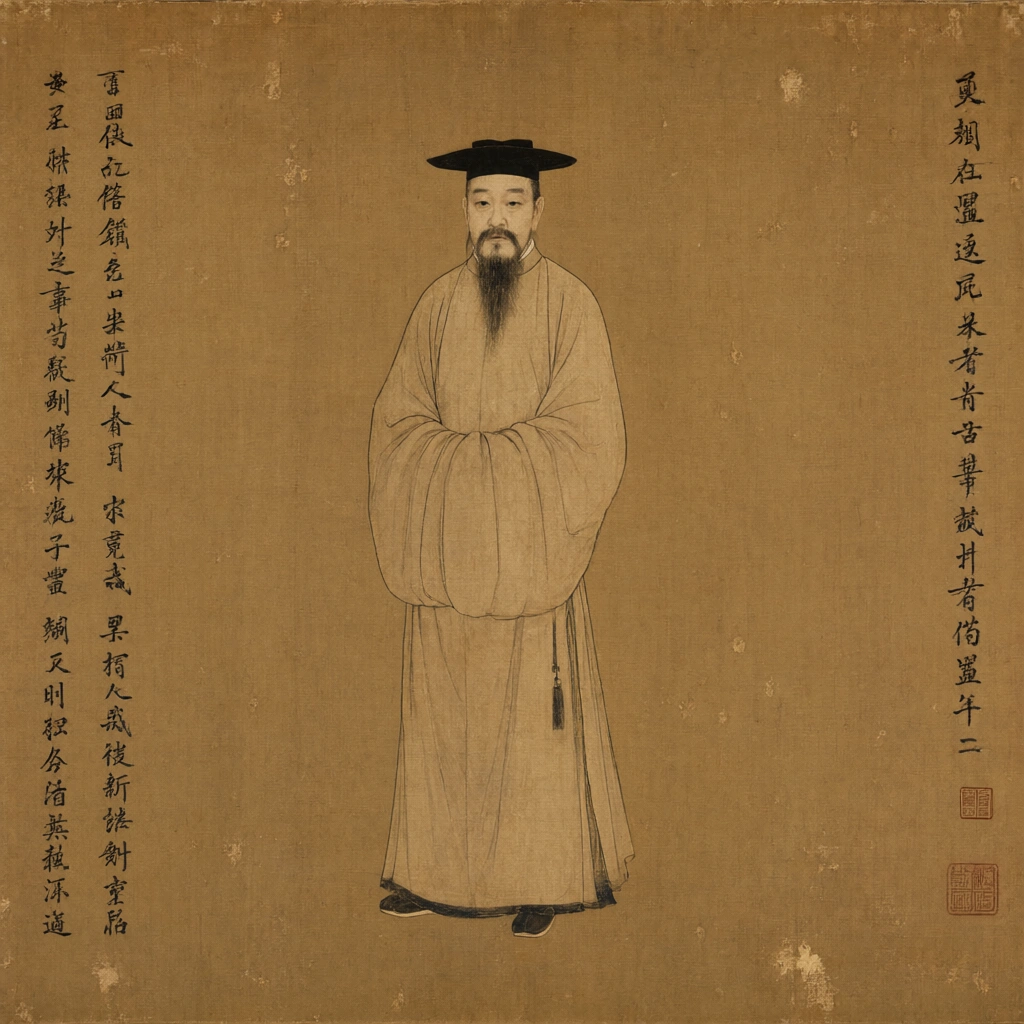 Qwen Image 2.1
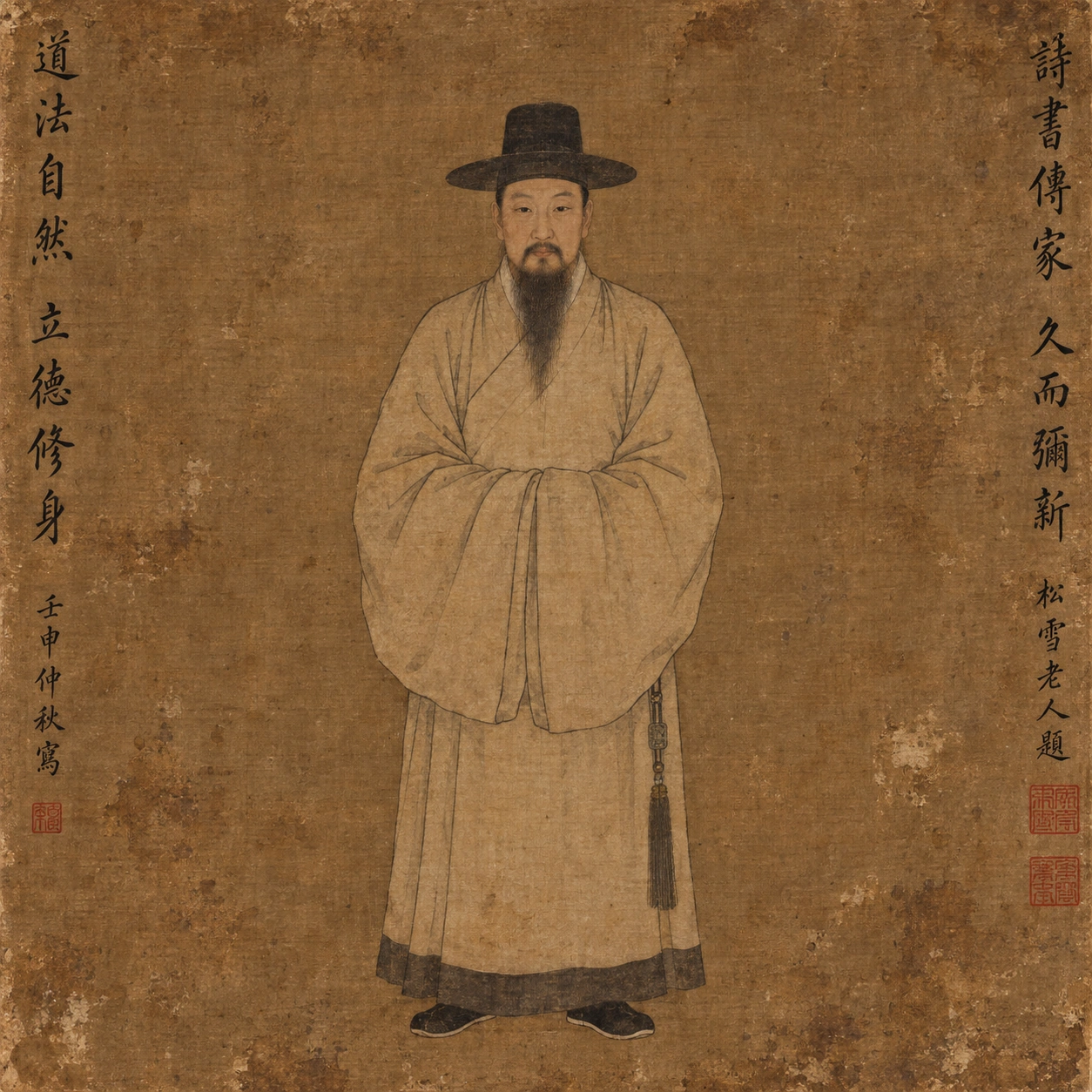 GPT Image 2.5
Reference details
- Reference ID
- 3436
- Category
- Painting
Reference prompts
Style prompt
The historical silk-painting treatment uses a broad aged tan field, restrained figure color, spare fine contour lines, and vertical calligraphic columns. A small centered full form stands within ample negative space, making stillness and proportion more important than dramatic lighting. Pale ochre and brown washes describe large clothlike areas; narrow dark strokes pick out folds, features, and small accessories. Black brush lettering at the margins and a few cinnabar seals balance the central image as graphic elements. Mottled stains, slight abrasion, and visible woven grain communicate the old material surface. Shadows remain quiet and shallow, with no strongly defined setting. The overall effect is ceremonial, measured, and documentary, with elegant spacing and timeworn texture carrying the visual character.Full example prompt
A square image of an aged Chinese-style hanging-scroll painting shows a single adult man standing full length at the center of a warm brown silk ground. He faces forward in a formal, contained pose. A flat black brimmed hat rests above a pale face with narrow eyes, a short mustache, and a long dark beard tapering toward the chest. He wears a broad pale tan robe whose very wide sleeves meet over the hands at the abdomen. The robe falls straight to the ankles, with delicate dark lines tracing folds and a narrow hanging tassel or accessory at his right side. A dark hem and black shoes anchor the figure near the bottom. The man occupies only a modest portion of the field, leaving substantial unpainted brown space around his silhouette. Vertical columns of black Chinese calligraphy run down the far left and right edges, with a few small red square seals toward the lower right. The calligraphy is visibly present as historic inscription, but the small characters are not transcribed here. The silk or paper surface is mottled with age: uneven tan, ochre, and umber stains, worn spots, and fine weave texture. The face and hands are carefully drawn but softly colored. The garment has restrained volume, with thin shaded creases rather than dramatic light and shadow. The framing is frontal and symmetrical, giving the figure a quiet ceremonial gravity. No room, landscape, or cast shadow is depicted. The image combines figure painting, generous empty ground, inscription, and material age into a formal document-like composition. Its slow visual rhythm comes from the wide still robe, slim vertical texts, and muted warm field.