
Styles
#3461
Kazumasa Nagai style reference and prompts
Explore the “Kazumasa Nagai” reference with stippled texture, tactile surfaces, and contrasting scales. View the images, copy the style or example prompt, and discover related styles on Looksift.
Compare the Qwen Image 2.1 and GPT Image 2.5 examples, choose the visual qualities you want, and copy the style prompt for your own project.
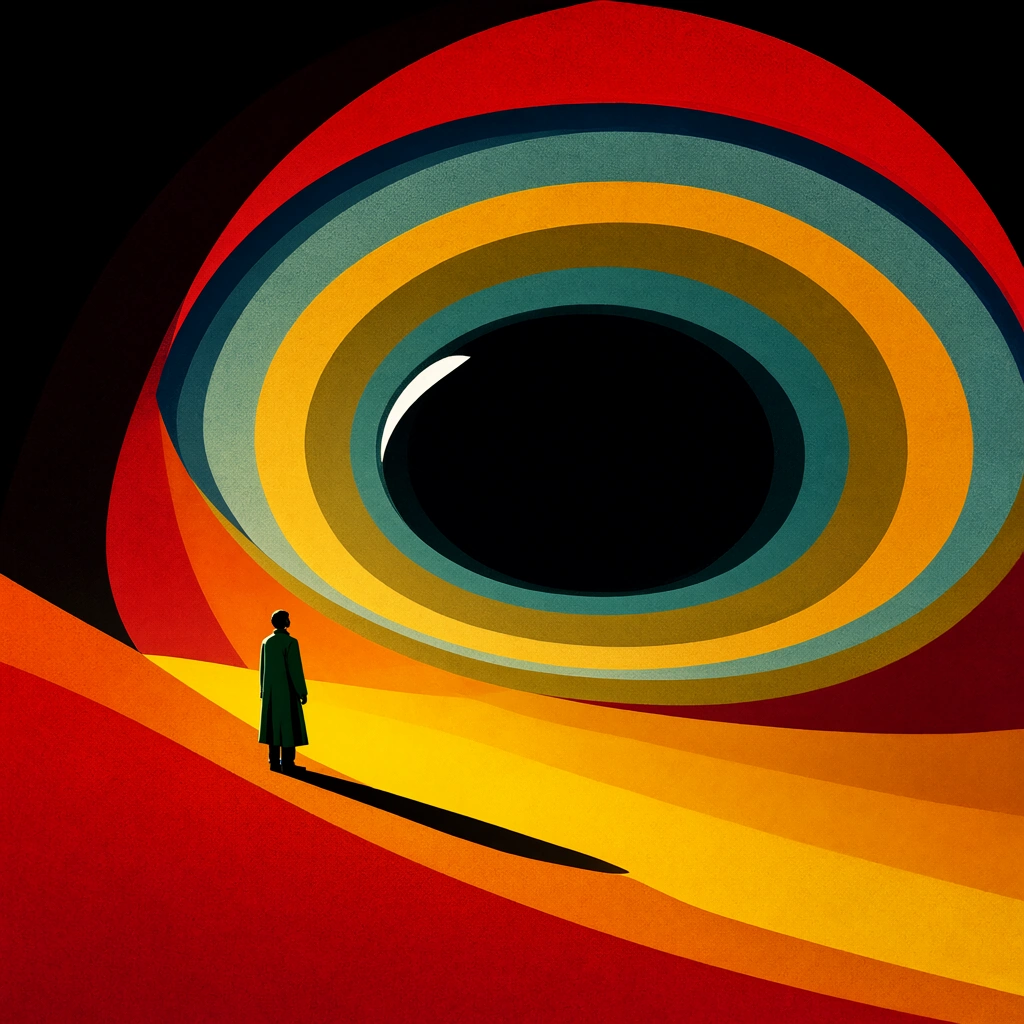 Qwen Image 2.1
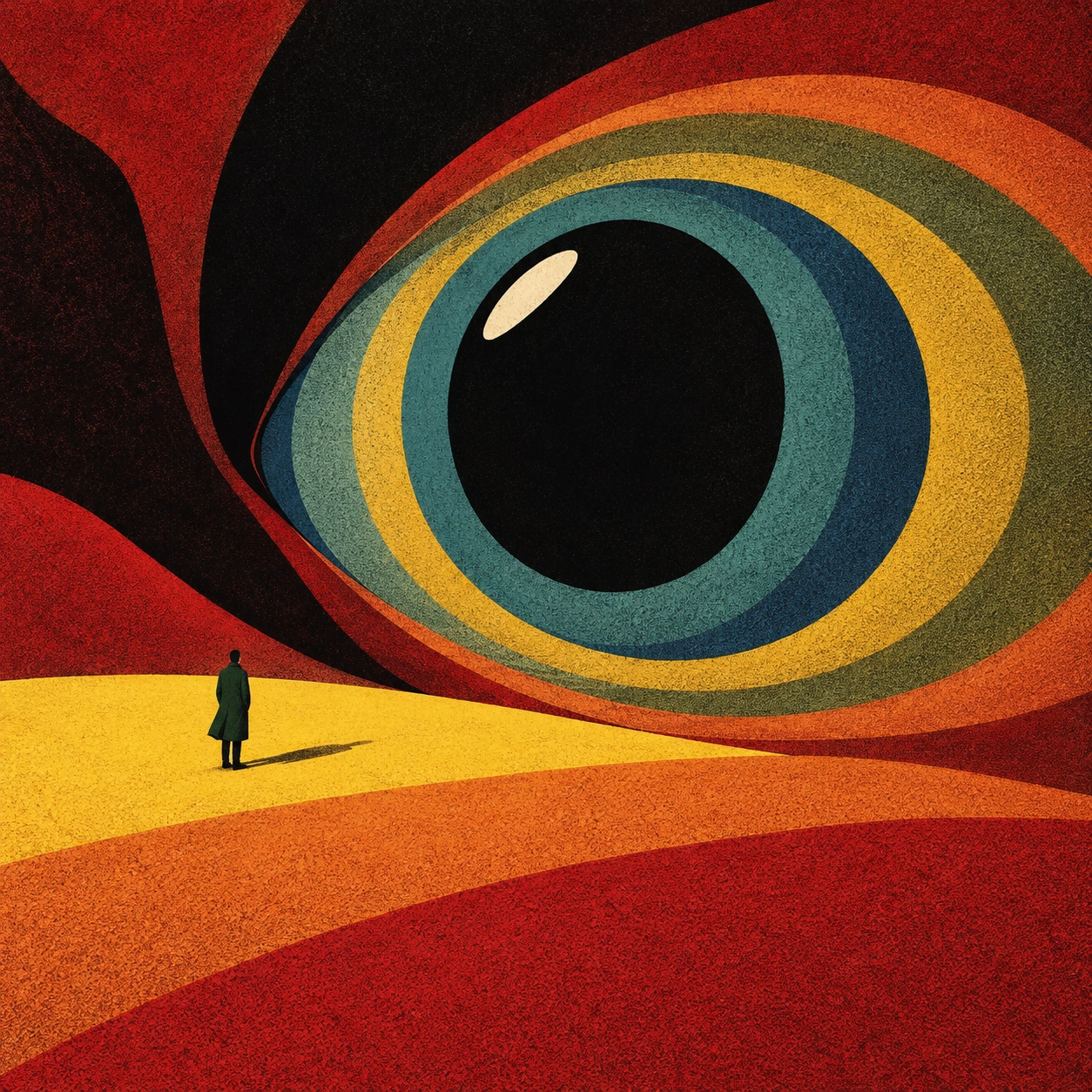 GPT Image 2.5
Reference details
- Reference ID
- 3461
- Category
- Flat illustration
Reference prompts
Style prompt
Graphic illustration uses monumental nested curves, sharply isolated black voids, and finely stippled color fields. Organize a large concentric focal form with bands of teal, blue, mustard, olive, ocher, vermilion, and crimson, allowing warm and cool stripes to alternate rhythmically. Set one tiny dark scale mark on a bright plane so the surrounding form feels overwhelming. Broad sweeping edges create depth without a literal vanishing point, while a small gloss highlight can imply rounded surface. Fine print-like grain gives otherwise flat color tactile density. Keep light graphic and directional enough to leave a crisp shadow on the pale area, but do not model every band realistically. The transferable effect is uncanny and monumental, driven by vast scale difference, repeated color arcs, and deliberate negative space.Full example prompt
A square surreal graphic illustration places a very small standing person before an immense eye-shaped form that fills the right two-thirds of the image. The person stands in the lower-left center, wearing a long dark green coat and looking toward the huge dark pupil. A narrow shadow falls diagonally to the right across a bright yellow ground. The eye is built from thick concentric bands of muted teal, deep blue, mustard yellow, olive, warm orange, and red, wrapped around a black central oval. A small white curved gleam sits near the upper-left edge of that oval, making the abstract structure read like a glossy eye. Above and around it, heavy black and crimson shapes curve inward from the top and left, as though the surrounding world has become a giant face or cavern. The lower half is divided into broad red, orange, and ocher bands, with a yellow wedge opening toward the figure. The edges of these bands follow sweeping curves rather than straight perspective lines. Fine, tightly repeated stipple or print grain textures the colored areas, especially the foreground reds and the eye's rings. No literal horizon or realistic sky is visible. Light appears graphic and concentrated on the yellow plane, giving the tiny figure a crisp dark silhouette while the large colored surfaces remain evenly legible. The entire frame is a confrontation of scale: a still human mark at the base of a vast circular gaze, held together by rhythmic nested color and bold black negative space.