
Styles
#3774
William Kentridge style reference and prompts
Explore the “William Kentridge” reference with construction lines, exposed paper, and soft diffused light. View the images, copy the style or example prompt, and discover related styles on Looksift.
Compare the Qwen Image 2.1 and GPT Image 2.5 examples, choose the visual qualities you want, and copy the style prompt for your own project.
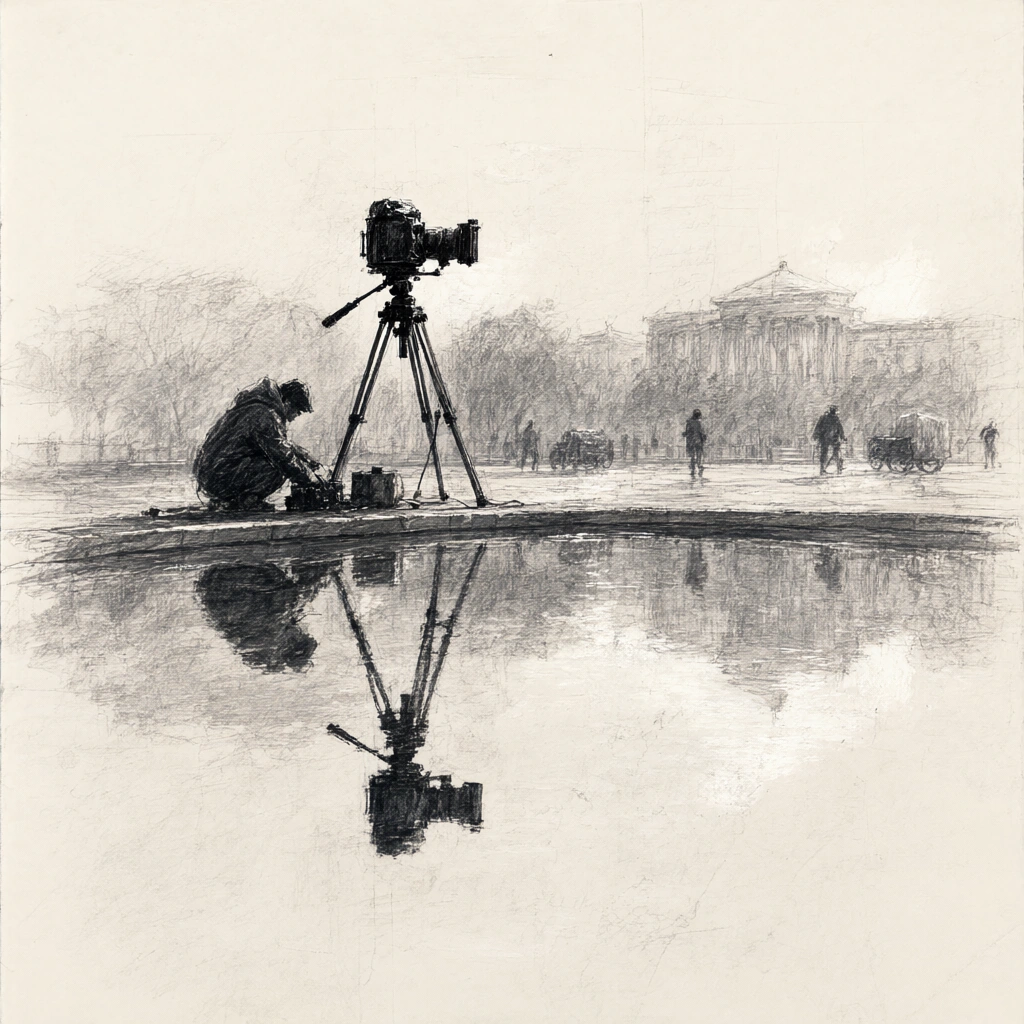 Qwen Image 2.1
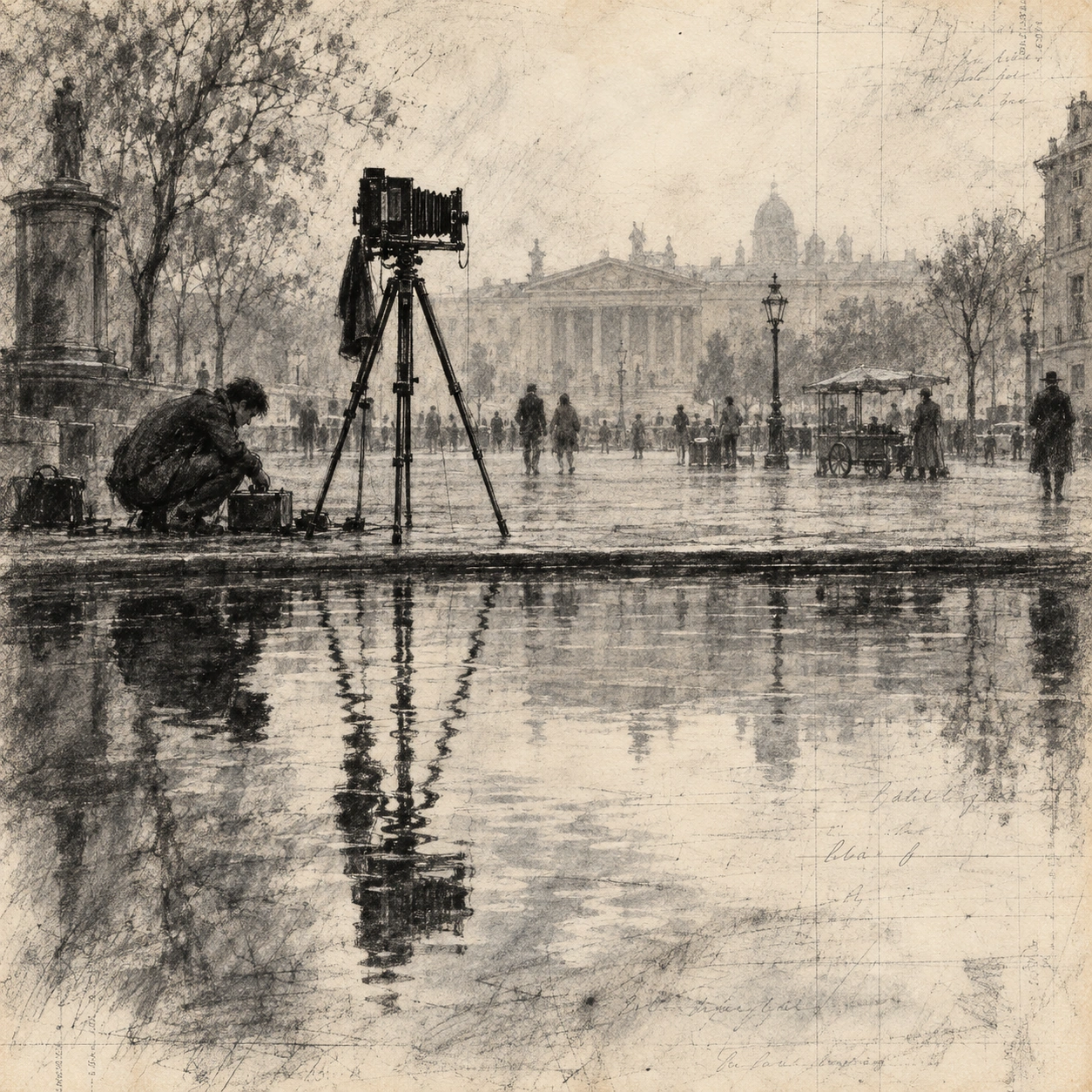 GPT Image 2.5
Reference details
- Reference ID
- 3774
- Category
- Photography
Reference prompts
Style prompt
A charcoal-and-pencil drawing language on warm, visibly marked paper. Dense black anchors coexist with quick fine construction lines, erased gray passages, smudges, and ghosted repetitions. Diffuse light comes from exposed paper and wiped highlights; depth forms as contrast fades from crisp dark foreground to unstable pale distance. Faint ruled marks and illegible script fragments remain as surface texture. Strong vertical elements meet broad horizontal reflective or tonal bands, creating a layered, memory-like composition. The unfinished edges and tactile revisions feel exploratory and contemplative.Full example prompt
A square charcoal-and-pencil drawing depicts a city square with a large camera mounted on a tall tripod beside a reflective pool. The camera sits just left of center, its dark mechanical body and three thin legs forming the crispest structure in the scene. A person crouches low on the left, adjusting equipment near the ground. Farther back, faint pedestrians, carts, trees, and a low classical building appear through rubbed gray haze. The horizontal edge of the water divides the page across the lower middle. Below it, the camera and tripod reappear as a broken upside-down reflection, stretched and softened by ripples. The drawing is made on warm off-white paper that remains visible through much of the image. Dense black charcoal gathers around the camera, crouching figure, and their reflection, while the surrounding square is built from quick linear marks, erased patches, and ghostlike silhouettes. Faint ruled lines and traces of handwriting are embedded in the surface, but no words are clearly legible. Light is broad and diffuse, suggested by the pale paper and wiped highlights rather than colored illumination. The city recedes through decreasing contrast: foreground forms are dark and precise, distant forms are light and unstable. Smudges, scratches, and incomplete contours make the image feel like an evolving visual memory rather than a fully sealed scene. The overall composition balances a strong vertical mechanical axis against a wide reflective band, creating a contemplative rhythm between observation and its wavering double.