
Styles
#3815
Hal Foster style reference and prompts
Explore the “Hal Foster” reference with etched linework, scratch-like marks, and close cropping. View the images, copy the style or example prompt, and discover related styles on Looksift.
Compare the Qwen Image 2.1 and GPT Image 2.5 examples, choose the visual qualities you want, and copy the style prompt for your own project.
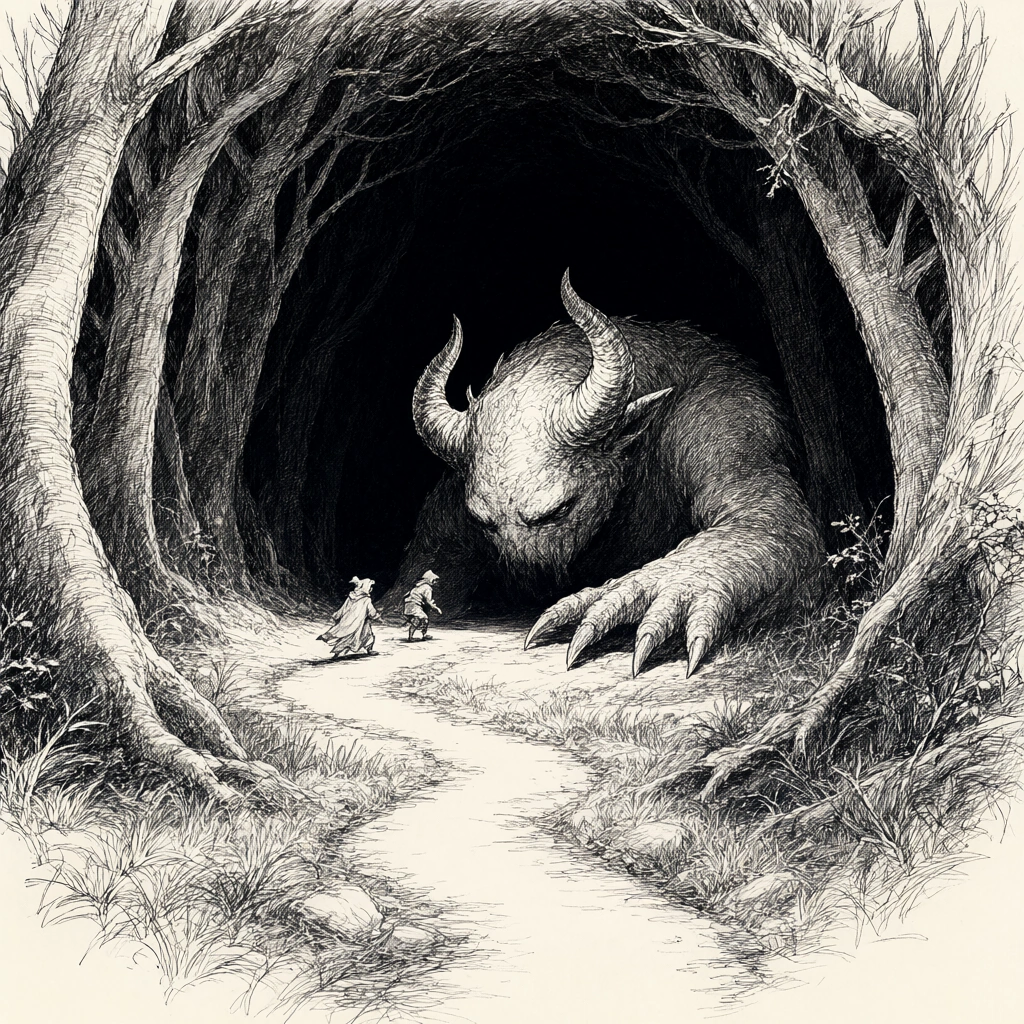 Qwen Image 2.1
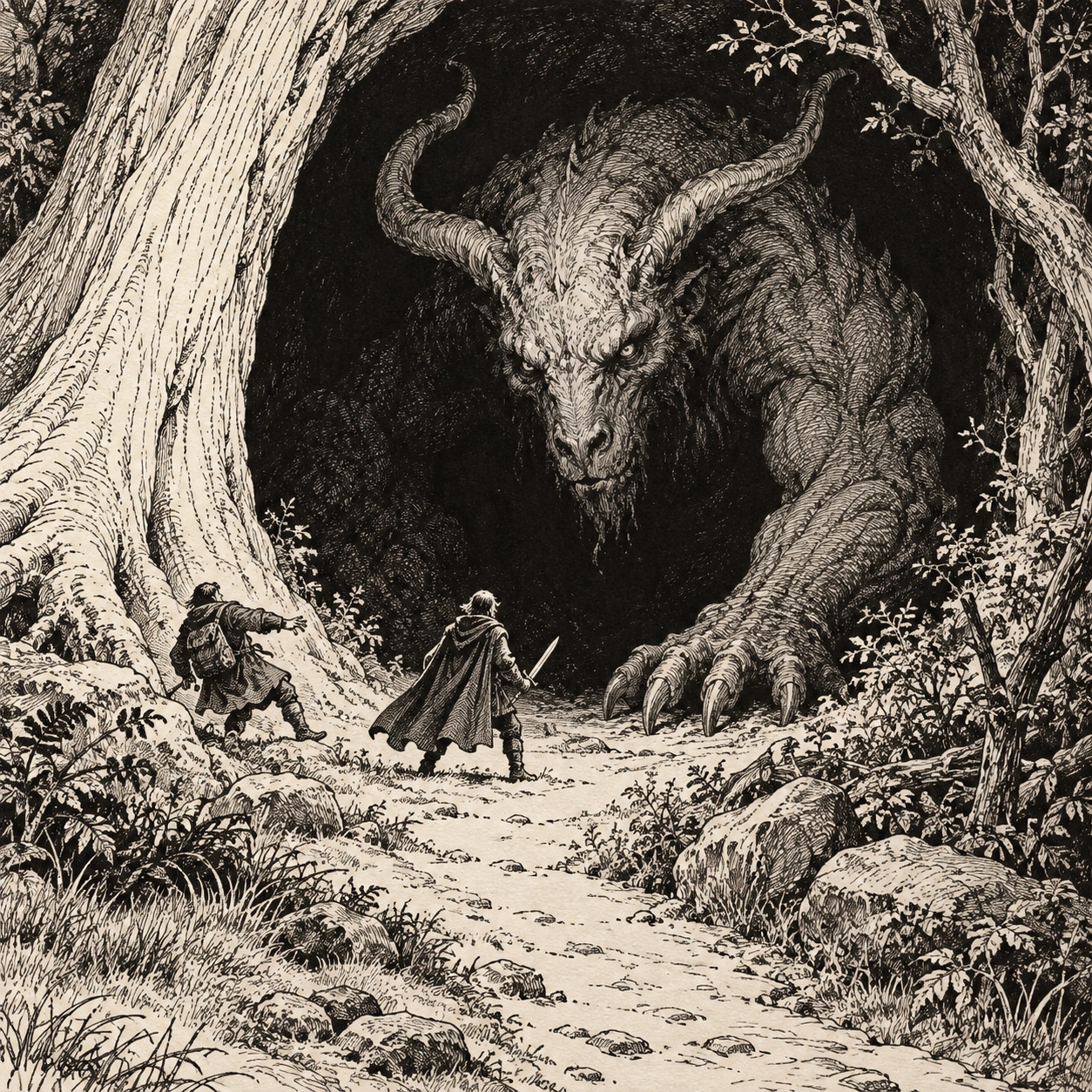 GPT Image 2.5
Reference details
- Reference ID
- 3815
- Category
- Ink & line
Reference prompts
Style prompt
Black-and-white adventure-comic ink drawing builds volume through fine contour, close parallel strokes, and tightly layered crosshatching on warm ivory paper. An almost solid black recess sits behind a pale central mass, making the focal overlap immediately legible. Large curved borders create an arch-like frame, while a bright winding opening begins low and guides the eye inward. Textures vary: long directional striations articulate broad surfaces, short scratchy marks cover uneven ground, and dense dark clusters settle under overhangs. There is no reliance on color or smooth gradient; line density supplies the gray scale and untouched paper supplies the sharpest light. Small simplified marks near the center give a clear sense of scale against larger detailed forms. Illumination feels like soft exterior light entering a darker interior, with abrupt tonal depth at the boundary. Careful edge placement and close cropping make the scene tense, theatrical, and tactile, echoing an engraved illustrated story page.Full example prompt
A black-and-white adventure-comic ink drawing shows two small travelers confronted by a giant horned creature in a dark woodland opening. The creature emerges from an almost solid black hollow at the center, one large claw resting on the pale ground. Its heavy head, curved horns, shoulders, and knotted arm are built from a mesh of fine contour lines, crosshatching, and short irregular marks. In front of it, a small cloaked figure faces the beast and another figure retreats toward the left, their simplified shapes emphasizing the difference in scale. Thick tree trunks curve around the scene like a natural arch. The left trunk is pale and covered in close parallel bark lines; on the right, branches and a tangle of scrub frame the opening. A bright winding path begins at the bottom center and rises toward the confrontation, its grass clumps and stones rendered with spare, scratchy strokes. The limited palette is warm ivory paper, layered gray ink, and deep black. There is no smooth colored wash; value emerges from line density and the deliberate contrast between blank paper and packed hatching. The forest's back chamber remains very dark, making the creature's pale head and the tiny foreground figures readable. Light feels as if it spills in from the path outside the trees, touching ground and bark before vanishing into the hollow. The composition is theatrical but precise, drawing the eye from open foreground to a compressed encounter under the arch. Its mood is tense, mysterious, and richly tactile, like a carefully engraved newspaper adventure panel.