
Styles
#3823
Charles Schulz style reference and prompts
Explore the “Charles Schulz” reference with ink contours, scratch-like marks, and a low horizon. View the images, copy the style or example prompt, and discover related styles on Looksift.
Compare the Qwen Image 2.1 and GPT Image 2.5 examples, choose the visual qualities you want, and copy the style prompt for your own project.
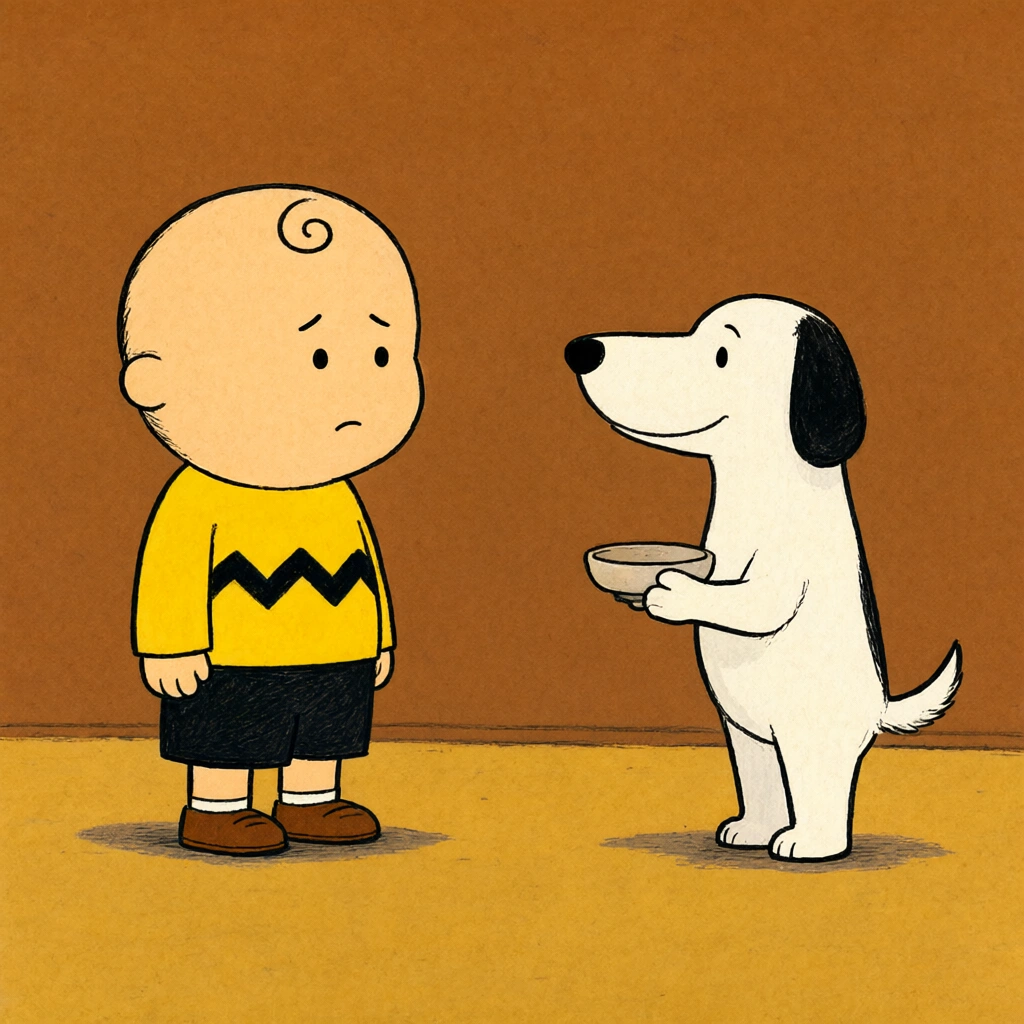 Qwen Image 2.1
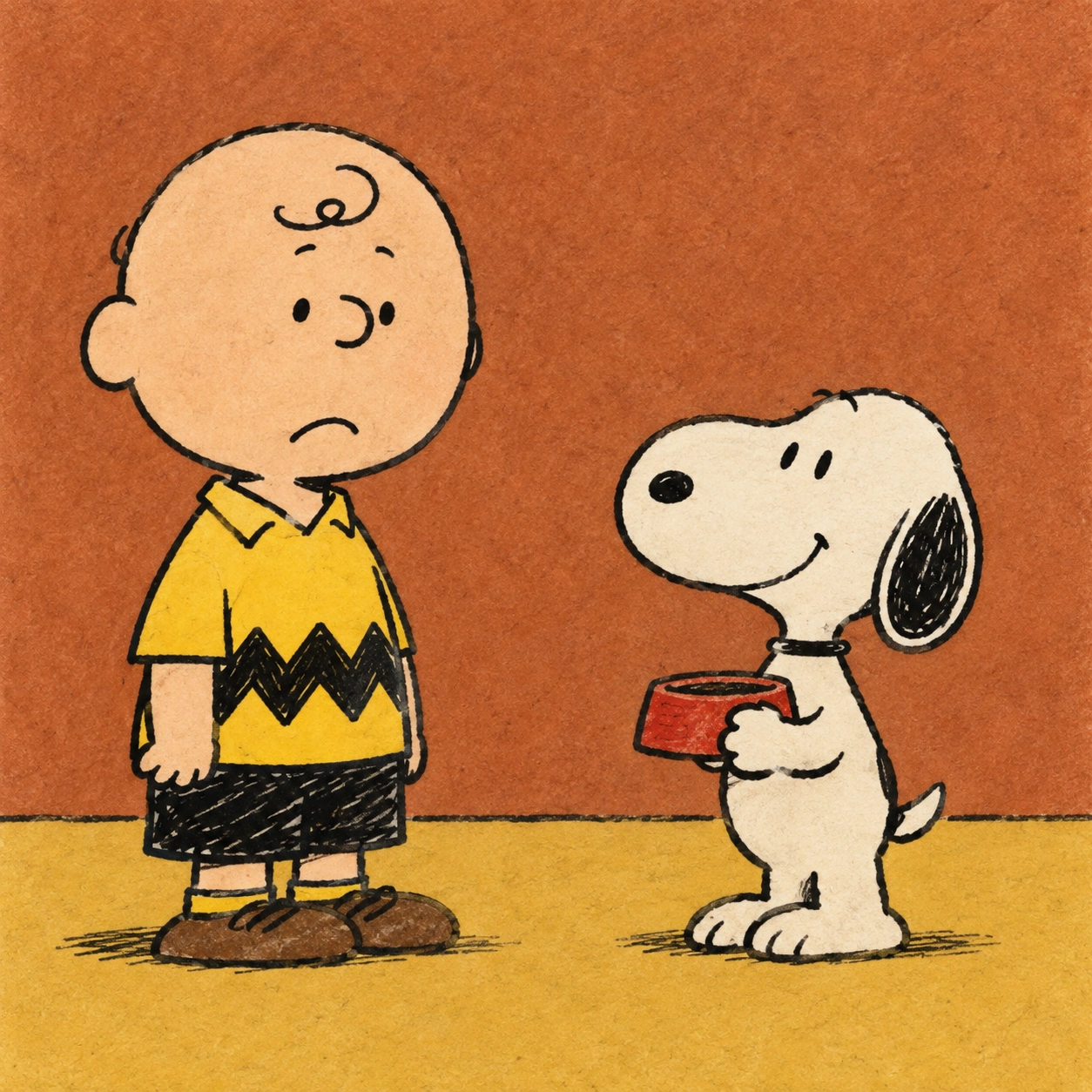 GPT Image 2.5
Reference details
- Reference ID
- 3823
- Category
- Anime & cartoons
Reference prompts
Style prompt
Simple hand-colored newspaper-comic art uses economical black ink contour and broad nearly flat color areas on subtly grainy warm paper. A rusty-brown upper field and ochre-yellow lower band establish the largest color relationship, with one vivid yellow accent and concentrated black shapes. Rounded silhouettes and a few small curved marks carry expression; line weight changes slightly rather than staying mechanically uniform. Tiny scratchy fills collect in dark areas, but most surfaces remain open and unmodeled. A single low horizontal division supports a compact pair of shapes, leaving a broad quiet field above. Even light creates only small grounding shadows, so the image reads through contour, spacing, and color rather than dramatic volume. Mild pigment mottling and imperfect ink edges preserve the physical printed feel. The arrangement is direct and humorous, with clear negative space between the main shapes and an easy left-to-right conversational rhythm. Every visible detail earns its place in the panel's simple visual grammar.Full example prompt
A simple hand-colored newspaper comic panel shows a solemn child standing on the left and a smiling white dog on the right. The child has a large round head, one curled line of hair on the forehead, sparse dot eyes, and a small downturned mouth. A bright yellow shirt with a thick black zigzag band, dark shorts, and brown shoes make a compact, instantly readable silhouette. The dog stands upright holding a small bowl, its long rounded nose pointing toward the child and one black ear giving the white body a clear side accent. Both figures rest on a flat ochre-yellow floor before an empty rusty-brown wall. A thin straight line marks the wall-floor join, and no furniture or scenery competes with the exchange between the two. Black ink contour varies slightly in thickness around cheeks, ears, clothing edges, and feet. Tiny scratchy strokes gather inside the dark shorts and ear, while the skin, shirt, dog, wall, and floor are filled with broad nearly flat color. The pigment has mild mottling and warm paper grain, keeping the surface softly printed rather than glossy. Light is even and undramatic, with only short gray shadows beneath the feet. The figures occupy the lower two-thirds, leaving open brown space above their heads. Their opposing eye lines and contrasting expressions provide the humor: the dog's relaxed smile meets the child's worried stillness. The panel is restrained, warm, and expressive through a few carefully placed lines rather than detailed modeling.