
Styles
#3908
Andreas Levers style reference and prompts
Explore the “Andreas Levers” reference with fine grain, narrow turquoise reflections on the wet road, and atmospheric haze. View the images, copy the style or example prompt, and discover related styles on Looksift.
Compare the Qwen Image 2.1 and GPT Image 2.5 examples, choose the visual qualities you want, and copy the style prompt for your own project.
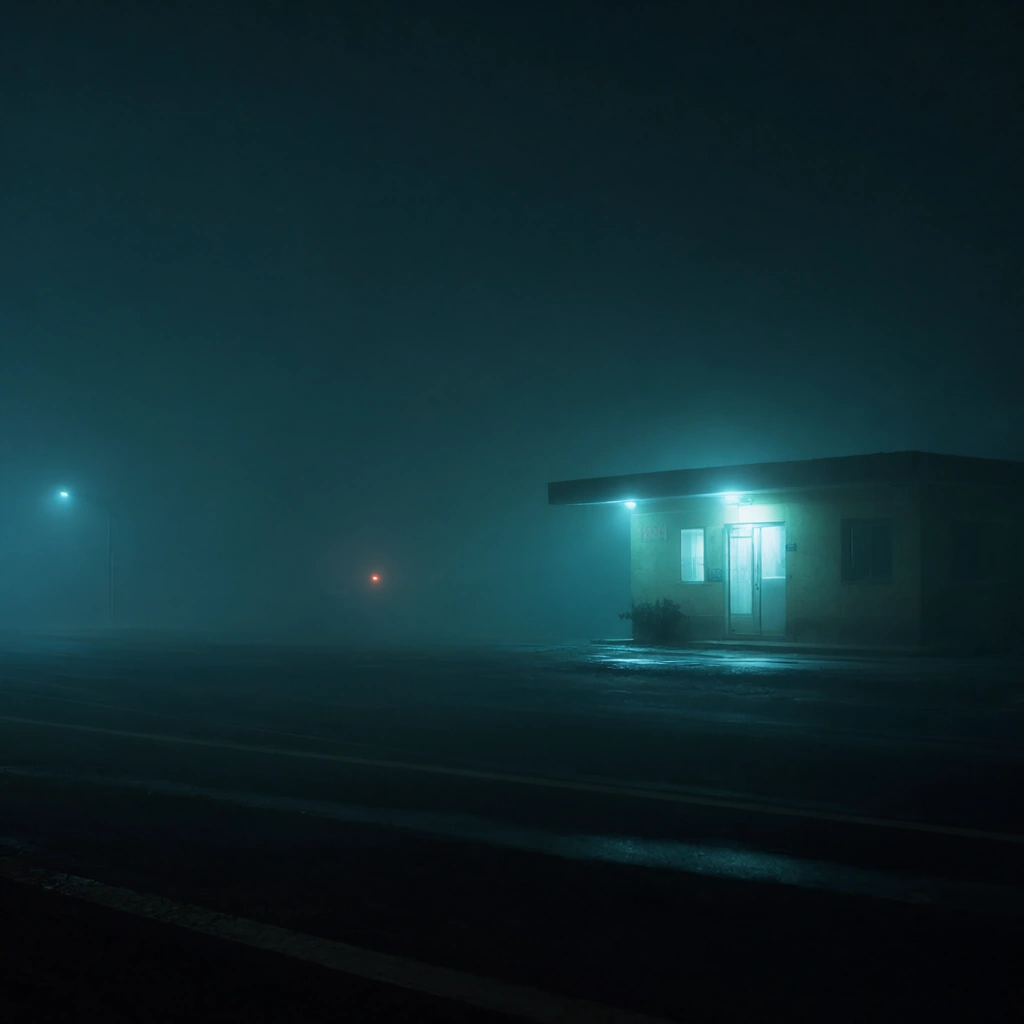 Qwen Image 2.1
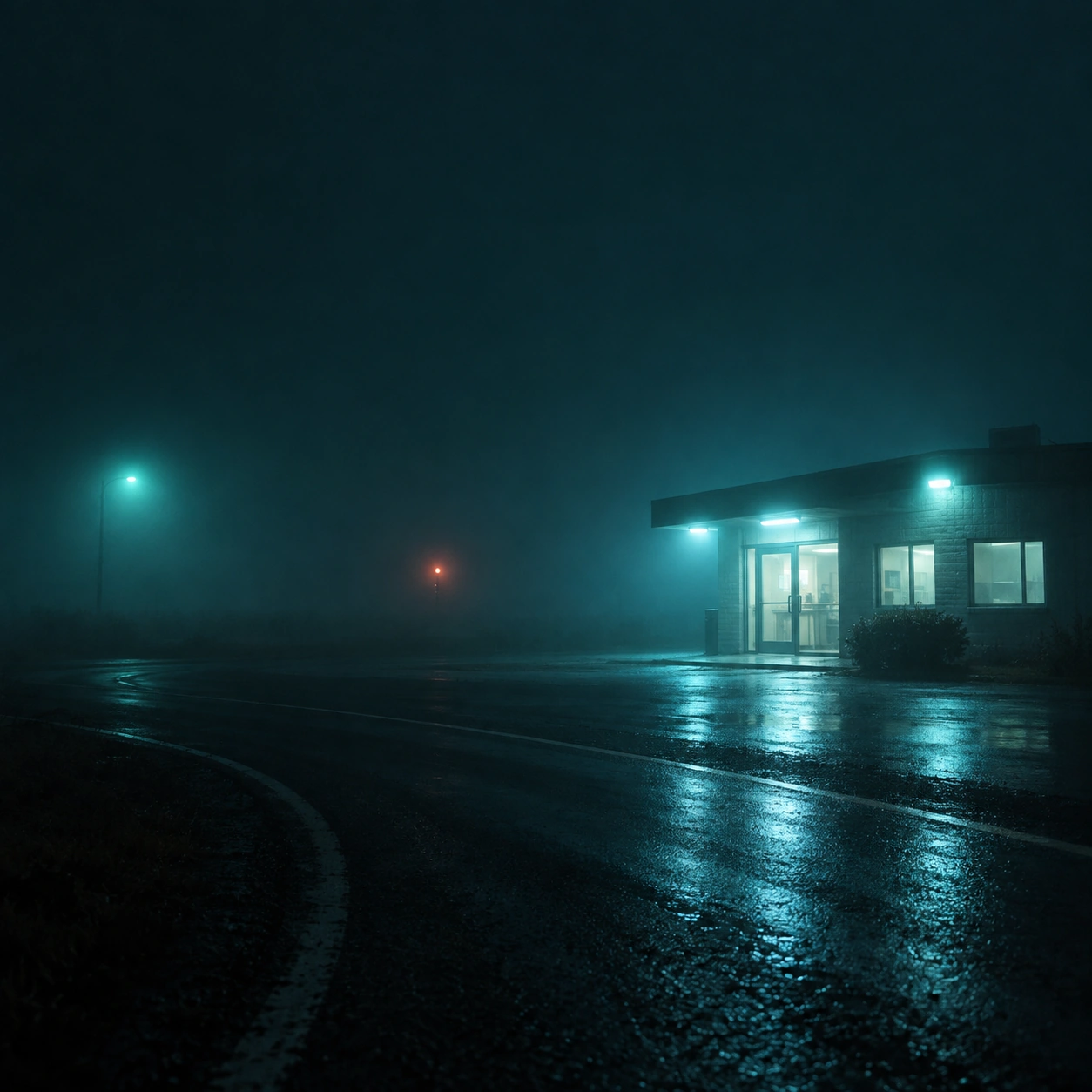 GPT Image 2.5
Reference details
- Reference ID
- 3908
- Category
- Photography
Reference prompts
Style prompt
The nocturnal color photography relies on dense fog to turn ordinary spatial detail into broad teal and blue-black gradients. Small artificial lights bloom outward with soft halos, while their reflections remain narrow and broken on damp ground. A tiny warm point counters the dominant cyan without changing the cool mood. Built forms are reduced to a few horizontal and vertical edges emerging from haze; large dark negative areas carry as much weight as the lit zone. Fine grain and moisture suppress sharpness, producing depth by progressive disappearance rather than explicit perspective. Localized illumination fades quickly, leaving outer edges unresolved. The overall effect is quiet, lonely, and cinematic, shaped by sparse light, wet reflection, and a great deal of atmospheric absence.Full example prompt
A square atmospheric night photograph shows a low roadside building glowing through dense blue-green fog beside an empty wet road. The upper half is almost entirely dark teal air, fading without a clear horizon. At the right middle, a flat-roofed one-story structure sits partly outside the frame. Bright cool lamps over the entrance and near the roofline cast a cyan halo into the mist. A glass door and a few pale window panes are visible in the lit section, while the rest of the facade withdraws into shadow. A small dark shrub or low object stands near the building's front edge. Far to the left, another isolated blue-green streetlight floats in the fog, its support almost lost. A tiny warm red-orange light glows nearer the center-left, providing the only strong warm accent. The road curves across the lower foreground in dark bands, with damp pavement reflecting narrow pools of turquoise near the building. Its boundary is soft and difficult to separate from the surrounding open ground because the mist erases detail. No person or moving vehicle is visible. The camera looks across the roadway from a low, steady position, leaving broad negative space above the small lit structure. The light is artificial and localized: lamps brighten the doorway and wet surface, then vanish quickly into the heavy haze. Grain and moisture soften edges, but the straight roofline and door frame remain enough to anchor the scene. No readable signs appear on the facade. The overall composition is lonely and cinematic, using a small cyan-lit shelter and one ember-like red point inside a vast field of nocturnal fog.