
Styles
#3917
Wheatpaste style reference and prompts
Explore the “Wheatpaste” reference with cool blue-gray tones, low-key lighting, and soft diffused light. View the images, copy the style or example prompt, and discover related styles on Looksift.
Compare the Qwen Image 2.1 and GPT Image 2.5 examples, choose the visual qualities you want, and copy the style prompt for your own project.
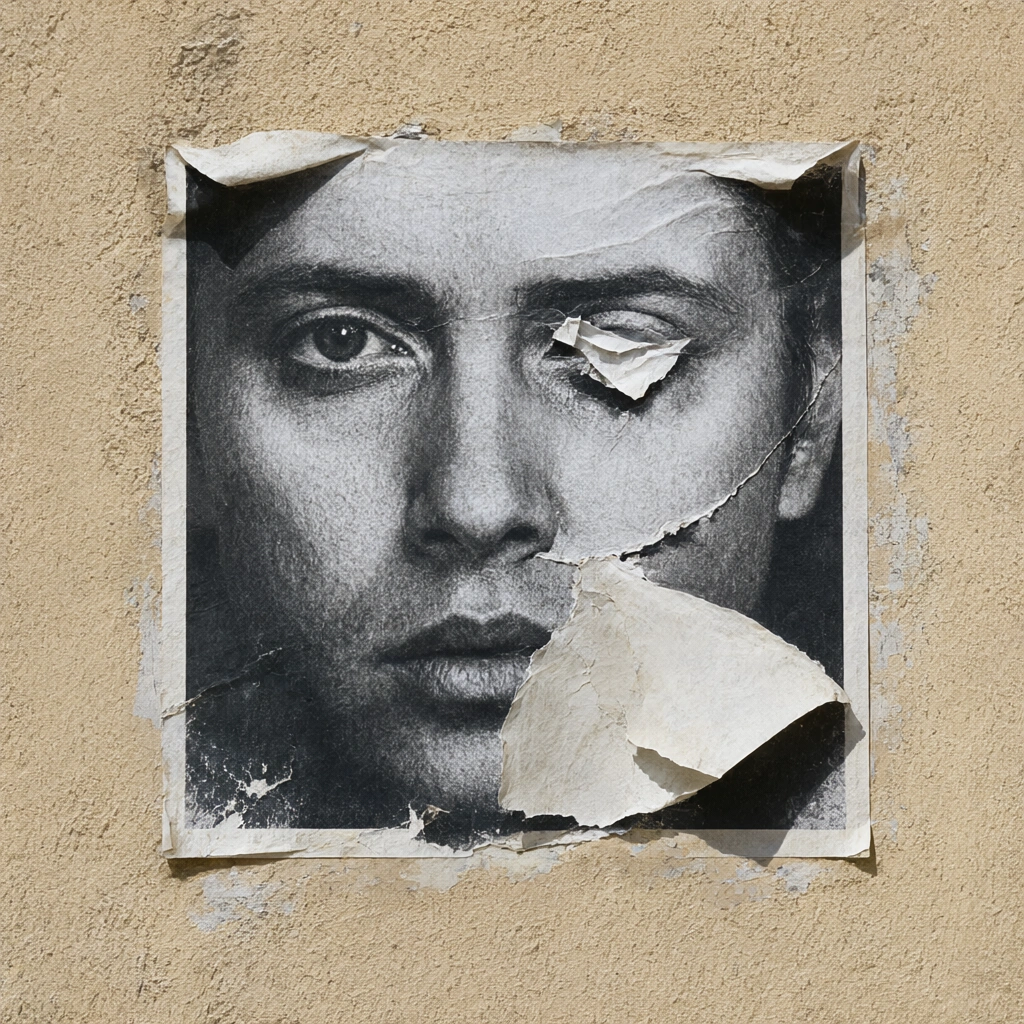 Qwen Image 2.1
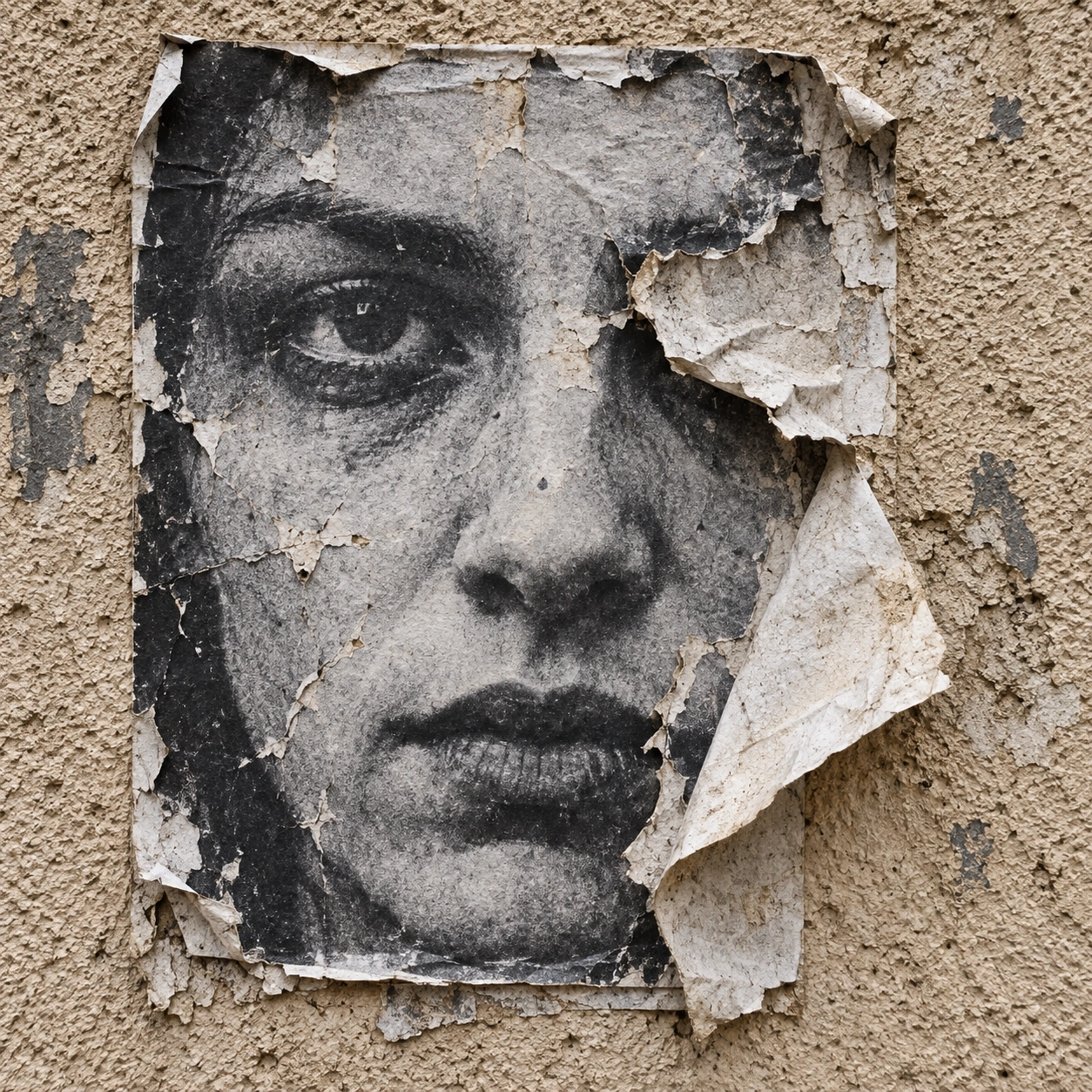 GPT Image 2.5
Reference details
- Reference ID
- 3917
- Category
- Photography
Reference prompts
Style prompt
Urban documentary photography treats a weathered surface as a found collage. Rough neutral plaster fills the frame around a limited black-and-white printed fragment, setting warm sandy color against cool gray ink. Torn edges, curled corners, lifted paper, adhesive traces, and fine cracks create layered physical depth on an otherwise nearly flat wall. Soft daylight gives raised material small realistic shadows rather than theatrical modeling. Close, square-on framing emphasizes surface texture and the uneasy relationship between a recognizable printed fragment and its decay. Contrast is strongest within the old graphic; the surrounding wall remains low-key and granular. The mood is quiet, imperfect, and timeworn, with visual interest arising from material erosion, partial concealment, and the chance placement of an image in ordinary space.Full example prompt
A square documentary color photograph centers on a weathered black-and-white face poster pasted onto a coarse beige stucco wall. The paper shows a close frontal face cropped tightly from the forehead to the chin. One eye looks out from a dark socket; the other lies under torn, folded paper, and the nose and mouth emerge from heavy gray-black printed shadows. The poster is rectangular in outline but no longer clean. Its corners curl, the upper edge is creased, and a large section near the lower right has lifted into a pale flap that partly covers the printed face. Smaller rips and cracks cross the image, exposing the uneven plaster below. A second thin layer of paper seems trapped beneath the main sheet around its bottom edge. The wall occupies the rest of the composition with rough sandy texture, darker scratches, and patches of old adhesive or chipped coating. There is no visible street sign or readable text, and the identity of the printed person is uncertain. Flat daylight comes from above and slightly left, making the raised paper edges throw small shadows and emphasizing the difference between matte ink, thin worn paper, and gritty wall. Color remains restrained: warm stone beige surrounds cool gray and dense black printing. The camera faces the wall almost squarely at close range, giving the surface an archival, found-image quality. The visual tension comes from a human gaze that survives physical damage and partial concealment. It feels like an accidental urban collage made over time by weather rather than a freshly designed graphic.