
Styles
#3944
Roy Lichtenstein style reference and prompts
Explore the “Roy Lichtenstein” reference with halftone texture, saturated colors, and pale neutral tones. View the images, copy the style or example prompt, and discover related styles on Looksift.
Compare the Qwen Image 2.1 and GPT Image 2.5 examples, choose the visual qualities you want, and copy the style prompt for your own project.
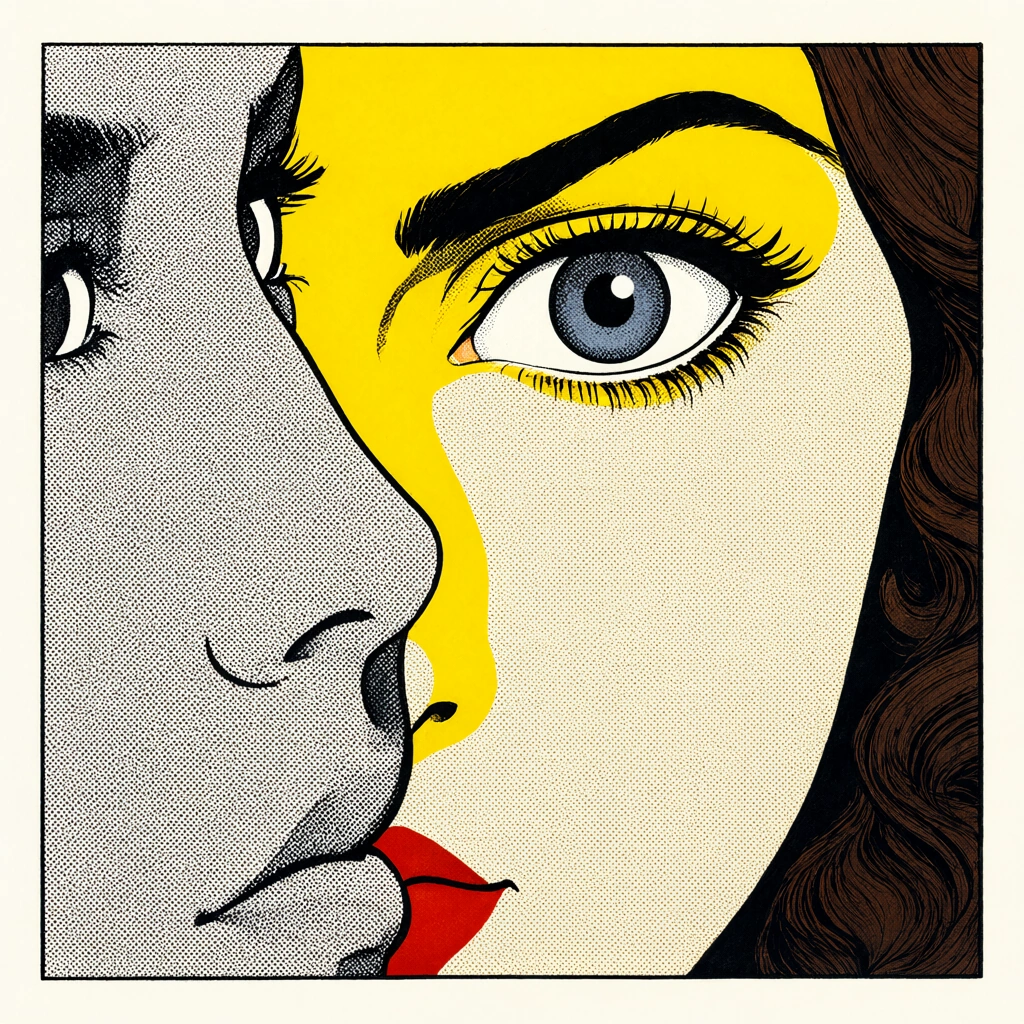 Qwen Image 2.1
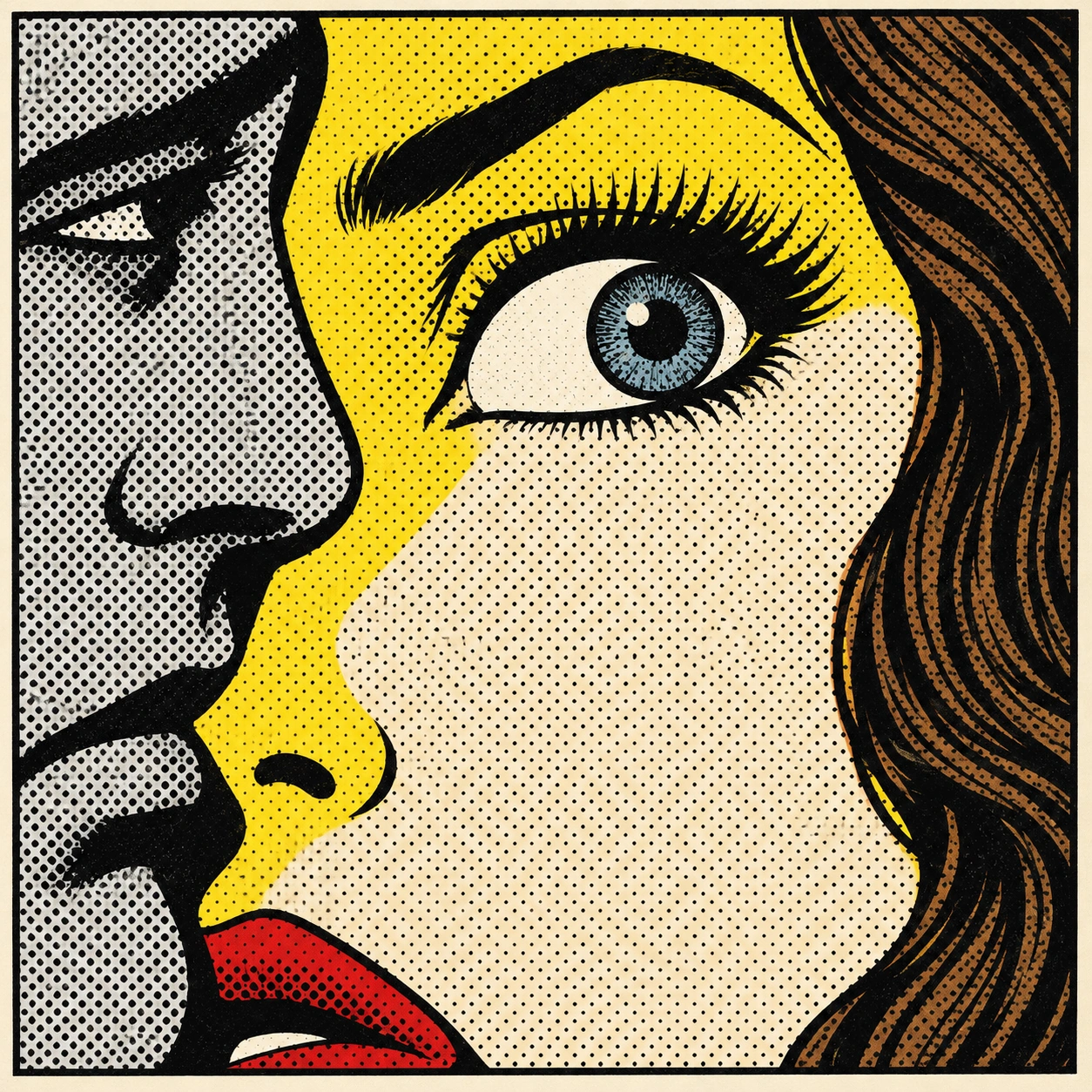 GPT Image 2.5
Reference details
- Reference ID
- 3944
- Category
- Anime & cartoons
Reference prompts
Style prompt
The pop-art print style uses hard black contours, regular halftone dots, and a few flat saturated color fields. Large pale areas acquire tone from the dot screen rather than smooth gradients, while pure black shapes give facial or object edges immediate force. Yellow and red accents interrupt cream, gray, and ink-black without subtle blending. Extreme cropping enlarges small features into compositional anchors; adjacent profiles or forms may collide with almost no negative space. Parallel ink strokes give dark textured areas directional flow. Illumination is encoded graphically through value blocks and dots, not through realistic cast light. A thin panel border reinforces the printed-page character. The overall effect is bold, witty, and electrically clear, built from scale, color separation, and visible print mechanics.Full example prompt
A square pop-art comic illustration shows an extreme close-up of a woman's face in yellow, cream, black, and red, with part of a second gray face at the far left. A thin black rectangular border contains the artwork against a pale surrounding margin. The woman's large blue-gray eye sits high near the center, opened wide beneath a thick black eyebrow and long inked lashes. Bright yellow fills the forehead, the area around the eye, and a curved strip beside the nose, while the main cheek remains pale cream covered in tiny regular halftone dots. Dark brown and black hair curls along the right edge in tightly drawn parallel strands. Near the lower left, a small wedge of red lip appears where the face leaves the frame. The second face enters as a grayscale profile from the left, showing one partial eye, nose, and mouth built from coarser black dots and solid shadow. The two faces overlap tightly, leaving almost no empty background; the yellow contour becomes a bright separator between them. Black outlines are thick and decisive around eyes and facial boundaries, while dense dotted printing gives broad skin areas a textured middle value. Lighting is graphic rather than naturalistic: white and cream areas stand for light, black ink for shadow, and yellow acts as a flat saturated field without cast shadows. The image appears like an enlarged printed panel, with the dot screen and hard color registration intentionally visible. No speech balloon or readable text occurs in the selected panel. The overall composition is urgent and playful, using the enlarged eye and abrupt cropping to turn a simple glance into a bold field of printed color and line.