
Styles
#3966
Philip Johnson style reference and prompts
Explore the “Philip Johnson” reference with a monochrome palette and localized practical lighting. View the images, copy the style or example prompt, and discover related styles on Looksift.
Compare the Qwen Image 2.1 and GPT Image 2.5 examples, choose the visual qualities you want, and copy the style prompt for your own project.
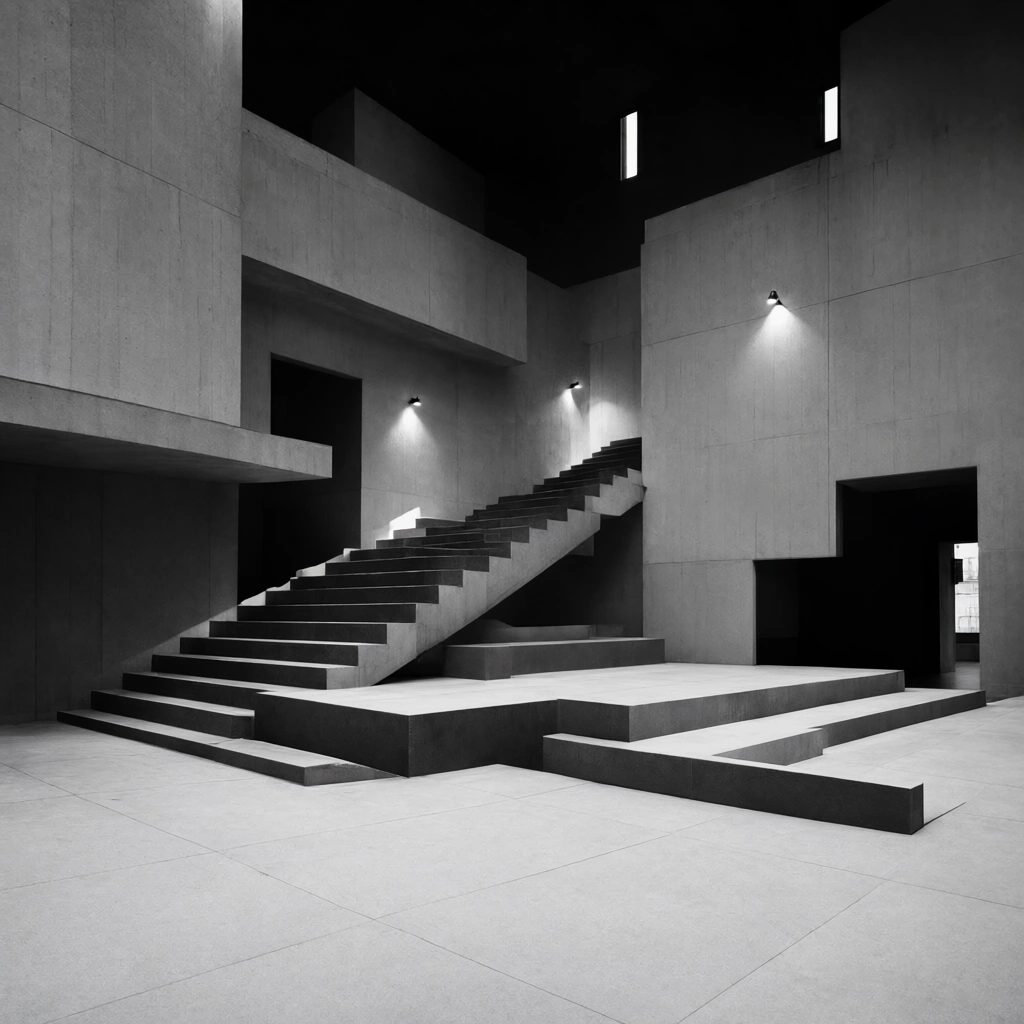 Qwen Image 2.1
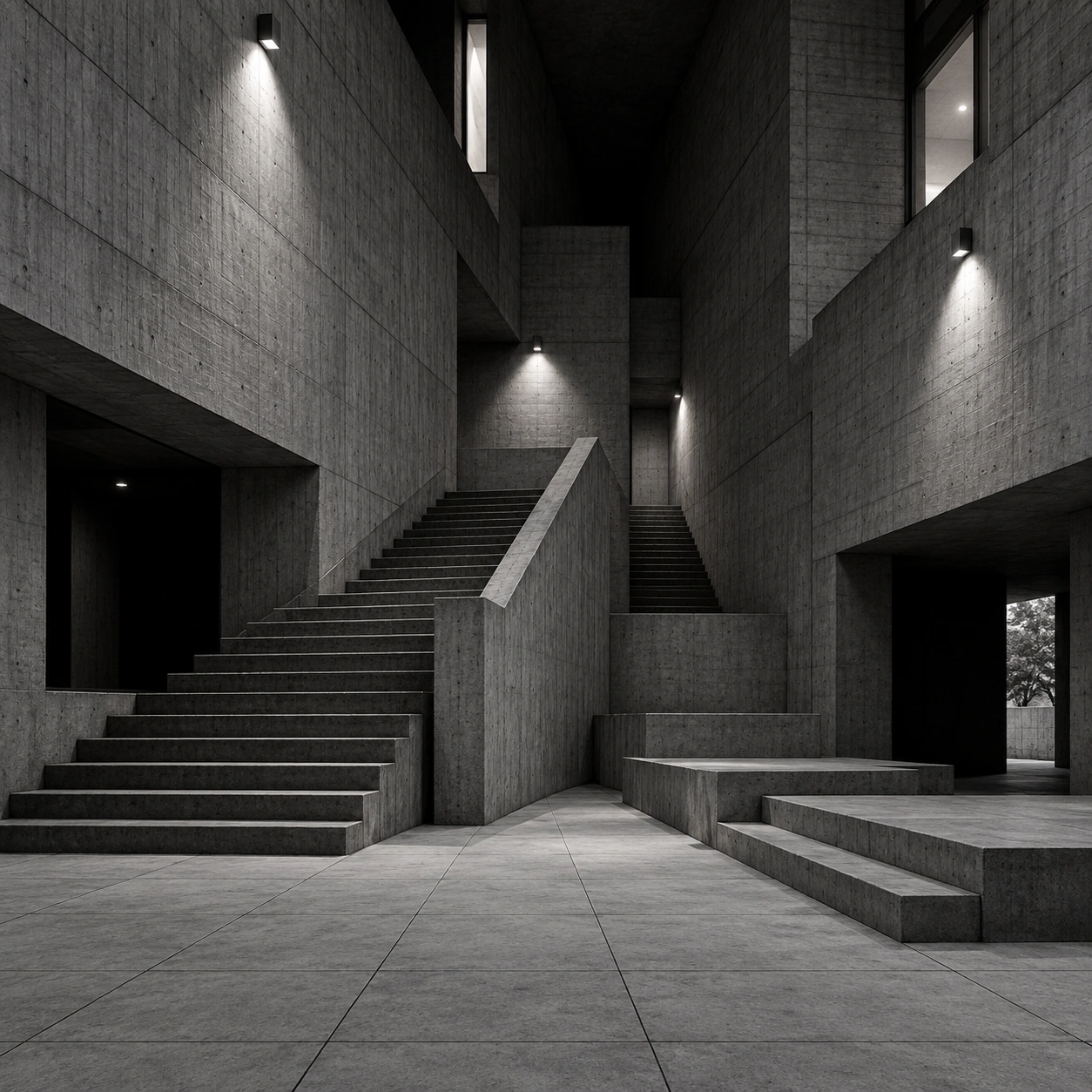 GPT Image 2.5
Reference details
- Reference ID
- 3966
- Category
- Photography
Reference prompts
Style prompt
The black-and-white photographic style emphasizes massive rectilinear planes, exposed concrete grain, and deep recessive shadow. A wide gray scale separates luminous white pools, textured middle values, and near-black cavities; color plays no role. Edges remain firm where lit planes meet dark voids, while tonal falloff from small practical sources softens selected surfaces. Repeated seams and paving-like grids create a measured texture inside the larger geometric arrangement. Several rising diagonals counter stacked horizontals and verticals, giving depth and direction without clutter. The viewpoint is low and wide enough to make the shapes feel weighty, with negative dark space preserving mystery at the margins. Surface grain is visible but subordinate to clear light-and-shadow organization. The overall effect is austere and sculptural, using controlled illumination to reveal volume, rhythm, and material.Full example prompt
A square black-and-white architectural photograph shows a concrete atrium with staggered stairs, projecting volumes, and small wall lights. The background rises into dark angular ceiling voids and a narrow vertical opening near the upper center. Tall gray concrete walls occupy both sides, their board-formed grain and panel seams visible in the light. At lower left, a broad flight of dark-edged steps climbs diagonally toward a small landing near the center. Another narrower stair continues farther back at the right of the landing. Across the lower right, low rectangular platforms and shallow steps project toward the viewer in a separate geometric rhythm. The floor is made of pale large paving slabs whose joints provide a quiet grid across the foreground. Deep rectangular openings under the left overhang and at the far right reveal black recesses; a small exterior glimpse is visible beyond the right opening. Several compact lamps mounted high on the walls cast downward cones of white light, making bright patches on the concrete and sharp pools around the stair landings. A slim lit window near the top and another in the upper right interrupt the otherwise solid masses. The viewpoint is low and centered in the open floor, so the steps and walls rise around the viewer with strong linear perspective. The photograph retains a restrained grain and a broad gray scale, with luminous white patches, middle-gray concrete, and nearly black cavities. Light comes from the wall fixtures and small upper apertures, leaving the overhead spaces in dense shadow. The overall composition is severe yet carefully balanced, with crossing stair diagonals and stacked rectangular masses organized by selective light.