
Styles
#3974
Ludwig Mies van der Rohe style reference and prompts
Explore the “Ludwig Mies van der Rohe” reference with lustrous surfaces, cool blue-gray tones, and even lighting. View the images, copy the style or example prompt, and discover related styles on Looksift.
Compare the Qwen Image 2.1 and GPT Image 2.5 examples, choose the visual qualities you want, and copy the style prompt for your own project.
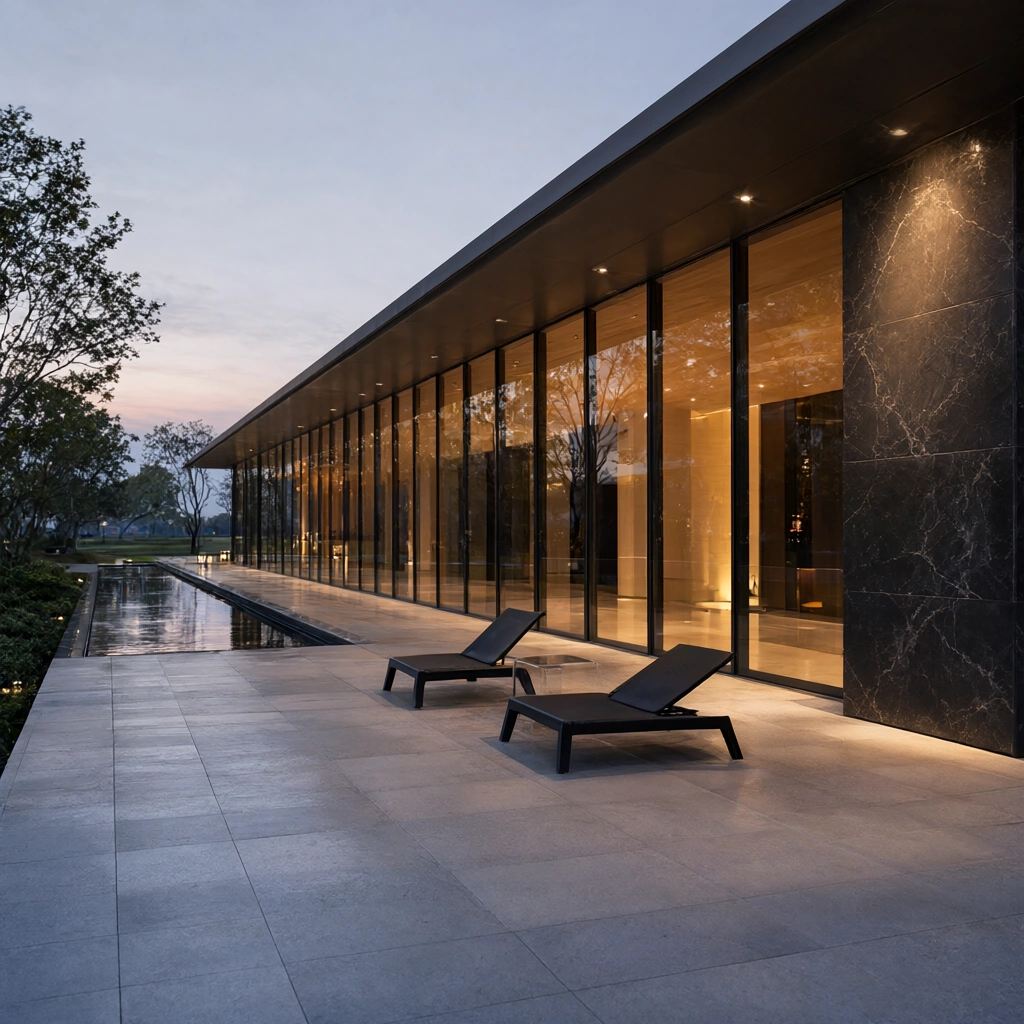 Qwen Image 2.1
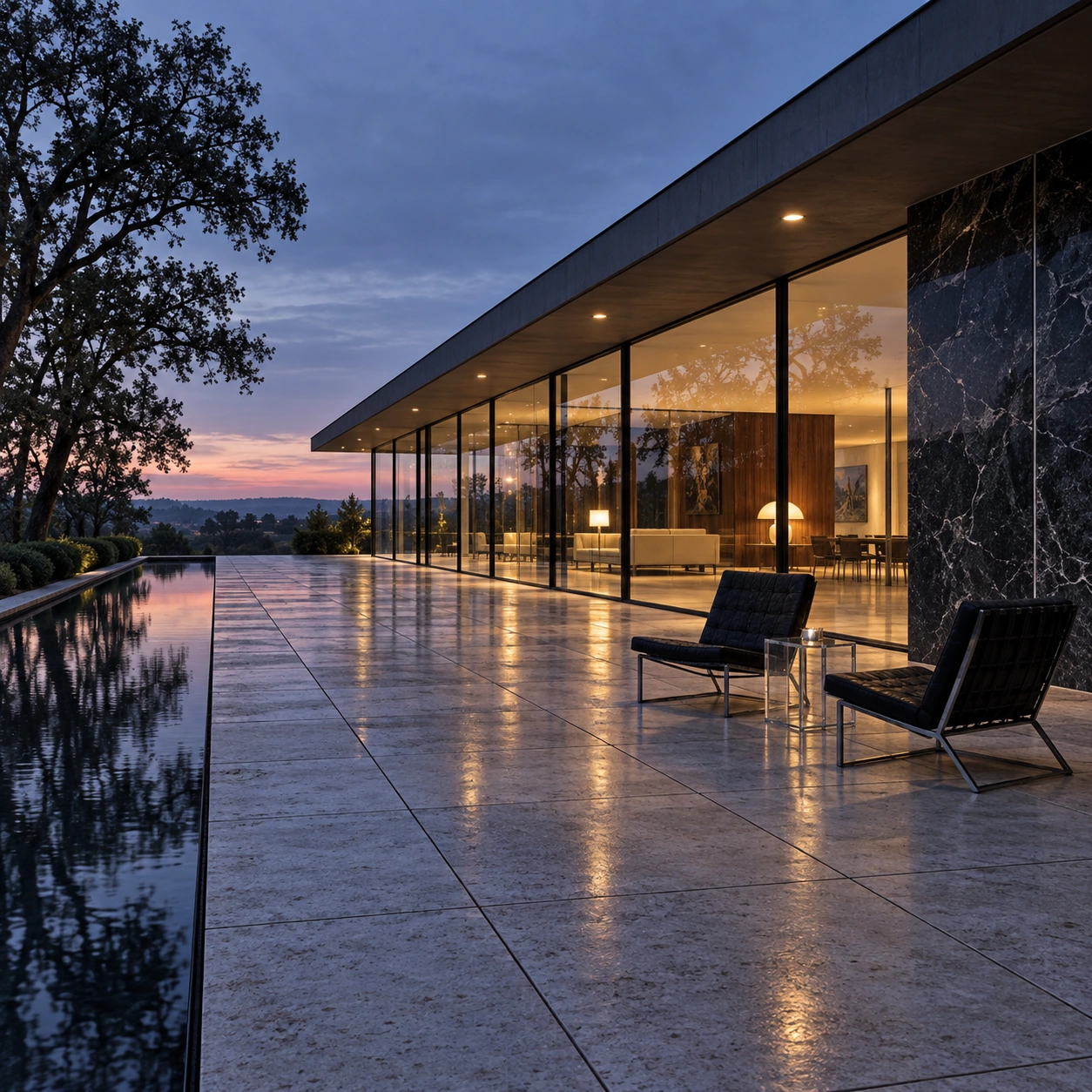 GPT Image 2.5
Reference details
- Reference ID
- 3974
- Category
- Photography
Reference prompts
Style prompt
The twilight photographic treatment uses thin dark horizontal planes, regular vertical divisions, and pale gridded surfaces to establish a calm geometric order. Transparent and glossy materials carry layered reflections, while matte sections provide solid visual anchors. Warm amber light glows from within a bounded zone and contrasts with a cool blue-gray outer field and a faint blush near the horizon. Fine points of artificial light repeat at measured intervals rather than becoming a dominant spectacle. Long receding lines create a clear diagonal perspective, countered by a few low dark foreground shapes. Surfaces remain clean but retain subtle water sheen, veining, and reflection differences. Outdoor light is soft and even, while local warm sources define depth behind the transparent layer. The overall effect is restrained, serene, and exact, with a dialogue between transparency, reflection, and orthogonal proportion carrying the visual identity.Full example prompt
A square architectural photograph shows a long glass pavilion beside a quiet paved terrace at blue dusk. The viewpoint is low and diagonal, looking from the near right corner toward a distant vanishing point on the left. A thin dark flat roof slices across the upper-right half of the frame and projects past the glass wall. Small recessed lights glow underneath its overhang. The facade is a row of full-height transparent panels separated by narrow black metal mullions, revealing a warm amber interior. Near the right edge, a tall dark polished stone panel with pale vein-like markings interrupts the glass. Across the foreground, large light-gray paving slabs form a regular grid, slightly damp and faintly reflective. Two low black lounge chairs sit on the terrace in the lower-right middle, angled toward the open space. A small transparent side table between them catches a tiny glint. Along the far left, a long narrow dark water channel follows the pavement toward the horizon. Trees with branching silhouettes frame that side, and low shrubs sit between the terrace and the distant lawn. The sky changes from cool gray-blue overhead to a pale pink band near the far horizon. Warm interior lamps and the pavilion's overhang lights reflect softly in the glass and on the paving, while the outdoor areas remain in cool twilight. The scene has no visible people or readable signage. Vertical metal lines, horizontal roof and water edges, and floor grids create a carefully ordered perspective. The overall composition is still and precise, balancing transparent warm enclosure against cool open air, reflective stone, and the soft fading daylight.