
Styles
#4013
Forensic photography style reference and prompts
Explore the “Forensic photography” reference with scratch-like marks, a monochrome palette, and tonal contrast. View the images, copy the style or example prompt, and discover related styles on Looksift.
Compare the Qwen Image 2.1 and GPT Image 2.5 examples, choose the visual qualities you want, and copy the style prompt for your own project.
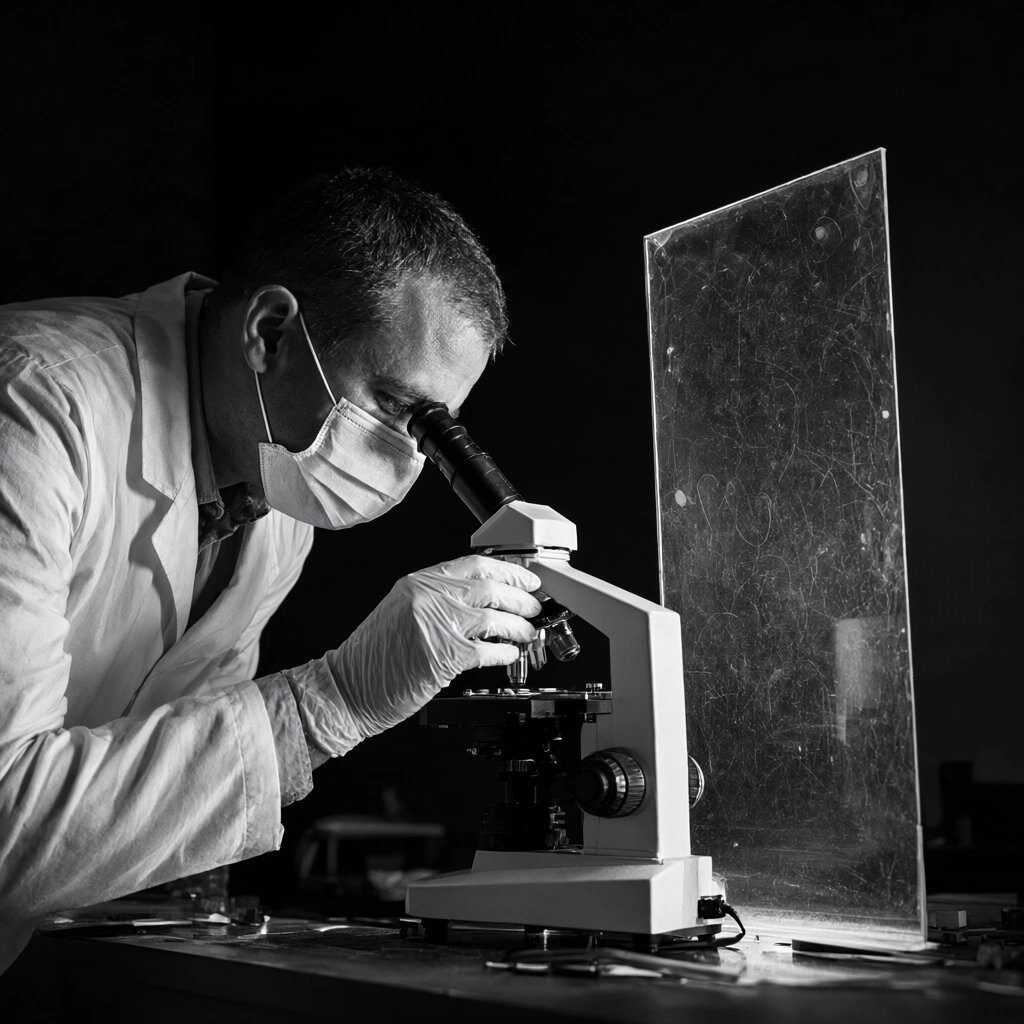 Qwen Image 2.1
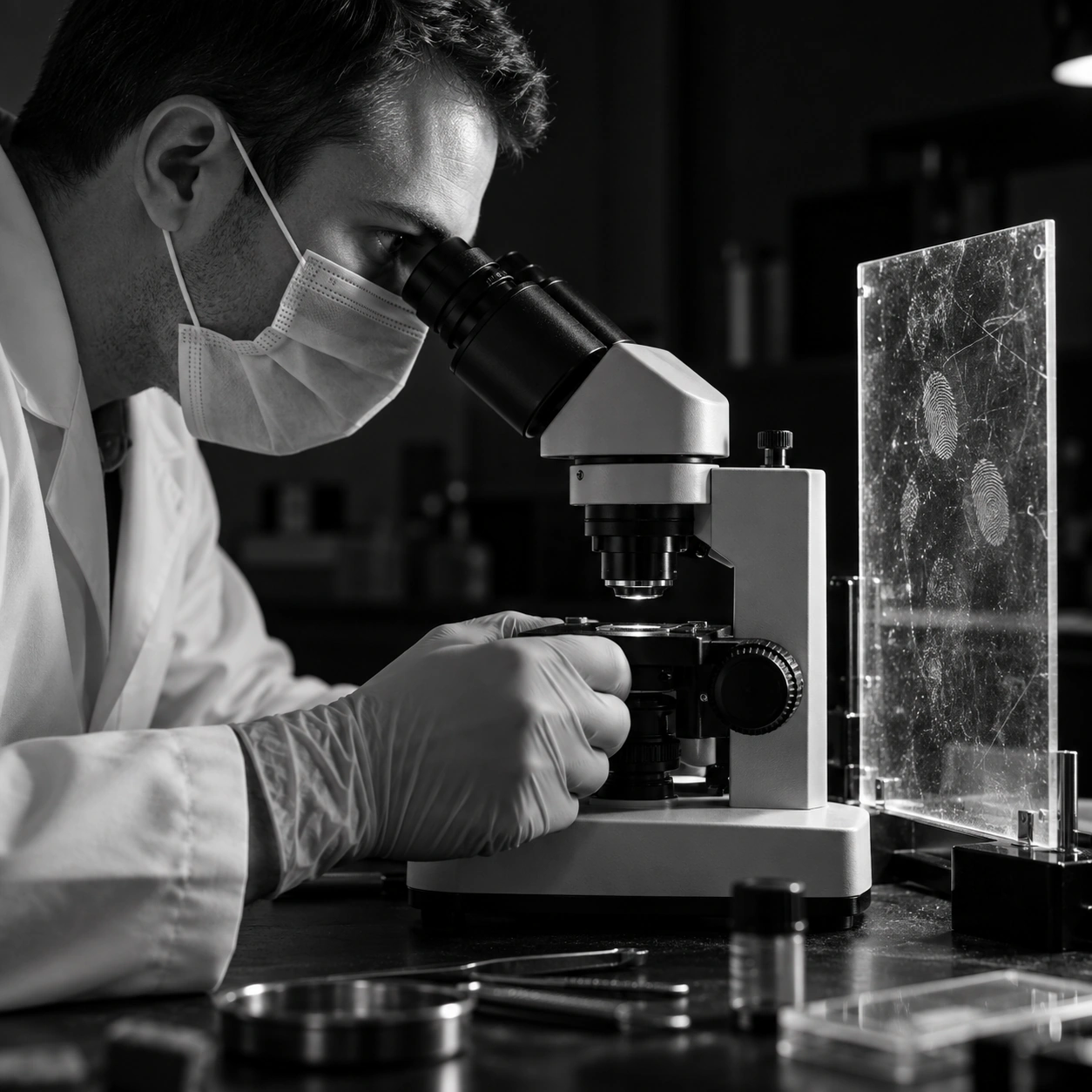 GPT Image 2.5
Reference details
- Reference ID
- 4013
- Category
- Photography
Reference prompts
Style prompt
High-contrast monochrome procedural photography with close framing, selective side light, and deep surrounding shadow. Smooth, creased, reflective, and scratched materials retain separate grayscale textures. A shallow but controlled focal zone joins a concentrated gesture to nearby working surfaces. Vertical planes and diagonal body movement organize the frame, producing a sober, investigative atmosphere without theatrical embellishment.Full example prompt
A square black-and-white forensic photograph shows a masked investigator leaning toward a laboratory microscope at a worktable. His short hair, white coat, protective gloves, and concentrated eye are clear on the left side, while the microscope's dark eyepiece meets his face near the center. A scratched, upright transparent evidence panel stands just beyond the instrument, catching gray reflections and faint circular marks. The lower tabletop is dark and crowded with the microscope base and small indistinct tools. Light from the side strikes the investigator's forehead, gloved hand, and the etched surface, making these details emerge from a nearly black room. The composition is close and procedural: the body bends diagonally inward, the instrument bridges foreground and middle ground, and the panel rises as a vertical plane on the right. The material contrast matters more than dramatic action: smooth mask, creased latex, polished optics, and rough marks on the evidence all receive distinct tones. Depth is shallow enough to darken the background but retains the primary examination surface. The grayscale range is high contrast yet still detailed in skin and lab clothing. A sober documentary mood comes from the fixed gaze and exact hand placement. There are no labels, captions, sensational color effects, or decorative frame within the image.