
Styles
#4036
Art Deco architecture style reference and prompts
Explore the “Art Deco architecture” reference with repeated linear rhythms and a monochrome palette. View the images, copy the style or example prompt, and discover related styles on Looksift.
Compare the Qwen Image 2.1 and GPT Image 2.5 examples, choose the visual qualities you want, and copy the style prompt for your own project.
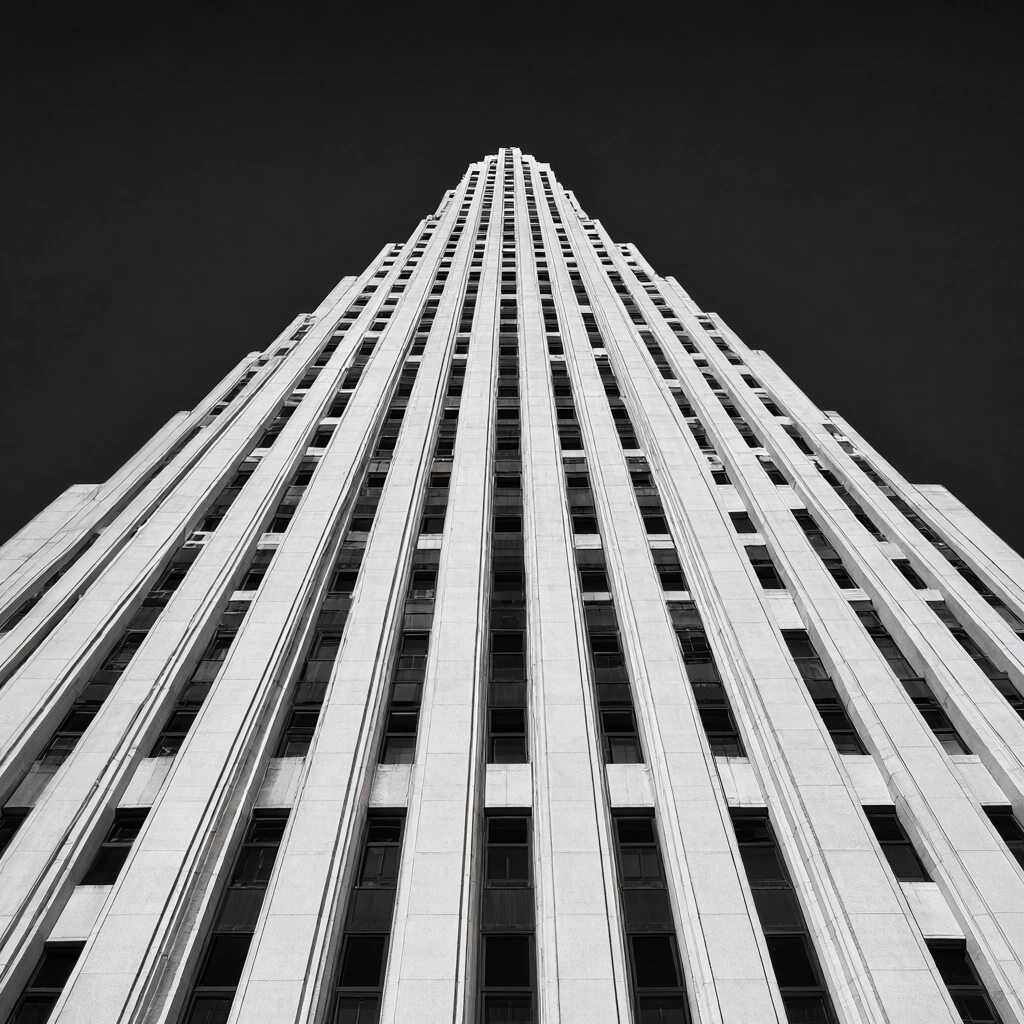 Qwen Image 2.1
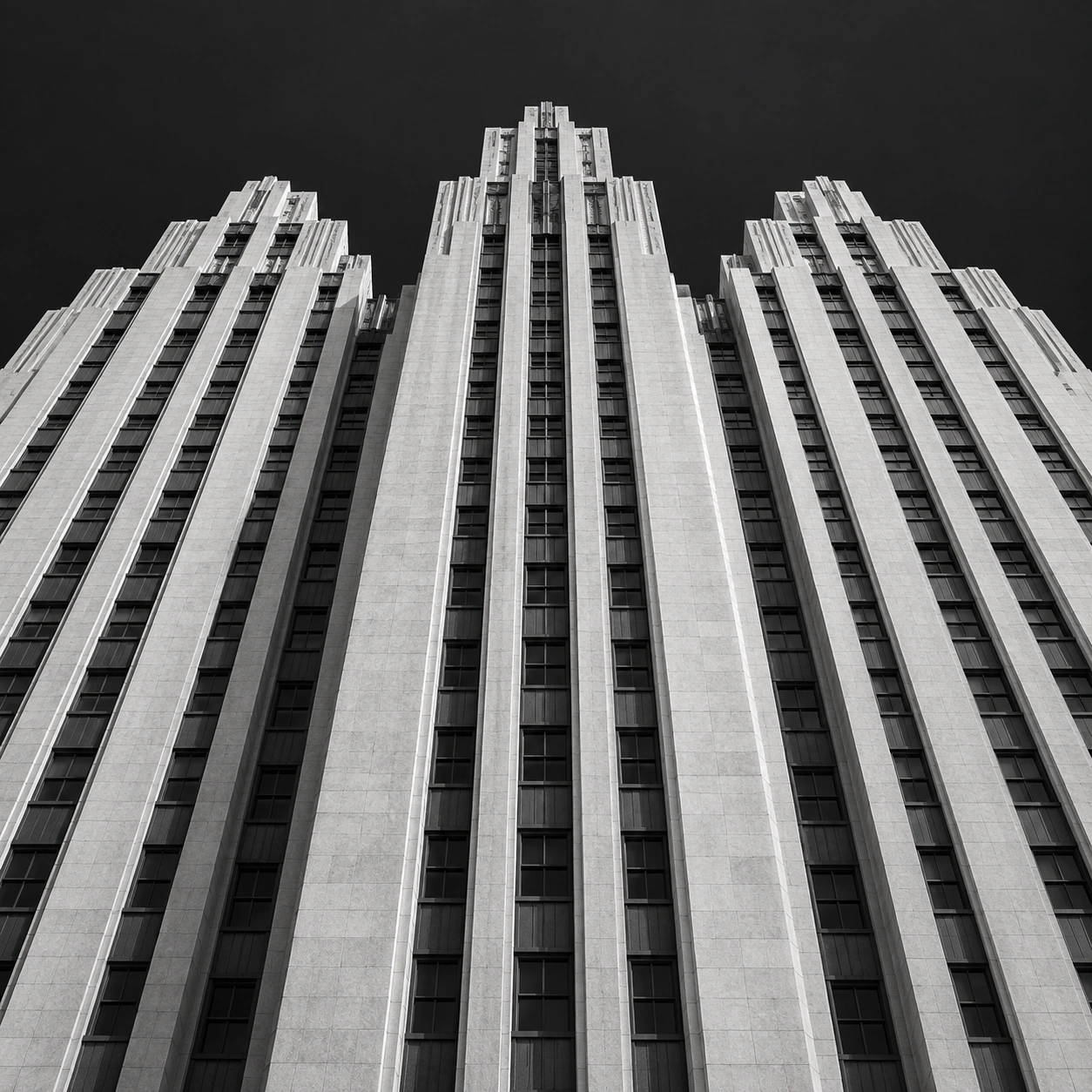 GPT Image 2.5
Reference details
- Reference ID
- 4036
- Category
- Photography
Reference prompts
Style prompt
The image has a black-and-white photographic finish with a forceful low-angle perspective and a disciplined vertical rhythm. Tall pale bands alternate with dark recessed slots, while repeated small rectangular openings measure the rise of the larger forms. Setbacks and narrow projecting ribs create a stepped silhouette whose edges stay crisp against a broad charcoal field. The tonal range is compressed into bright silver-gray planes, medium gray joints, and almost black voids, with little decorative color or soft atmospheric blur. Smooth stone or concrete surfaces retain slight seams and weather variation, but pattern and mass dominate texture. Light from above catches exposed ridges and leaves the cavities dense and dark. Symmetry organizes the central thrust, while angled side masses stretch perspective toward the upper frame. The overall effect is monumental, graphic, and emphatically upward, with rhythm emerging from repeated linear relief and stark value separation.Full example prompt
A square black-and-white architectural photograph looks sharply upward along a tall, symmetrical Art Deco facade against a nearly black sky. The lower edge is filled by large pale vertical piers that rise past the viewer, their shallow ridges and grooves leading into the height of the building. In the center, a narrow dark shaft of recessed windows is framed by broad bright stone strips. The central section climbs farther than the flanking wings and finishes in a small cluster of stepped projections near the upper middle. On the left and right, two massive wings angle away from the viewpoint, each lined with repeated window bays and long pale ribs. Their upper edges are trimmed into successive setbacks, producing a tiered silhouette rather than a flat roof line. The camera's low position makes these parallel lines seem to converge overhead, giving the central tower a pronounced vertical thrust. Dark window rectangles interrupt the pale wall at regular intervals, but the repeated ribs carry the strongest visual rhythm. Surface detail is restrained: subtle stone joints and slight differences in gray remain visible beneath the hard graphic division between sunlit planes and shadowed slots. A broad area of smooth charcoal sky occupies the top of the picture and isolates the geometric crown. The light appears to come from above and a little to the left, lifting the outer stone bands to bright gray while the window recesses and the deeper spaces between wings stay near black. There is no visible street activity, person, sign, or readable text; the image concentrates entirely on scale, elevation, and repeated structure. The overall composition is severe and upward-sweeping, using symmetry, stepped edges, and high monochrome contrast to turn the facade into a pattern of ascending lines.