
Styles
#4062
Deconstructivism style reference and prompts
Explore the “Deconstructivism” reference with pale neutral tones. View the images, copy the style or example prompt, and discover related styles on Looksift.
Compare the Qwen Image 2.1 and GPT Image 2.5 examples, choose the visual qualities you want, and copy the style prompt for your own project.
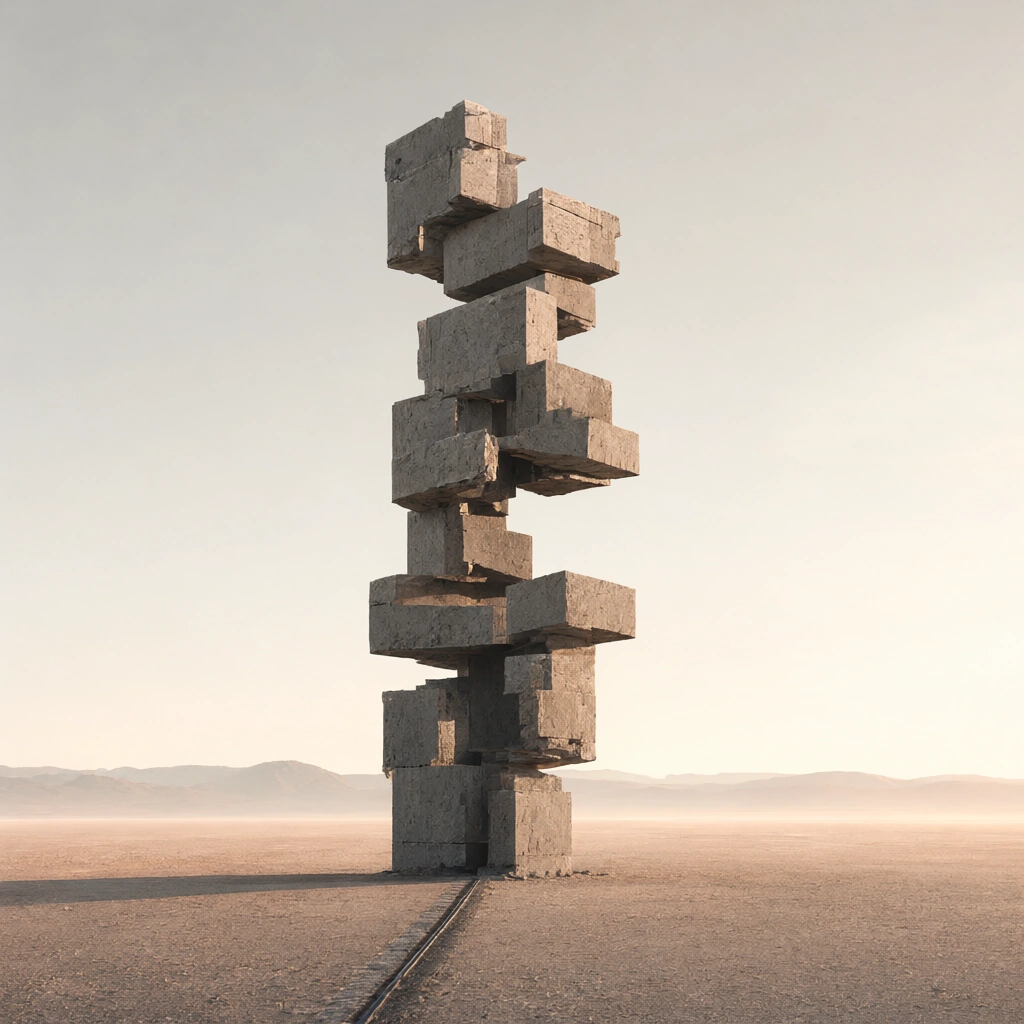 Qwen Image 2.1
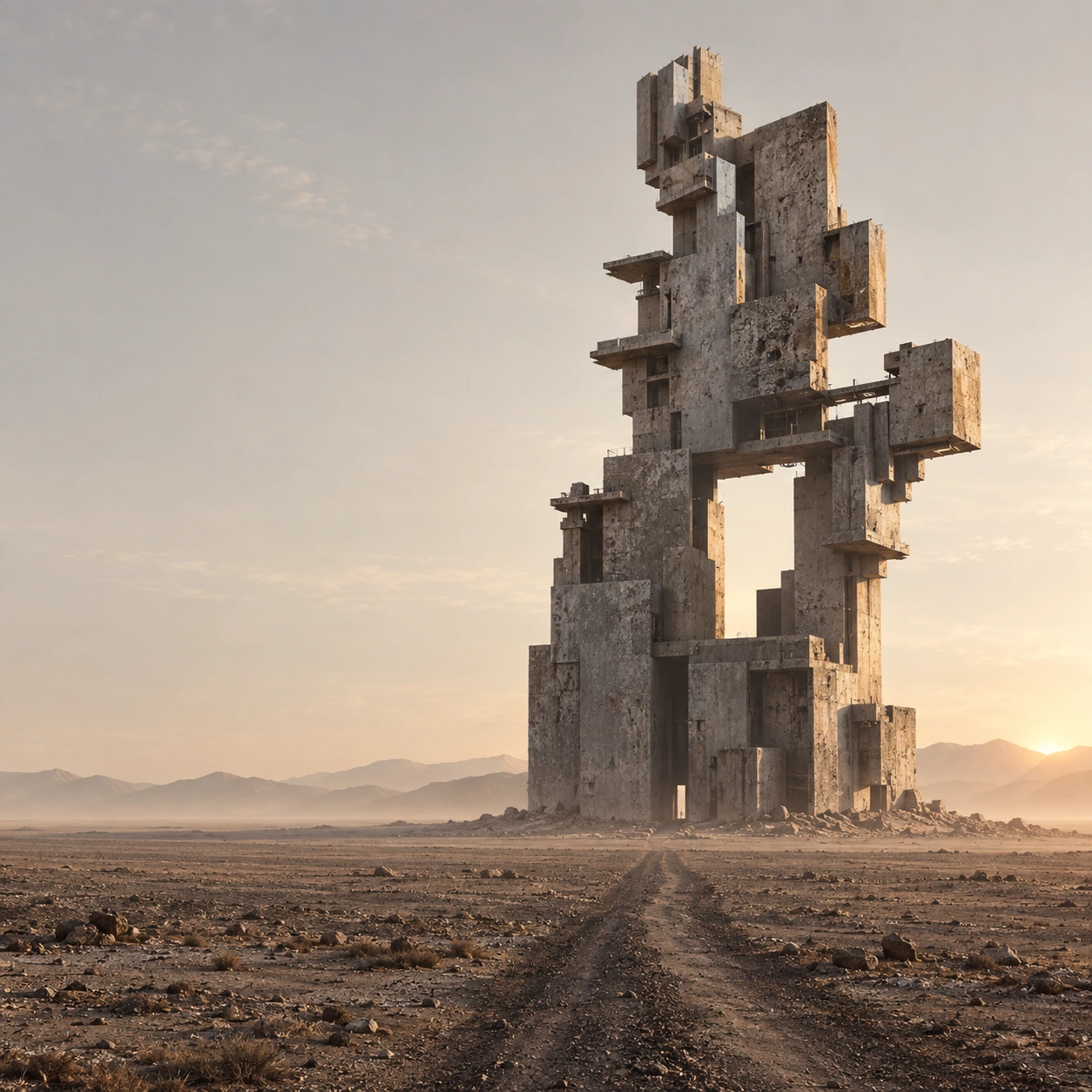 GPT Image 2.5
Reference details
- Reference ID
- 4062
- Category
- Photography
Reference prompts
Style prompt
Conceptual rendering assembles irregular angular masses through abrupt offsets, projecting planes, and voids. Hard stepped silhouettes contrast with rough speckled surfaces and a softly hazed distance. A narrow palette of cream, sand, warm gray, and charcoal keeps the spatial fractures more prominent than color. Low oblique light warms exposed edges and allows recesses to form compact dark cuts. A small dense vertical cluster occupies one part of a much broader quiet field, while a subtle directional trace across the lower area draws the eye inward. The image feels monumental, isolated, and deliberately unsettled.Full example prompt
A square conceptual architectural image places a tall fragmented structure alone in a broad, dusty plain. The background is a pale beige-gray sky that brightens toward the low horizon, with faint distant hills stretching behind the structure. A narrow dark track begins near the lower edge and points toward the central base, making the otherwise empty ground read as a traversable space. The structure rises slightly right of center as a stack of offset stone-colored blocks, suspended platforms, abrupt voids, and projecting ledges. Its upper mass leans and breaks into smaller rectangular units, while a large opening near the middle allows the bright background to pass through. Rough gray and tan surfaces are speckled and uneven, but the outer profile remains sharply stepped. The separate pieces look deliberately assembled in unstable balance rather than organized around a conventional façade. Thin shadows collect under the overhangs and inside the central void; a warm low light from the right picks out exposed edges and gives the terrain a faint peach cast. Much of the left half remains open sky and flat earth, emphasizing the structure's improbable scale and isolation. The tonal range is narrow, moving from warm cream through dusty gray to charcoal in the deepest gaps. The overall composition contrasts extensive calm negative space with a compressed, angular vertical rhythm, leaving the solitary construction both monumental and strangely precarious.