
Styles
#4066
Dada movement style reference and prompts
Explore the “Dada movement” reference with scratch-like marks, flat color areas, and a monochrome palette. View the images, copy the style or example prompt, and discover related styles on Looksift.
Compare the Qwen Image 2.1 and GPT Image 2.5 examples, choose the visual qualities you want, and copy the style prompt for your own project.
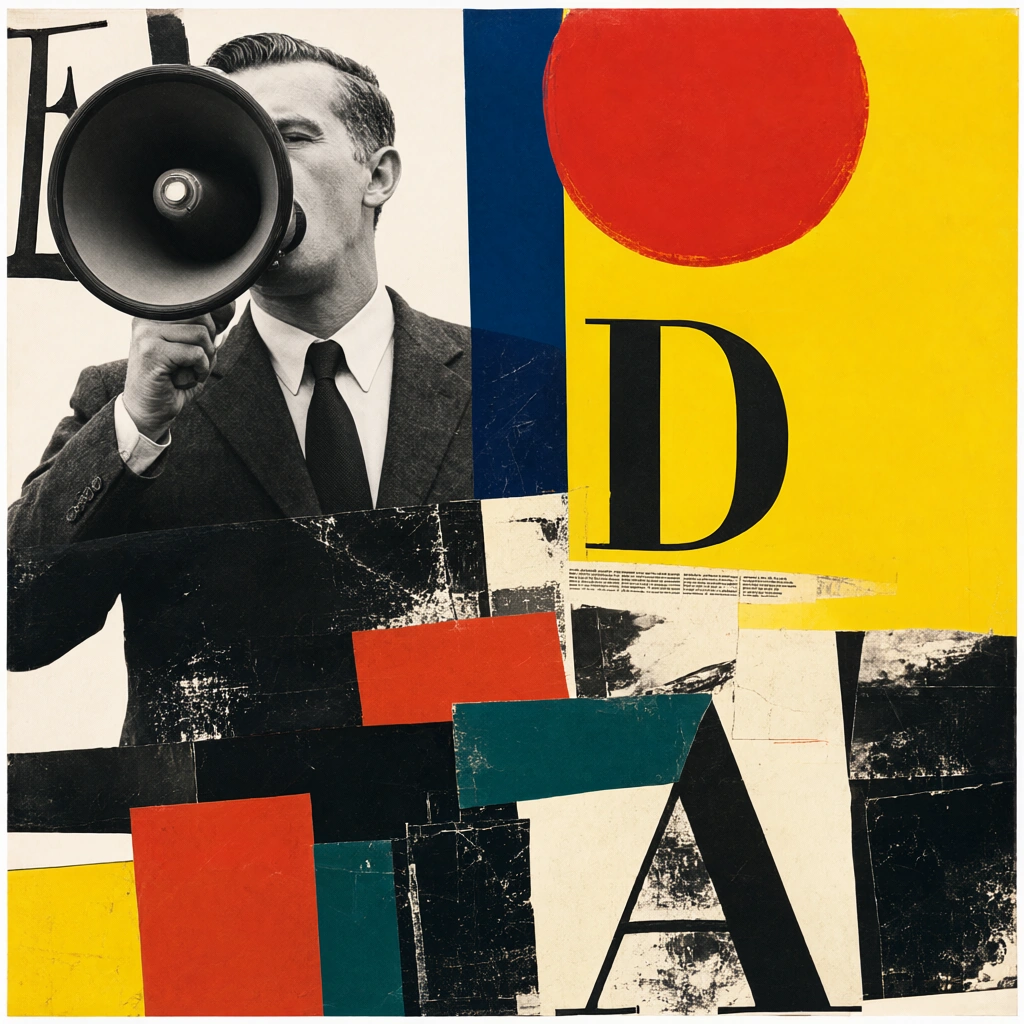 Qwen Image 2.1
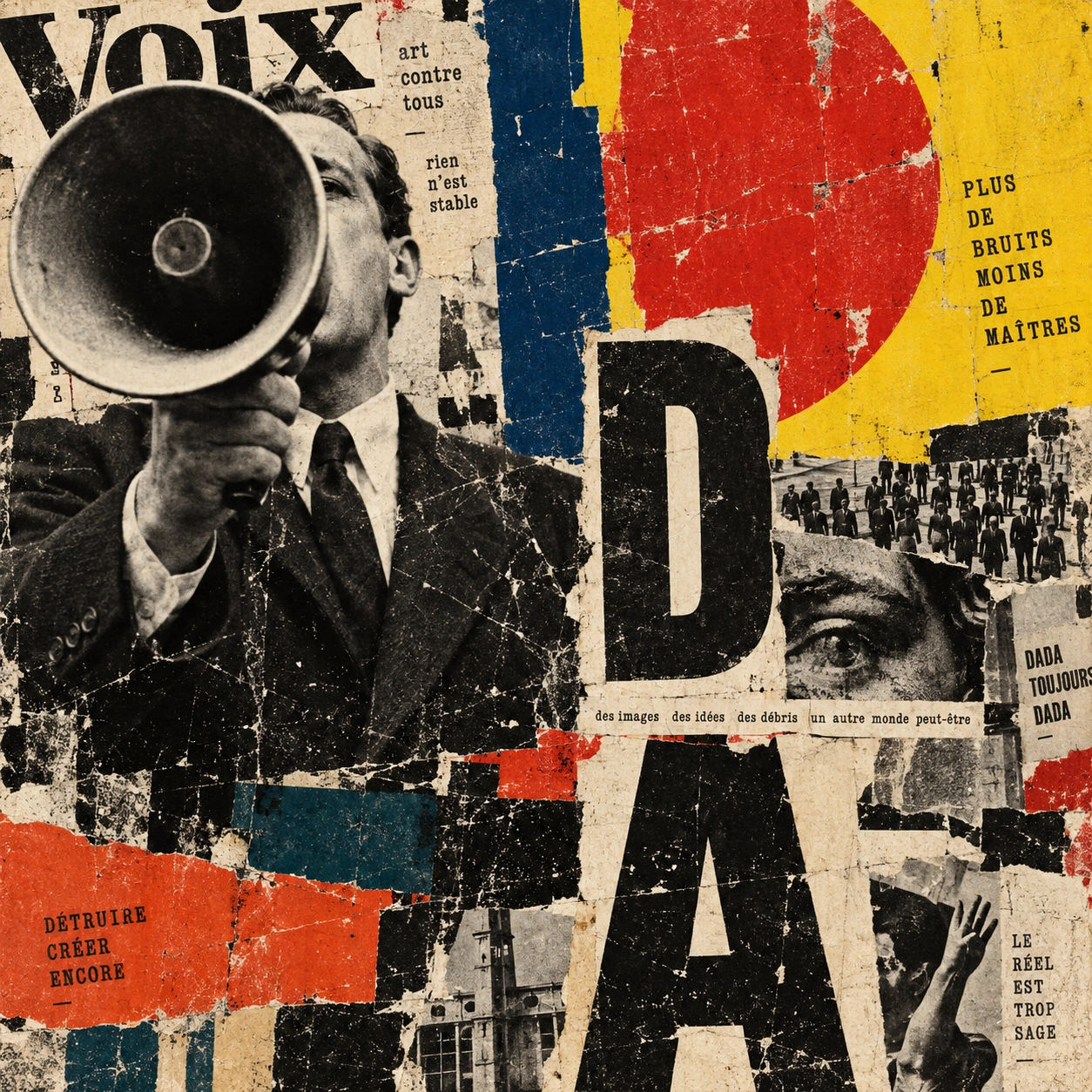 GPT Image 2.5
Reference details
- Reference ID
- 4066
- Category
- Photography
Reference prompts
Style prompt
The image has a distressed print-collage surface made of abrupt photographic, typographic, and flat-color layers. Hard rectangular cuts meet torn-looking, scratched edges; oversized cropped marks interrupt smaller fragments and make the scale intentionally inconsistent. Black, cream, poster yellow, hot red, and deep teal-blue dominate, with grayscale tonal imagery set against opaque color blocks. Ink appears rubbed away in patches, paper carries scuffs, and slight registration shifts make the layers feel manually assembled. Illumination is mixed: photographic areas have soft internal shading, while flat printed fields remain nearly shadowless. A strong off-center focal mass is countered by large circular and letter-like forms, producing a restless push across the whole frame. The overall effect is irreverent, noisy, and tactile, with collision and interruption serving as the main visual rhythm.Full example prompt
A square Dada-inspired collage combines a black-and-white photograph of a suited man holding a megaphone with large blocks of yellow, red, and dark blue print. The man's cropped upper body fills the left half; his face is partly hidden behind the round black mouth of the megaphone, which points toward the viewer from the upper left. His dark jacket and tie merge into scratched black ink areas below. Across the top left, a fragment of large black serif lettering is cut by the image edge and by overlapping paper, so the complete word cannot be read. On the upper right, a rough red circular form presses into a field of bright yellow, with a vertical dark blue strip dividing it from the photograph. Near the center right, a large block capital D stands over another scuffed photographic fragment. Below it, tiny print-like marks run in a short horizontal band, too small to decipher. Along the bottom, rough rectangular strips in orange-red, deep teal, black, and cream overlap the man's lower torso. A large black capital A rises near the lower center-right, partly covered by surrounding distressed textures. Small pieces of monochrome imagery and torn-looking edges interrupt the flat color fields. Paper wear, scratches, rubbed ink, and uneven registration are visible across nearly every layer. Light is graphic rather than photographic across the whole piece: the grayscale figure retains soft tonal modeling, while the colored shapes stay flat and opaque. The off-center portrait and oversized fragments jostle for attention, making the image feel deliberately assembled and unstable. The overall composition is noisy, confrontational, and rhythmic, with typographic scale and primary-color collision organizing the disorder.