
Styles
#4071
Cave painting style reference and prompts
Explore the “Cave painting” reference with earth colors, side lighting, and warm color tones. View the images, copy the style or example prompt, and discover related styles on Looksift.
Compare the Qwen Image 2.1 and GPT Image 2.5 examples, choose the visual qualities you want, and copy the style prompt for your own project.
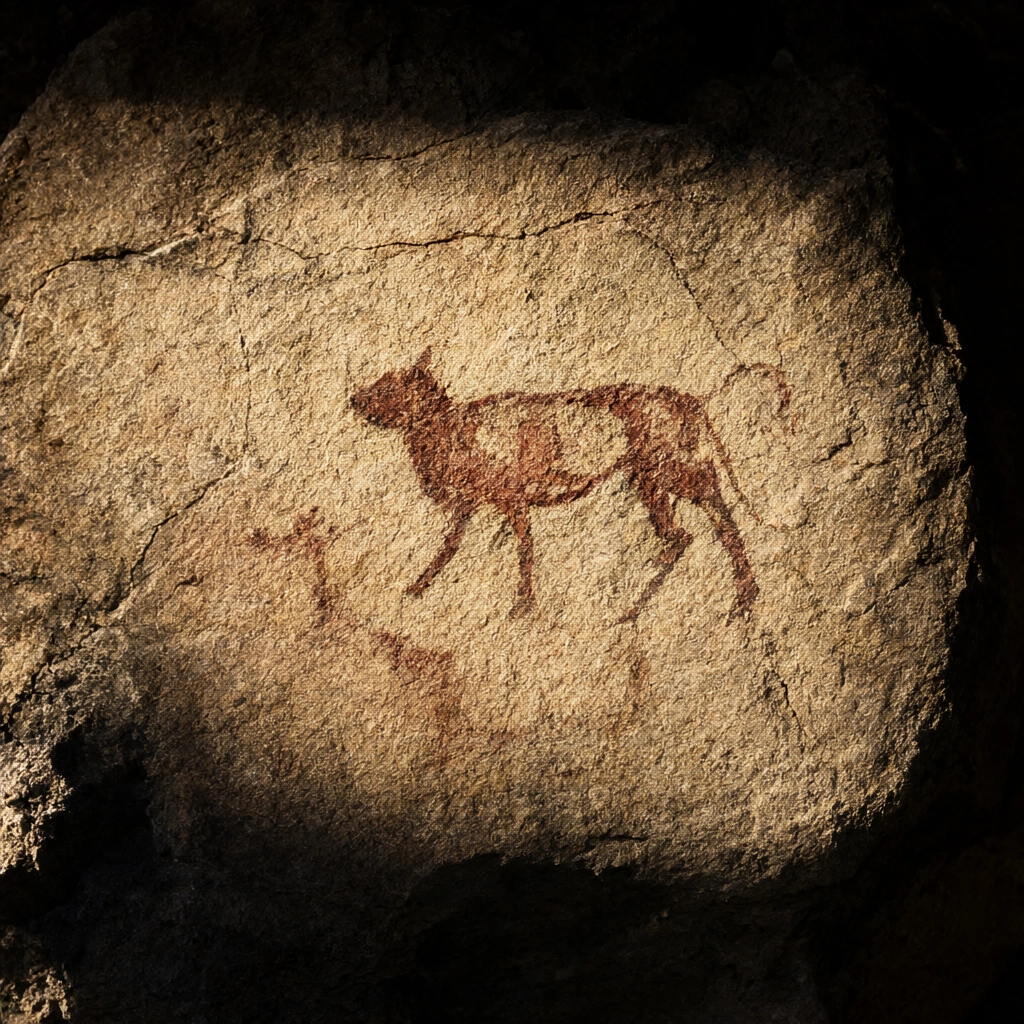 Qwen Image 2.1
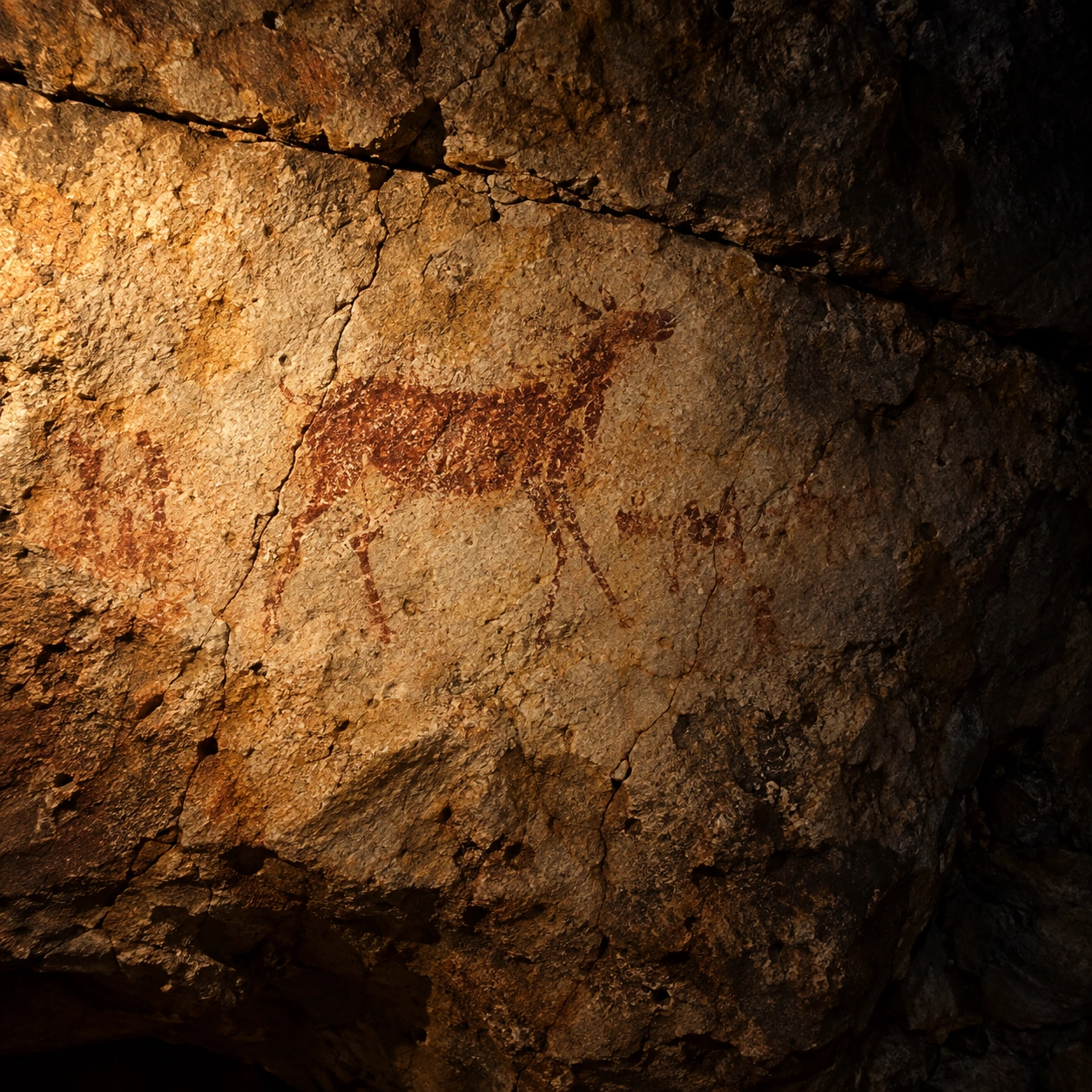 GPT Image 2.5
Reference details
- Reference ID
- 4071
- Category
- Photography
Reference prompts
Style prompt
Rough mineral-surface imagery sets sparse, irregular pigment lines into a field of cracks, pits, granular ridges, and uneven stains. Edges are broken by the support itself rather than mechanically distressed afterward. Stone beige, warm ochre, rust red, burnt umber, and near black form a narrow earthy range. Grazing light from one side lifts raised texture and pushes fissures into deep shadow, making the surface more spatial than the simple marks on it. A small loose focal cluster occupies a much larger darkened field. The visual effect is primitive in mark making, materially dense, and quietly archaeological.Full example prompt
A square photograph of cave painting shows a small reddish animal figure on a large, uneven rock wall. The wall fills the entire image, its surface shifting from warm ochre in the central lit area to almost black along the top and right edge. A thick horizontal crack cuts across the upper portion and several finer fissures run down through the painting. Near the center, dark red-brown lines form a four-legged animal in side view, with a compact body, raised head, and thin limbs. Smaller faded marks and partial strokes sit nearby but remain too worn to resolve confidently as separate figures. The painted lines follow and disappear into the rock's pits, stains, and granular ridges, so the image is inseparable from its stone support. At the lower edge, the wall falls into deeper shadow, making the lit patch feel like a discovery within a dark recess. Warm directional light comes from the left and slightly above, grazing the rough surface and catching raised grains while leaving cracks nearly black. There is no smooth paper or designed border, and no text can be read. The limited colors are stone beige, burnt umber, rust red, and charcoal. The overall composition is spare and tactile, with a fragile hand-drawn mark held inside a much larger field of ancient, weathered mineral texture.