
Styles
#4102
Intaglio Print Style Reference: Fractured Abstract Forms
Explore the “Intaglio print” reference with etched linework, tactile surfaces, and fine linear detail. View the images, copy the style or example prompt, and discover related styles on Looksift.
Compare the Qwen Image 2.1 and GPT Image 2.5 examples, choose the visual qualities you want, and copy the style prompt for your own project.
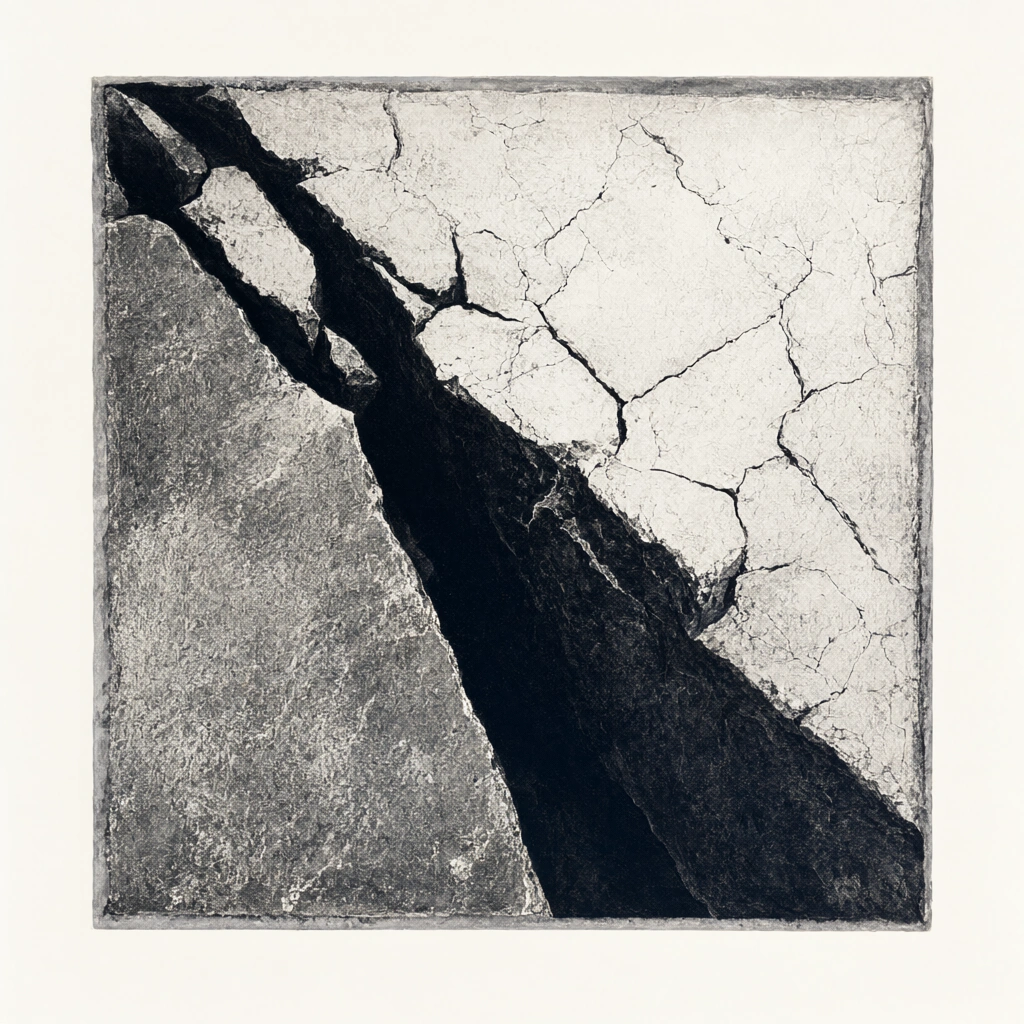 Qwen Image 2.1
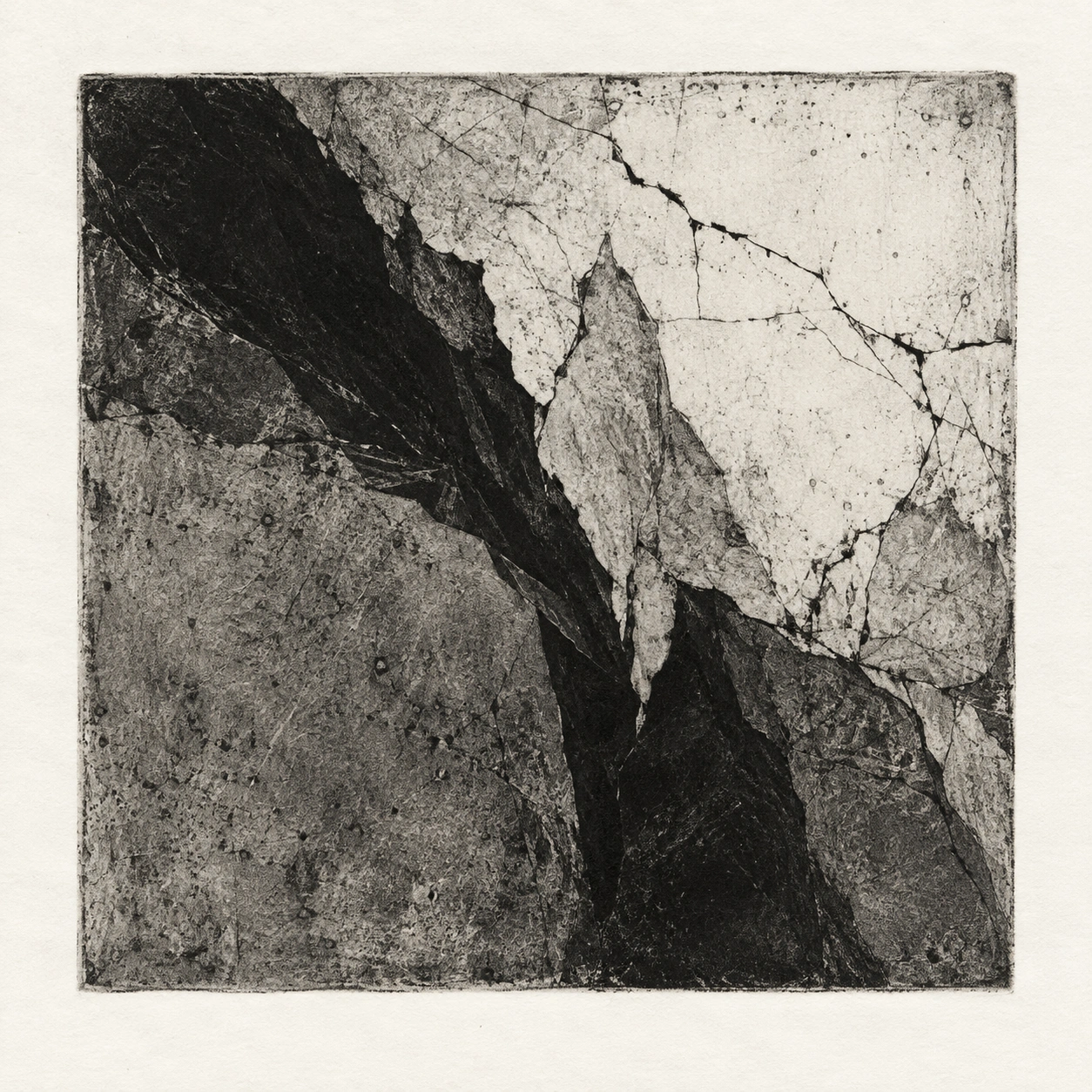 GPT Image 2.5
Reference details
- Reference ID
- 4102
- Category
- Ink & line
Reference prompts
Style prompt
Intaglio printmaking gives fine etched lines, bitten texture, rubbed gray tone, and dense black pools equal importance. Jagged diagonals cross branching hairline fissures, and some edges dissolve into grain while others remain sharply incised. The palette is limited to warm paper white, smoky gray, charcoal, and black. Illumination reads as pale reserved areas beside deep ink cuts, with a slight one-sided grazing effect. A concentrated dark wedge meets larger fractured light zones inside a plainly bordered plate impression. The image feels tactile, austere, and charged with compressed movement.Full example prompt
A square black-and-gray intaglio print shows a jagged dark form cutting across a pale, cracked field. The printed image sits inside a rectangular plate area with uneven gray edges and a wide warm-white paper margin. Near the upper left, a thick black diagonal descends toward the center, splitting into irregular angular masses. A lighter fractured shape rises beside it, while thin branching lines and fissures spread through the upper and right side. The lower left is a grainy gray wash; the lower center contains the deepest dark wedge, so the image feels pulled toward a narrow internal chasm. The forms suggest stone or broken material, yet remain partly abstract, their exact scale and setting deliberately unresolved. Tonal depth comes from finely etched lines, dense black ink, rubbed grays, and pale paper reserves rather than color. The plate surface has scratches, mottled bite marks, and irregular pressure at the edges, making the printed process visible. Light appears to graze from the upper right, where the palest areas catch the eye; dark incisions and overlapping fragments remain heavily shadowed. The surrounding paper stays plain and bright, isolating the active square of marks. No text is present. The overall composition is tense and mineral, balancing a deep diagonal cut with pale fractured space and the quiet margin of the sheet.