
Styles
#4147
Rembrandt style reference and prompts
Explore the “Rembrandt” reference with soft tonal transitions, pale neutral tones, and chiaroscuro. View the images, copy the style or example prompt, and discover related styles on Looksift.
Compare the Qwen Image 2.1 and GPT Image 2.5 examples, choose the visual qualities you want, and copy the style prompt for your own project.
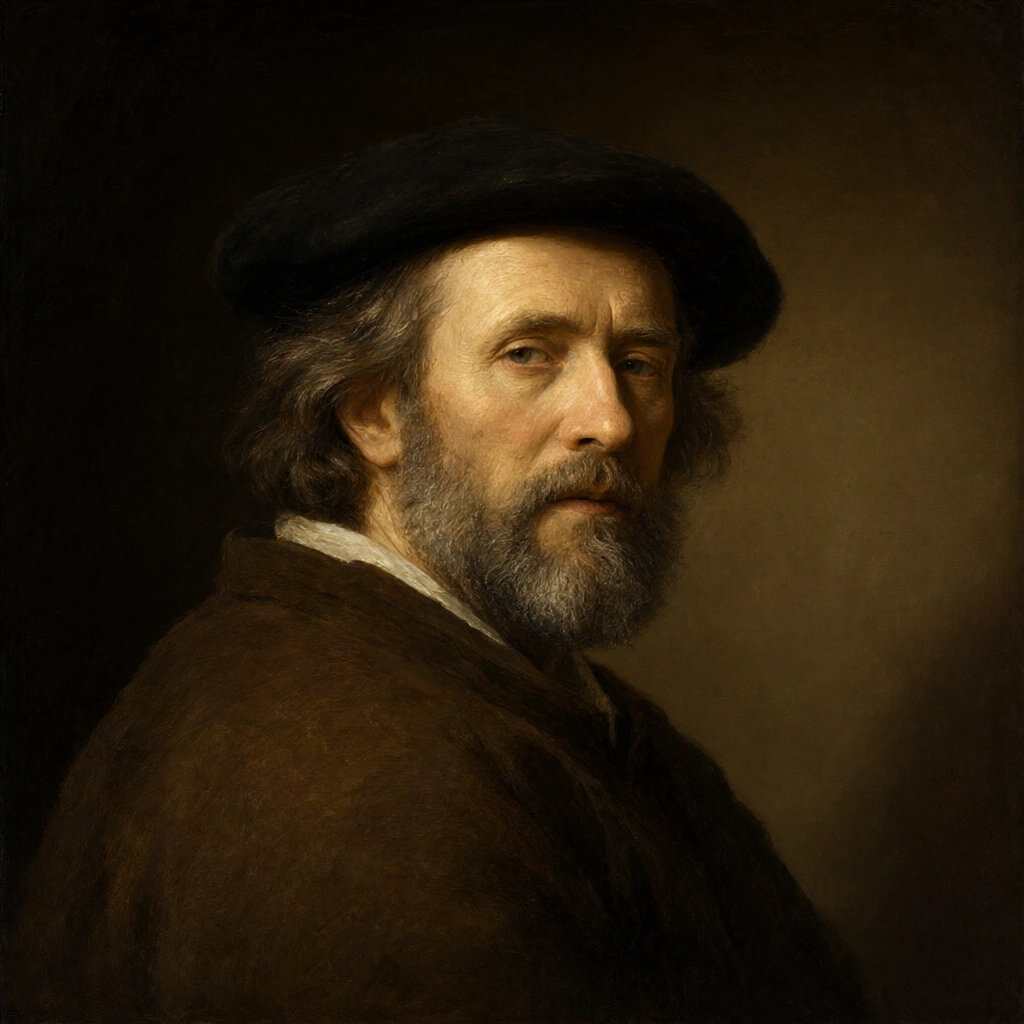 Qwen Image 2.1
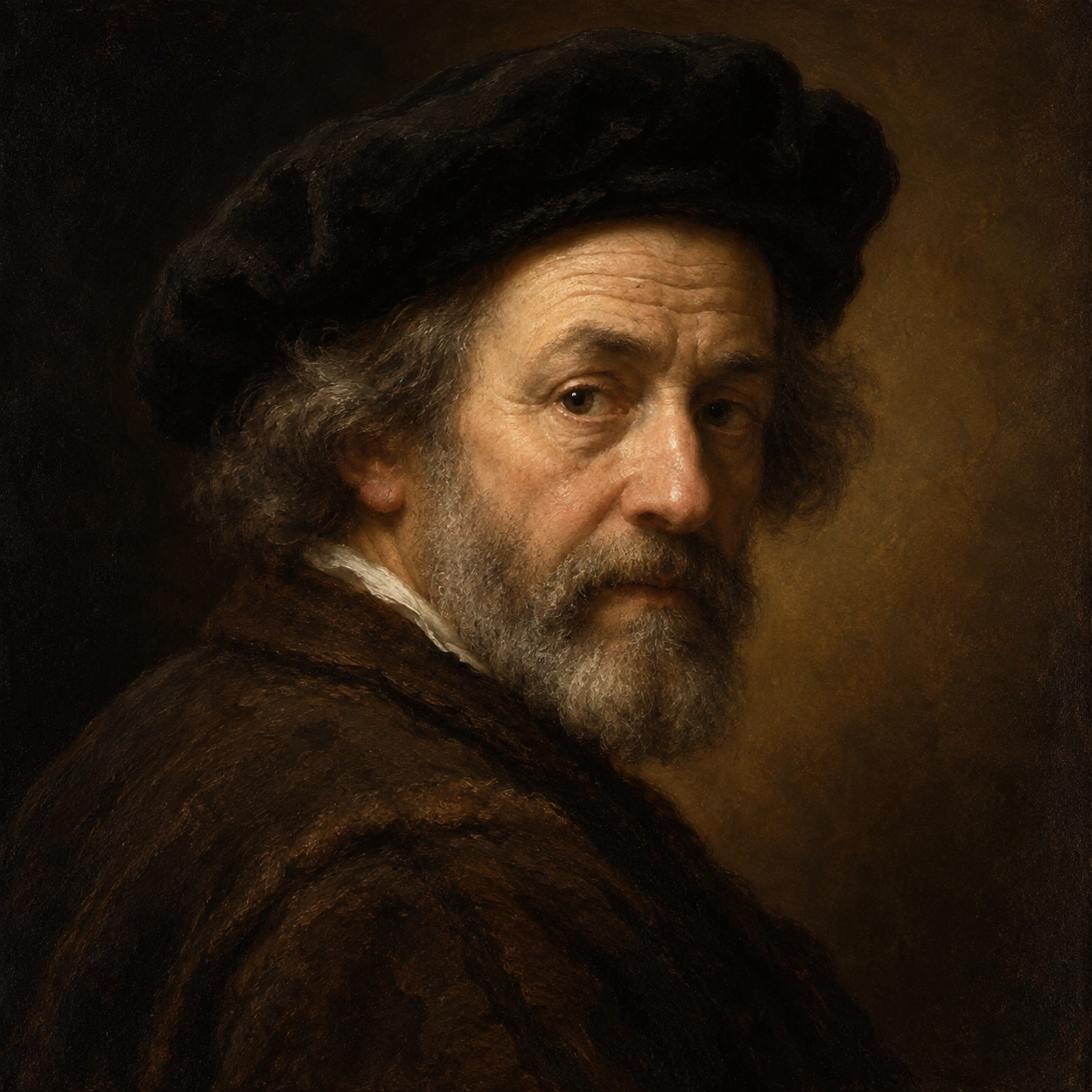 GPT Image 2.5
Reference details
- Reference ID
- 4147
- Category
- Painting
Reference prompts
Style prompt
The image has an old-master oil-painting surface shaped by warm chiaroscuro and lost edges. Broad near-black and umber fields hold a compact island of softly modeled cream, ocher, and muted rose. Contours sharpen only where light strikes; they dissolve where dark form meets dark ground. Brushwork is smoother in luminous passages and more broken or nearly swallowed in shadowed ones, giving the surface quiet material variation. A single warm upper-side light rounds the central form and falls off gradually, without broad even illumination. The close crop and angled mass create immediacy within a spare, nonliteral background. The overall effect is contemplative and humane, with restrained color, slow light, and darkness serving as active parts of the composition.Full example prompt
A square old-master-style oil portrait shows an older bearded man turning his head toward the viewer from a dark warm-brown setting. The crop reaches from the upper hat to the chest, and the shoulders angle away toward the lower left. A large soft black beret sits low over tousled gray-brown hair that fans out at both sides. The face is broad and closely observed: horizontal wrinkles cross the forehead, the eyes are tired but direct, and the nose and mouth are modeled through gentle uneven light. A short gray beard and mustache soften the jaw. A pale narrow collar peeks from beneath a rough deep-brown outer garment, whose folds lose themselves in the surrounding shade. The background is nearly black on the upper left and becomes a warmer umber halo behind the right side of the head. This tonal opening separates the hair without creating a distinct room or object. The paint surface is smooth in the illuminated cheek and forehead but more broken in the hat, hair, and dark garment, where individual strokes merge into shadow. The figure is not rigidly frontal; the turn of the neck and the angled shoulders make the glance feel sudden and personal. Warm light from the upper right of the image catches the forehead, nose bridge, cheek, and beard, then falls away across the far eye and coat. No readable writing or additional figure appears. The overall composition is intimate and reserved, letting the illuminated face slowly emerge from broad dark color and retaining the weight of unpainted-seeming shadow at the edges.