
Styles
#4200
Calotype print style reference and prompts
Explore the “Calotype print” reference with scratch-like marks, sepia tones, and soft diffused light. View the images, copy the style or example prompt, and discover related styles on Looksift.
Compare the Qwen Image 2.1 and GPT Image 2.5 examples, choose the visual qualities you want, and copy the style prompt for your own project.
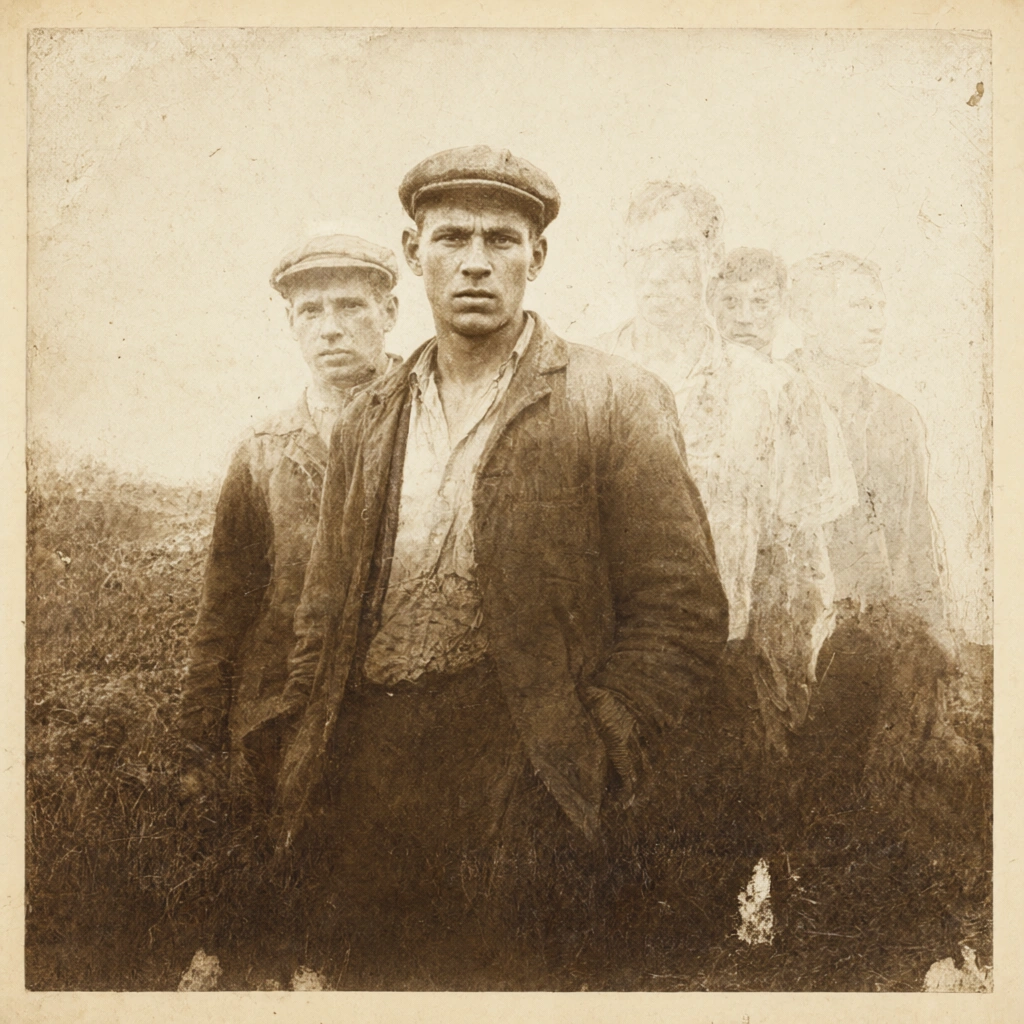 Qwen Image 2.1
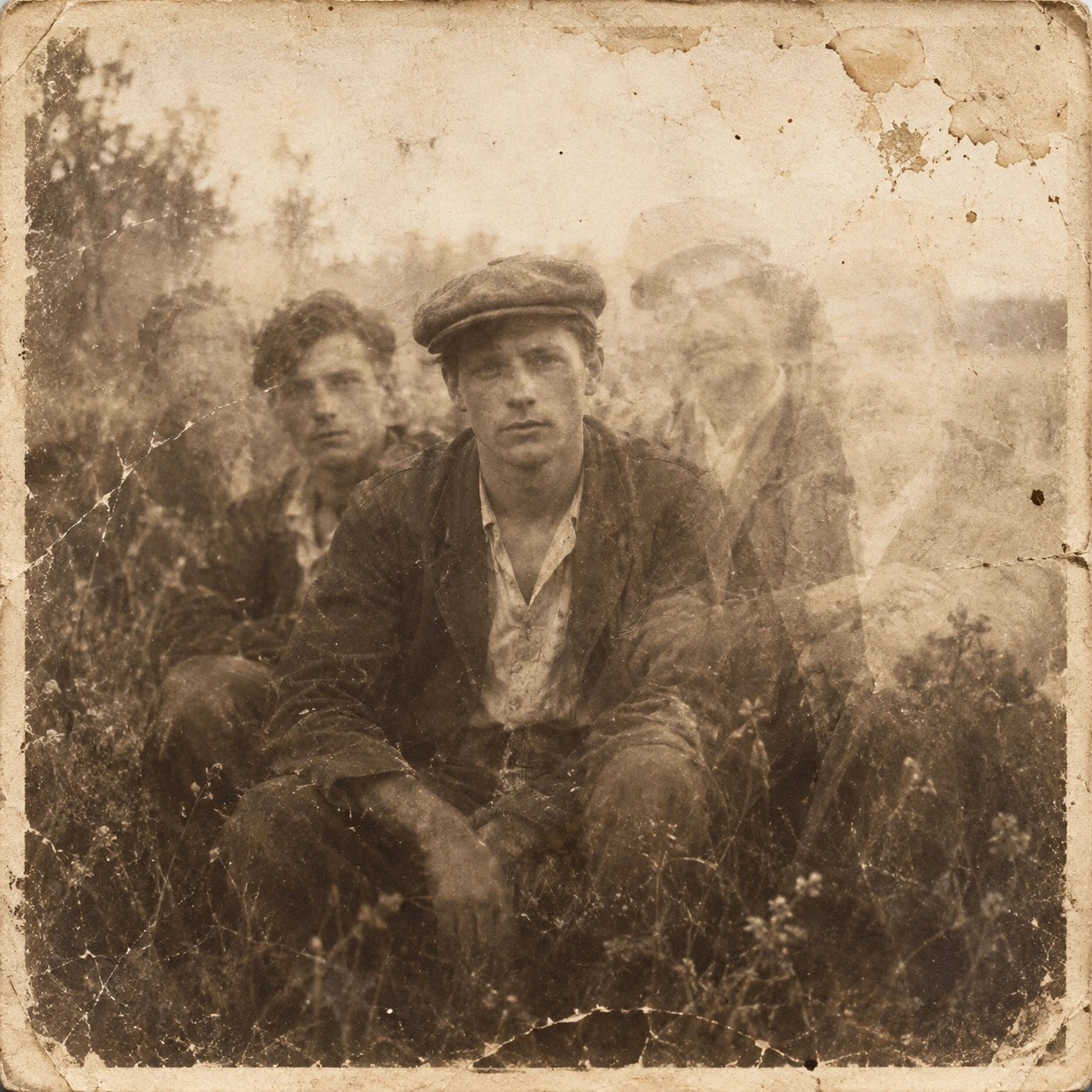 GPT Image 2.5
Reference details
- Reference ID
- 4200
- Category
- Photography
Reference prompts
Style prompt
The calotype-like print has soft sepia contrast, uneven exposure and visible paper fibers. Warm cream highlights fade into brown and charcoal patches without crisp digital edges. Ghosted overlapping shapes and scratches make depth uncertain, while one slightly clearer center anchors the frame. Broad diffuse illumination leaves shadows porous rather than solid. Stains, grain and irregular borders give the image a fragile historical character.Full example prompt
A square antique photographic print shows a small group of young men in worn outdoor clothing. One central man in a flat cap and open jacket is the clearest figure, looking directly toward the camera. A second face appears behind him to the left, while other pale figures overlap faintly at the right and across the background. Their bodies dissolve into a dark, grassy lower field, and the upper part of the image is veiled by light staining and irregular paper marks. The sepia brown and cream tones feel faded rather than sharply black and white. The central face and cap retain enough detail to show a serious expression, but nearby outlines blur and double as though several moments were exposed together. No precise setting is visible beyond a suggestion of outdoor vegetation. Light is broad and soft, brightening the upper background and leaving the lower bodies in brown shadow. Paper fibers, scratches, patches and uneven chemical density are as visible as the people themselves. The composition is frontal and roughly centered, but ghostly overlapping faces make its space uncertain. A warm beige margin and mottled surface turn the photograph into a fragile historical object. The image feels intimate and unstable, with one clear gaze held among fading traces of others.