
Styles
#4248
Charles Burns style reference and prompts
Explore the “Charles Burns” reference with hatching, tactile surfaces, and pale neutral tones. View the images, copy the style or example prompt, and discover related styles on Looksift.
Compare the Qwen Image 2.1 and GPT Image 2.5 examples, choose the visual qualities you want, and copy the style prompt for your own project.
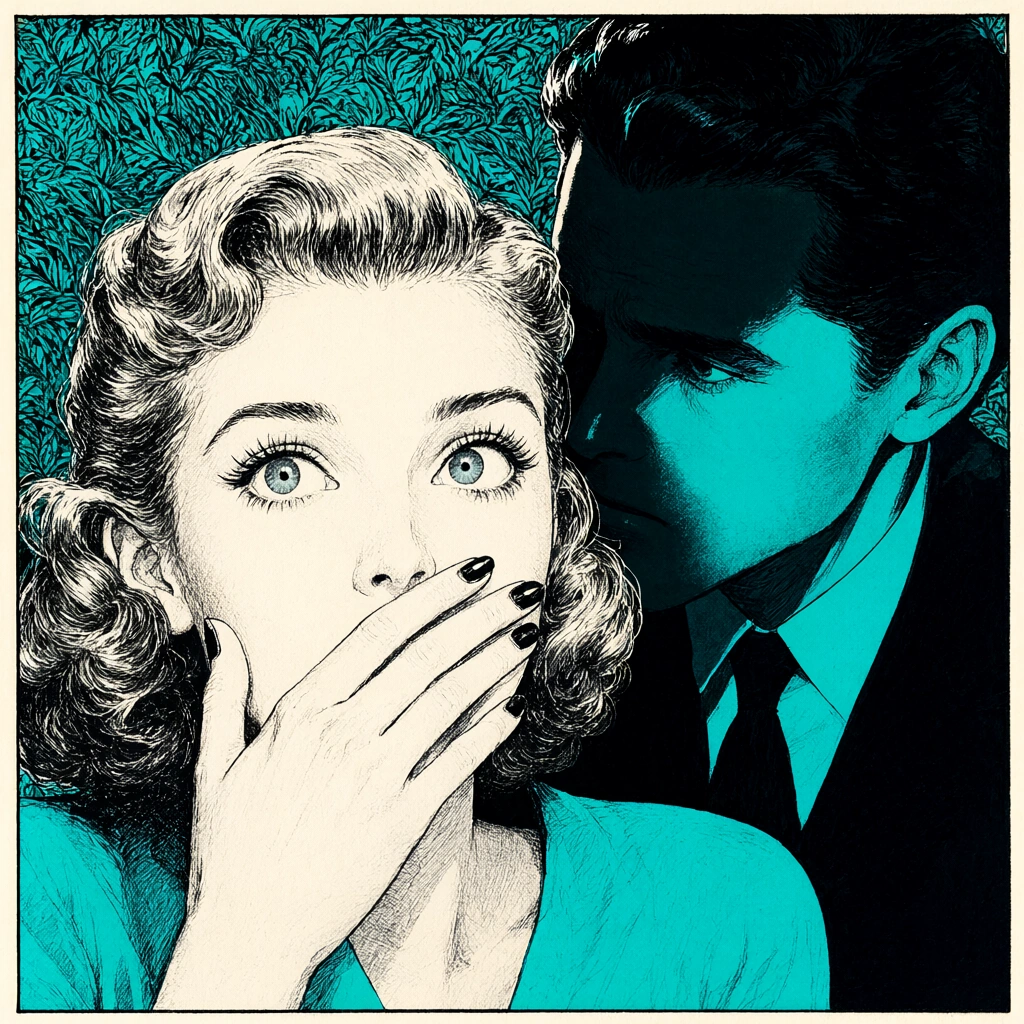 Qwen Image 2.1
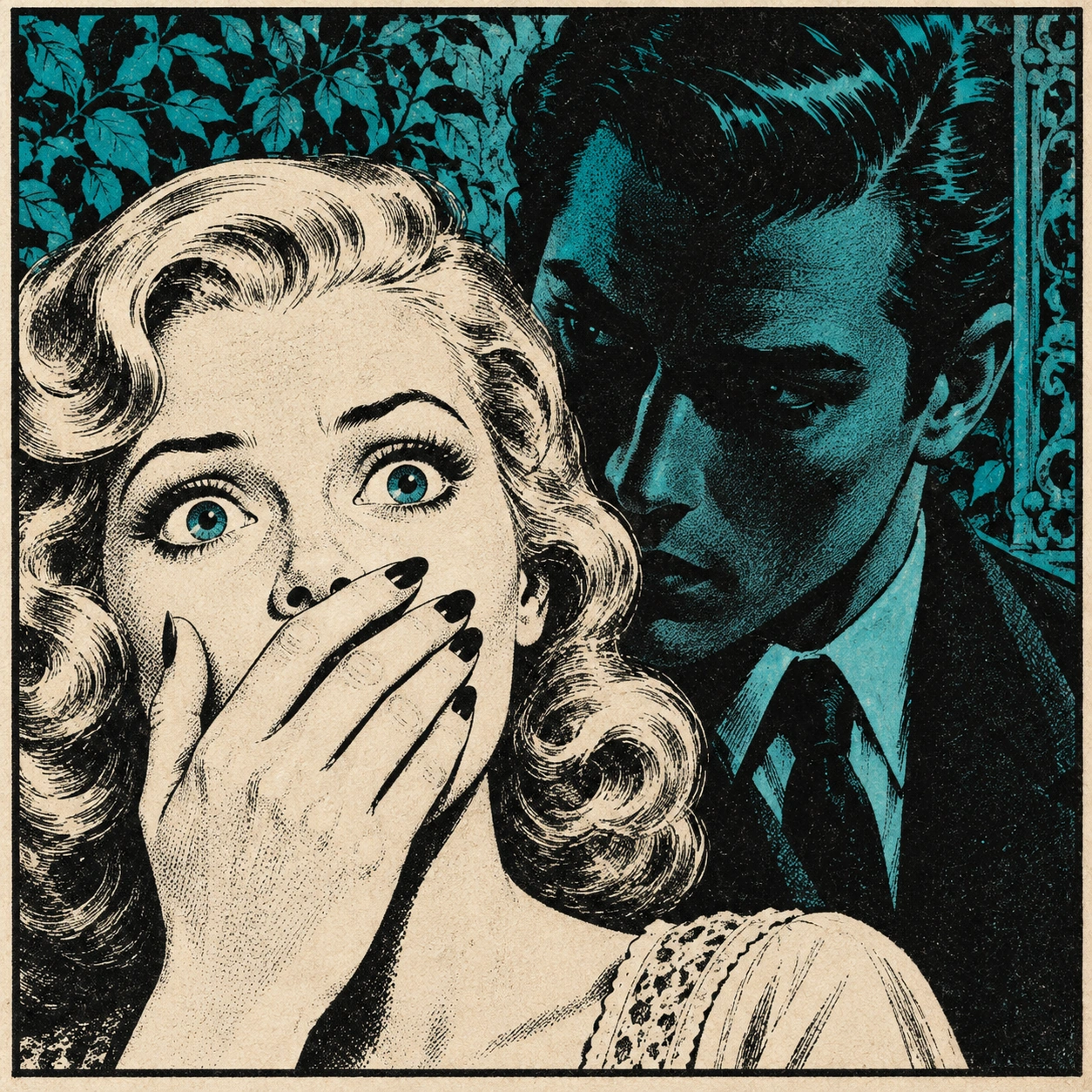 GPT Image 2.5
Reference details
- Reference ID
- 4248
- Category
- Anime & cartoons
Reference prompts
Style prompt
Midcentury suspense comic art with electric turquoise against stark black-and-cream ink. Tight crops, overlapping planes, exaggerated eyes, selective stipple, and dense hatching create psychological pressure. Cream paper acts as the strongest light, while cyan edge accents carve forms from dark masses. Printed grain and a thin panel border keep the image graphic and tactile.Full example prompt
A square comic panel in black, cream, and electric turquoise frames a startled young woman in the left foreground. Her light hair is styled in glossy vintage waves; wide blue eyes look forward and one hand with dark painted nails covers her mouth. Behind her at right, a dark-haired man in suit and tie leans close, his face mostly submerged in turquoise-black shadow, eyes cast toward her. Dense foliage or an intricate patterned wall fills the background in saturated teal. A narrow black border gives the image a printed panel structure. The woman's face is the brightest region, rendered with fine black hatch and stipple around eyes, hair, and fingers; her lips and cheek are almost white paper. The man's sharp nose and brow are cut from deeper shadow with selective cyan highlights. The composition is tightly cropped, so the faces and hand overlap in an intimate dramatic triangle. Light is graphic rather than natural: cream paper and turquoise color blocks separate focal expression from threatening darkness. Small print grain and ink irregularities keep the surfaces tactile. The scene feels suspenseful and midcentury, like a moment interrupted before dialogue, with emotion carried by eyes, gesture, and proximity rather than words.