
Styles
#4302
Edgar Degas style reference and prompts
Explore the “Edgar Degas” reference with broken brushwork, close cropping, and pale neutral tones. View the images, copy the style or example prompt, and discover related styles on Looksift.
Compare the Qwen Image 2.1 and GPT Image 2.5 examples, choose the visual qualities you want, and copy the style prompt for your own project.
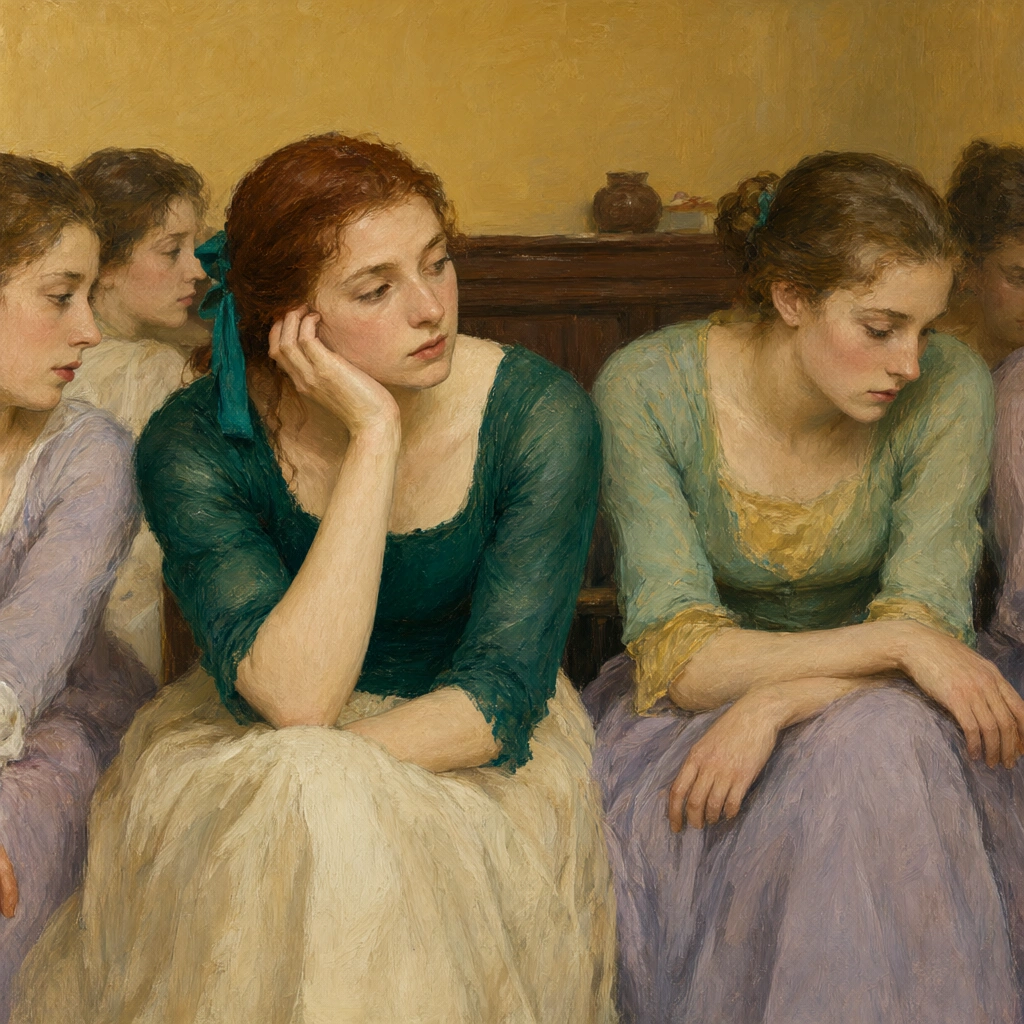 Qwen Image 2.1
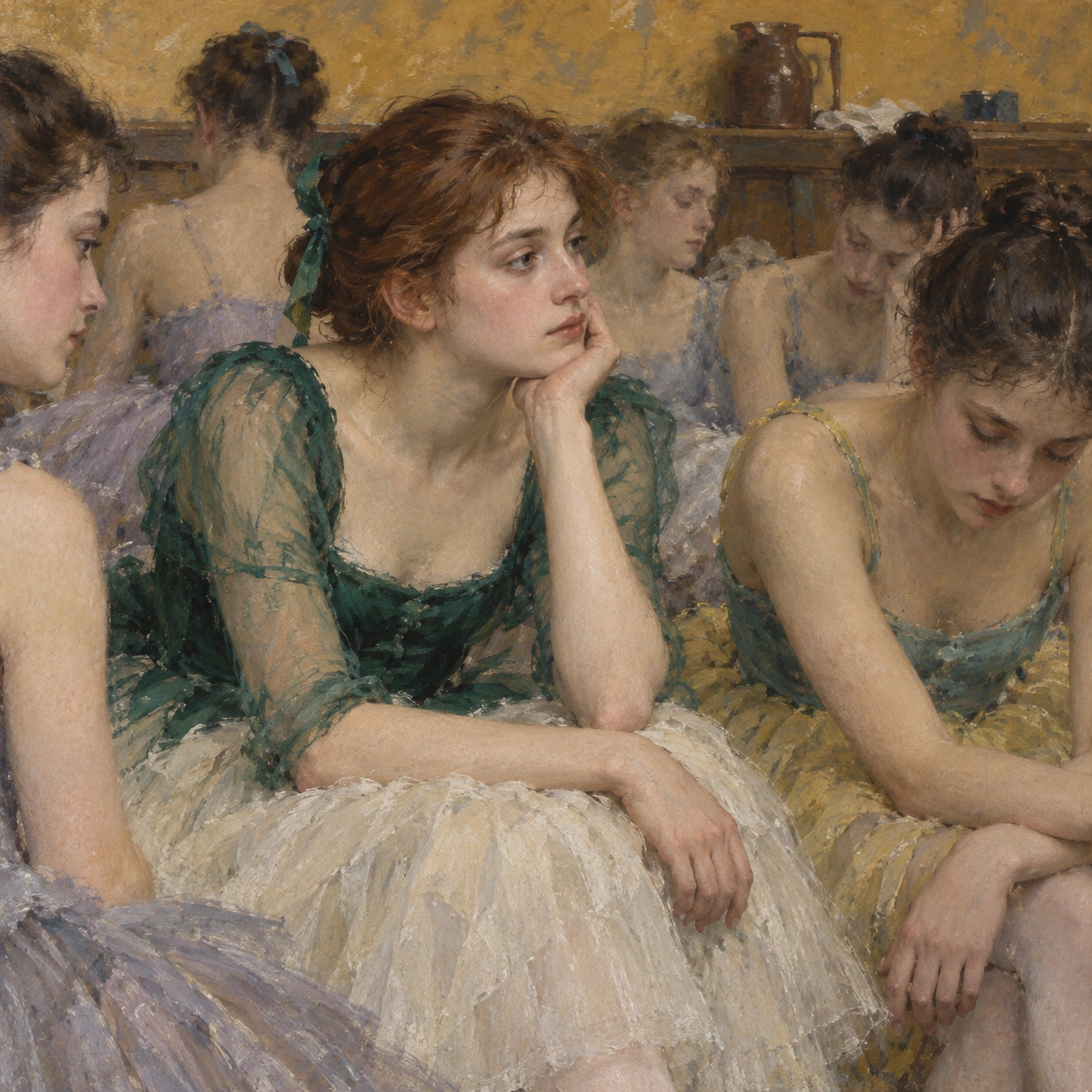 GPT Image 2.5
Reference details
- Reference ID
- 4302
- Category
- Painting
Reference prompts
Style prompt
Use intimate observational oil painting with carefully modeled focal areas and freer broken strokes around them. Pair warm ocher and mustard grounds with cool emerald, sea-green, pale cream, and lavender-gray passages. Let diffuse indoor light reveal soft transitions across rounded forms while preserving visible brush grain in broad fabric and background areas. Compose a closely cropped cluster with overlapping silhouettes and a rhythm of tilted shapes and bent lines. Avoid theatrical spotlights or uniformly polished finish. Edges should alternate between crisp at focal expressions or gestures and soft where neighboring forms merge. The atmosphere is quiet and psychologically attentive, finding elegance in an unposed pause.Full example prompt
A square oil painting shows a close group of young dancers seated in a rehearsal room. The most prominent figure sits slightly left of center, wearing a deep emerald bodice with sheer sleeves and a pale cream skirt. A narrow teal ribbon is tied in her reddish-brown hair. She rests her chin lightly near her right hand, looking toward the right with a tired, inward expression. Beside her at the right, another dancer in faded sea-green and yellow leans forward with her eyes lowered. A partial profile enters from the far left, and several more figures appear behind them as loosely painted heads and shoulders. A wide ocher wall and a dark wooden rail run behind the seated group; a brown vessel and small items rest along it. The composition crops the foreground figures closely, making their hands, shoulders, and expressions more important than the full room. Warm mustard wall tones contrast with cool green costumes, pale skin, and muted lavender-gray skirts. Faces are drawn with careful, soft modeling, while garments and background are worked in freer, broken strokes. The brushwork preserves the grain of paint and small shifts in color rather than rendering every edge sharply. Light is diffuse and indoor, falling softly across cheeks and fabric without a theatrical spotlight. There is no stage, performance gesture, signage, or readable text. The mood is quietly observational: the dancers seem between activities, absorbed in thought, while the crowded arrangement still has an elegant rhythm of repeated tilted heads and elbows.