
Styles
#4319
Norman Rockwell style reference and prompts
Explore the “Norman Rockwell” reference with broken brushwork, tactile surfaces, and pale neutral tones. View the images, copy the style or example prompt, and discover related styles on Looksift.
Compare the Qwen Image 2.1 and GPT Image 2.5 examples, choose the visual qualities you want, and copy the style prompt for your own project.
 Qwen Image 2.1
 GPT Image 2.5
Reference details
- Reference ID
- 4319
- Category
- Painting
Reference prompts
Style prompt
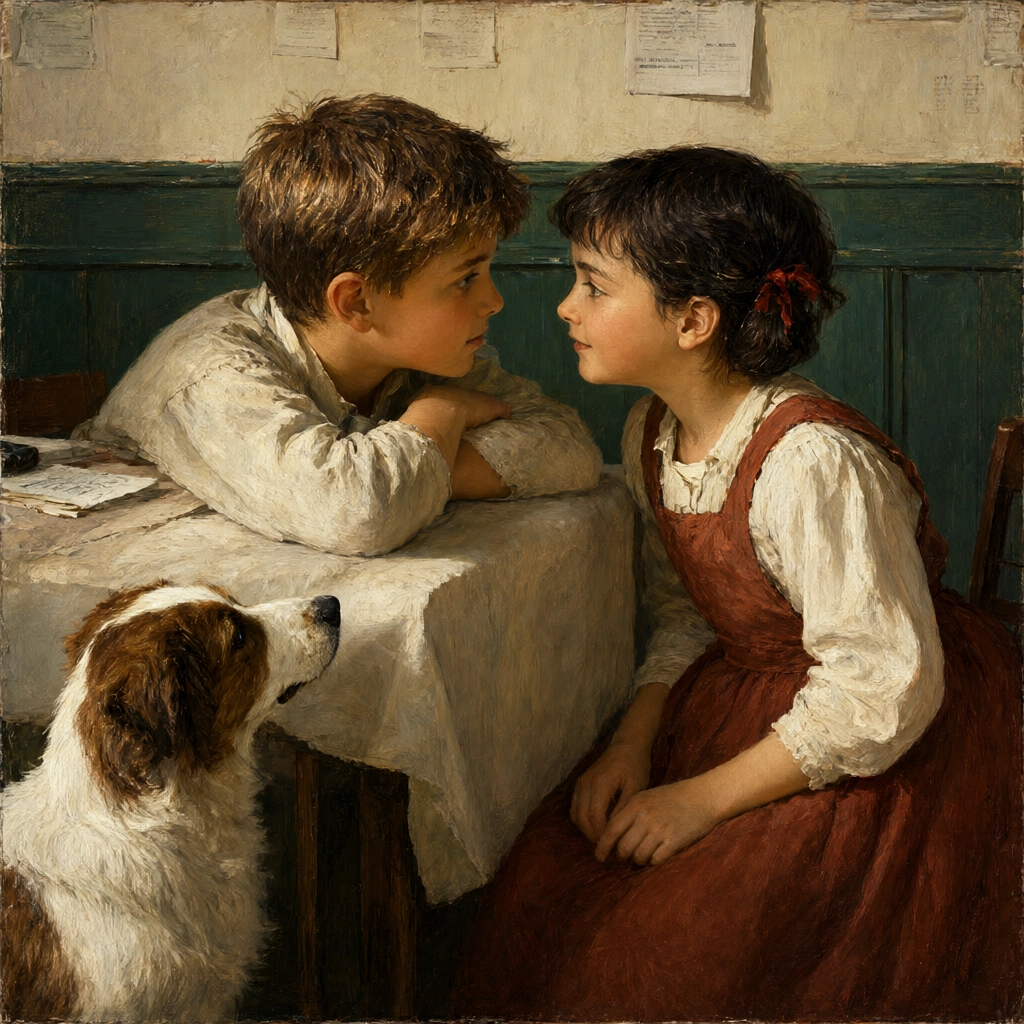
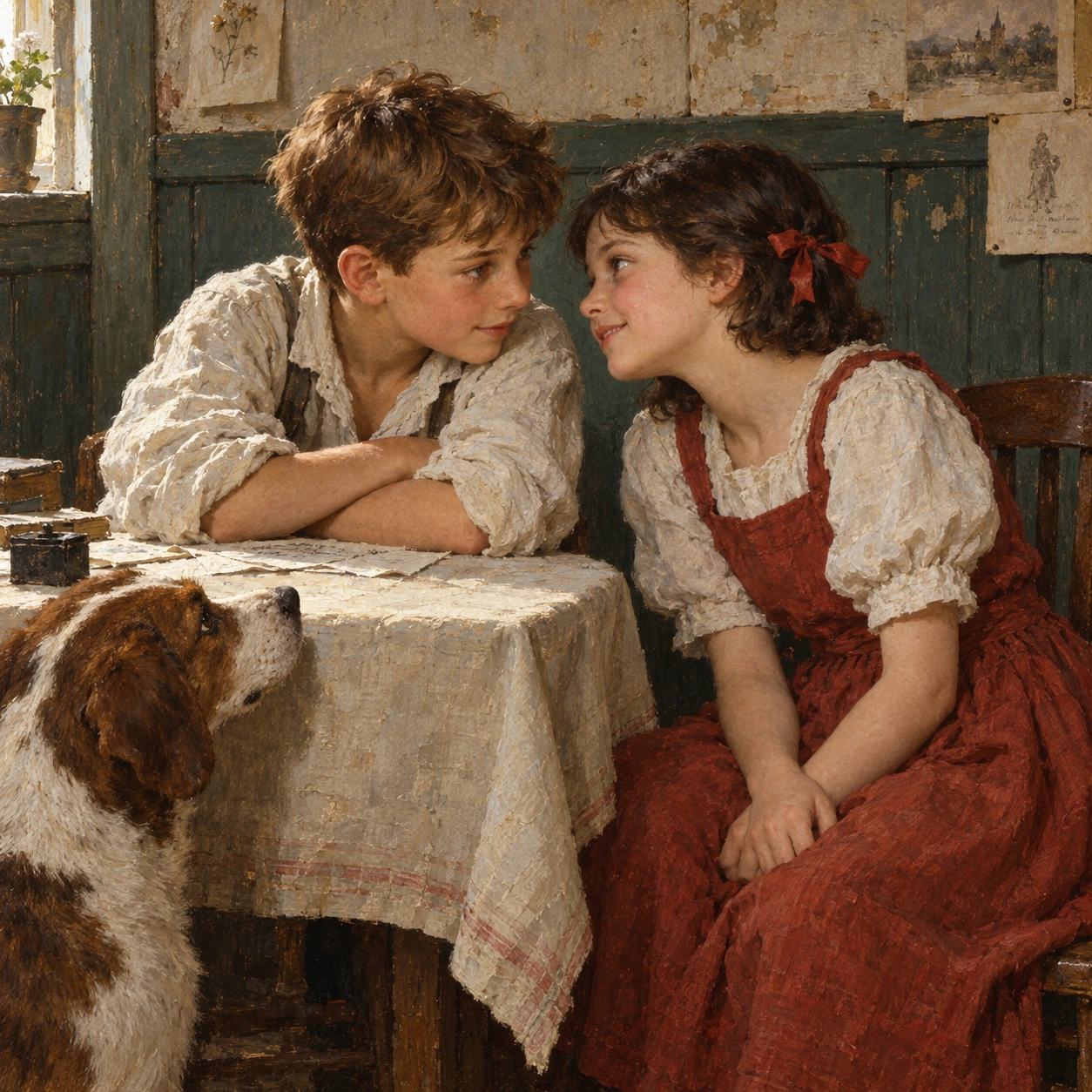
The image has a warm narrative oil-paint finish, with carefully observed expressions and tactile everyday surface detail. Cream, russet, muted teal, olive, and warm brown form a friendly, slightly aged palette. Fine strokes gather at focal contacts and textures, while broader broken marks keep the surrounding field soft. Gentle side daylight brightens selected faces and clothlike planes, leaving small natural shadows that anchor the forms. Close overlapping shapes and opposing leaning diagonals create an intimate center without theatrical staging. Matte pigment and slight wear give the setting a lived-in quality. The overall effect is affectionate, humorous, and quietly observant.Full example prompt
A square narrative oil painting shows a boy and a girl leaning close across a table while a brown-and-white dog watches from the lower left. The interior wall behind them is divided into dark teal-green paneling below and worn pale paper above, with small pinned sheets and indistinct marks along the upper edge. The boy sits at the left in a loose light shirt, his elbows folded over the pale tablecloth and his head tilted toward the girl. Short tousled brown hair catches warm highlights, and his attentive eyes meet hers. The girl sits at the right in a rust-red pinafore over a white puff-sleeved blouse, a red ribbon tied into her short dark hair. She leans forward with a small smile, hands resting low in her lap, the two faces nearly touching across the narrow space. At the lower left, the dog's head rises beside the table, its white neck and brown patches carefully painted as it looks toward the children. Papers and a small dark object lie on the tabletop near the boy's arms, but no words are clearly readable. Fine brushwork describes expressions, hair, the dog's muzzle, and cloth folds; the old wall and table edges use broader, more broken marks. Soft daylight from the upper left falls across the children's faces and the cloth, leaving mild shadow under their chins and along the paneling. Cream, russet, olive-teal, and warm brown keep the palette homely and restrained. The overall composition makes a small shared glance feel lively through close faces, gentle diagonals, and the dog's quiet attention.